Justice
President of Israel’s Supreme Court and Israeli jurist whose broad jurisprudence spans civil, criminal, administrative and constitutional law in a defining institutional period
Deputy President of Israel’s Supreme Court, Israeli jurist and central judicial voice in debates over restraint, interpretation, rights and separation of powers
The Israeli attorney who made civil litigation and financial pressure tools in the fight against terrorism
A founding architect of Israeli law who brought human rights, Jewish legal tradition, and democratic principle into sustained conversation
The Supreme Court president who helped build Israel’s legal institutions and placed the rule of law at the center of public service
Felicia Langer's legacy is marked by her unwavering commitment to advocating for the rights of Palestinians in the face of considerable challenges. Her legal work and activism left a lasting impact on the discourse surrounding the Israeli-Palestinian conflict and human rights in the region.
Leah Tzemel, born on June 19, 1945, is an Israeli lawyer who represents security prisoners, Palestinians accused of terrorist activities, as well as Israelis and Palestinians charged with violence against the Israel Defense Forces (IDF) and settlers.
Uzi Meshulam's life and activism were marked by controversy and a relentless pursuit of justice for the Yemenite children who went missing. His actions, which sparked a nationwide debate and inquiry, continue to be a point of contention and reflection in Israeli society to this day.
Attorney, civic activist, and founder of Israel’s Movement for Quality Government
Legal scholar, civil rights advocate, and a leading architect of debate over Israel as a Jewish and democratic state
Amnon Zechroni (1935 - October 12, 2017, 22nd of Tishrei, 5778) was an Israeli attorney, one of the early conscientious objectors to military service, and a leftist activist who tirelessly fought for freedom of expression and human rights. He served as legal counsel to prominent figures in Israeli public life.
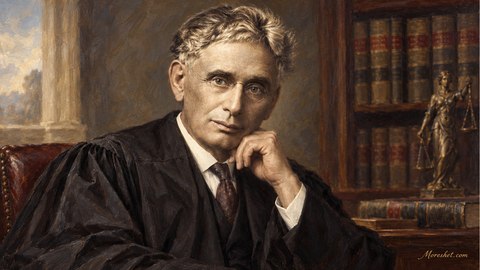
The People's Lawyer, pioneer of privacy law, first Jewish U.S. Supreme Court justice, and leader of American Zionism
The constitutional lawyer and communal leader who built lasting institutions for Jewish and minority rights
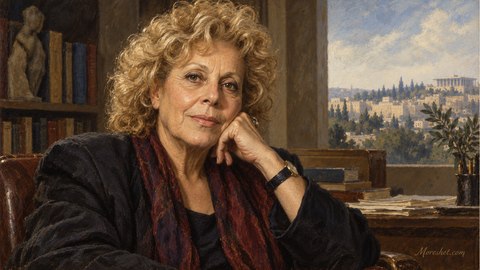
Shulamit Aloni (December 27, 1927 – January 24, 2014) was a prominent Israeli social activist, Member of the Knesset (Israel's parliament), and government minister. Her political career began with the establishment of the Movement for Civil Rights and then the leadership of the Ratz party, later known as Meretz.
Socialist thinker emphasizing participation, freedom and opposition to war
Jewish American linguist and public intellectual whose ideas transformed the study of language and mind
Was a high-ranking officer in the Israel Defense Forces (IDF) and a social activist. Ligum established the Public Relations Officer's Office in the IDF's Manpower Directorate and was the first woman to be awarded the rank of Brigadier General (in a personal capacity) without holding the position of Chief Education Officer.
Forensic pathologist, director of Israel’s National Institute of Forensic Medicine, and Israel Prize laureate for civilian heroism
The Israeli judge and institution-builder who founded the Central District Court and established a new framework for oversight of state prosecutors
Amy Goodman, born on April 13, 1957, is an American journalist, broadcaster, columnist, investigative reporter, and author of Jewish-American heritage.
In this documentary, we embark on a remarkable journey through the life, heritage, and enduring legacy of Rafi Rotem—an individual whose unwavering commitment to the Jewish community has left an indelible mark on history.
A civic and legal organization advancing accountable government, transparency, public responsibility and protection for whistleblowers
In the annals of Jewish history, some stories shine brighter than others. The life of Kinneret Barashi is one such story—a tale of resilience, heritage, and the enduring legacy of a remarkable woman.
An Israeli judge and legal scholar who has brought human dignity, equality, and public accountability to the center of judicial inquiry
The story of Gal Hirsh is a testament to the enduring power of heritage and the contributions one individual can make to their community. His life's work reminds us of the importance of preserving and celebrating our cultural roots.
Yael Lotan's life serves as a testament to the power of one individual's determination and commitment to make a difference, strengthening the Jewish community and enriching its heritage.
Philosopher who brought questions of justice into a worldwide public conversation
The first Jewish justice of the U.S. Supreme Court and a leading advocate of privacy, labor rights and progressive reform
A jurist and judge who transformed the pursuit of gender equality into lasting legal and civic work
U.S. Supreme Court Justice and the second Jewish woman appointed to the Court
A Hasidic pioneer in public service, justice and community emergency care
A human rights lawyer who became Attorney General for England and Wales
A judge in the trial of Adolf Eichmann, one of the central legal proceedings addressing the crimes of the Holocaust (November 10, 1906 – November 8, 1989)
U.S. Supreme Court Justice and advocate for individual rights
A judge who brought the language of justice into everyday television
A civil rights attorney and advocate for women facing discrimination and abuse
A pioneering suffragist who opened new paths for women in law and public service
A senior British judge who led the Hillsborough disaster inquiry and helped reshape public oversight of football safety
Sir Harry Woolf, a prominent British judge and legal leader who served as Lord Chief Justice and played an important role in representing Jewish lawyers internationally.
An American lawyer and public official who helped lead major terrorism prosecutions and served as Secretary of Homeland Security
French jurist and statesman who helped shape the Universal Declaration of Human Rights and received the Nobel Peace Prize
A Jewish jurist who helped shape international law and the global protection of human rights after the Holocaust
Raphael Lemkin coined the term "genocide" and led the campaign that resulted in the adoption of the Genocide Convention in 1948, helping shape international human-rights law and the response to mass extermination.
The lawyer who publicly cross-examined Adolf Hitler and exposed the violent character of the Nazi movement
A senior Israeli jurist who served as Attorney General, Minister of Justice and a Supreme Court Justice
A South African and British lawyer who placed human rights at the center of public law
The pioneering English lawyer who became Britain's first female recorder and later served as a High Court judge
From the struggle against apartheid to shaping South Africa’s democracy
Gabriel Bach is best known for his role as deputy prosecutor in the 1961 trial of Nazi Adolf Eichmann, helping secure Eichmann's conviction. He later served 15 years as a justice on Israel's Supreme Court, earning lasting recognition for his contributions to justice for Holocaust victims and Israeli law. (March 13, 1927 - February 18, 2022)
Judge and President of Israel’s Supreme Court, whose work in major cases helped shape Israeli law and public justice
A pioneering lawyer and women’s rights activist who opened professional and academic paths for women
A pioneering jurist, judge and advocate for women’s rights in family law
The Jewish lawyer who fled Nazi Germany and advanced comparative legal research
A leading advocate of monetary reform and the creation of the Federal Reserve
Mark Alfred Dreyfus practiced as a barrister for 20 years, and was appointed a Queens Council (now KC) in 1999. He has served in parliament since 2007, including holding the office of Australian Attorney General in 2013 and again following the Albanese government's election in 2022 (october 3, 1956)
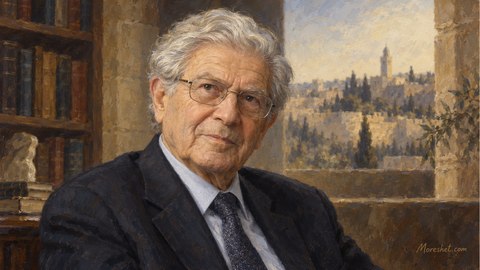
Israeli jurist, Holocaust survivor, former President of the Supreme Court of Israel, former Attorney General, legal scholar and Israel Prize laureate who reshaped Israeli constitutional and public law
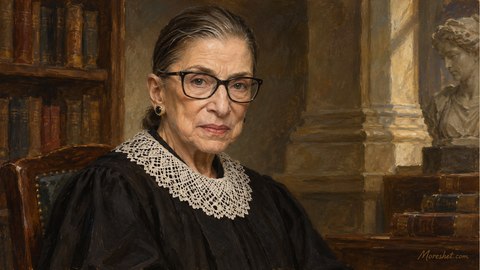
Jewish-American jurist, United States Supreme Court justice, legal architect of gender equality and one of the most influential figures in the modern struggle for equal protection under law
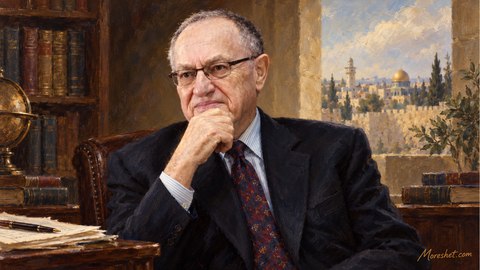
Jewish-American legal scholar, attorney, Harvard Law professor emeritus, author and public commentator, one of the best-known American voices on civil liberties, due process and the public defense of Israel
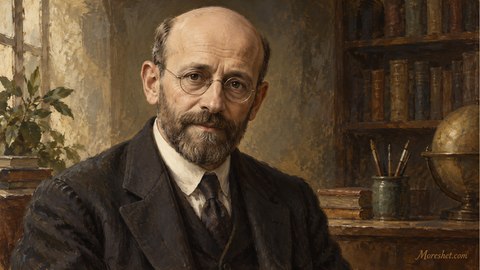
Henryk Goldszmit, the Polish Jewish pediatrician, educator, writer, publicist and social activist who became a pioneer of children’s rights and democratic education, and a moral symbol when he chose to remain with the children of his orphanage until their murder at Treblinka
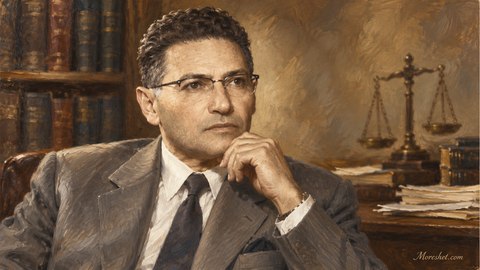
Israeli lawyer, Jewish Brigade officer and founding architect of the IDF military justice system, the first Military Advocate General, who also worked for Holocaust survivors, due process and the legal institutions of the emerging State of Israel
Reform rabbi, constitutional advocate and legislator who expanded the public place of pluralistic Judaism in Israel
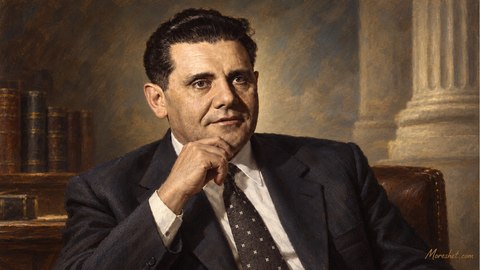
The jurist and statesman who helped shape Israeli law, public institutions, and democratic practice
The Jewish American jurist who shaped judicial restraint, helped build institutions protecting civil liberties, and advanced the Zionist cause
The Jewish American labor lawyer, Supreme Court justice, and diplomat who turned law into an instrument of human dignity
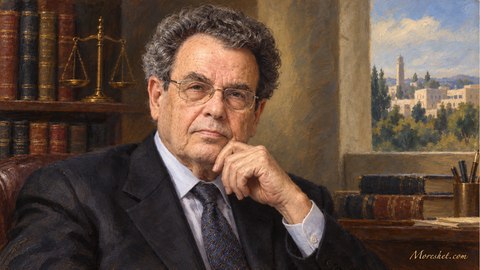
The legal scholar, educator, and justice minister who helped shape Israeli private law and the national debate over judicial power
Attorney, former head of the Israel Bar Association, businessman and co-founder of the Field Schools youth circles
Israel’s fourth Supreme Court president and the jurist who made civil procedure a foundation of practical justice
Former State Attorney of Israel whose public career helped shape the enforcement of law in cases of national importance
The economist, accountant and educator who made government contracts, public revenue and financial accountability matters of public consequence