Michael Sandel
Philosopher who brought questions of justice into a worldwide public conversation
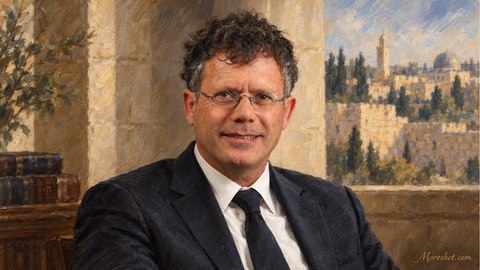
Michael Sandel, born in 1953, turned political philosophy teaching into a conversation with a worldwide audience. Through recognizable dilemmas, he asks people to examine fairness, obligations to others and the limits of putting a price on human goods. His contribution combines philosophical research with teaching that encourages listeners to articulate and test their own positions.
Identity and the meaning of justice
Born into a Jewish family in Minneapolis, Sandel studied at Brandeis and continued at Oxford as a Rhodes Scholar under Charles Taylor. Liberalism and the Limits of Justice examined the account of the person underlying John Rawls’s theory. Sandel emphasized connections with history, community and obligations not produced by individual choice alone.
A classroom reaching far beyond campus
His Harvard Justice course, followed by filmed lectures and an accompanying book, introduced large audiences to philosophical argument. Rather than asking students to memorize an answer, Sandel presents a dilemma, listens to reasons and explores their implications. Disagreement becomes an opportunity for shared inquiry.
Markets, achievement and the common good
In What Money Can’t Buy, Sandel asked how market mechanisms affect social values. The Tyranny of Merit investigated relationships among achievement, luck, dignity and solidarity. In 2025 he received the Berggruen Prize for Philosophy and Culture in recognition of his wider intellectual influence.
Why this legacy belongs in Moreshet
Moreshet includes Sandel as a significant Jewish voice in the human discussion of justice and shared life. Moreshet.com also records an educational achievement: philosophy can leave the university and help people listen, reason and consider together what kind of society they wish to create.