Yehuda Burla
Israel Prize-winning novelist whose work brought the richness of Sephardi Jerusalem and Middle Eastern Jewish life into Hebrew literature
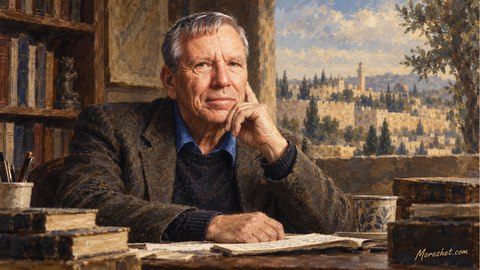
Yehuda Burla (1886–1969) was a novelist and educator whose work gave a central place in modern Hebrew literature to Sephardi Jews and Jewish communities of the Middle East. Writing about Jerusalem, Damascus and cultural worlds he knew closely, he explored love, faith, family and individual aspiration. He received the Israel Prize for literature in 1961. His achievement enlarged the literary representation of Jewish life by bringing underrepresented experiences and storytelling traditions into sustained focus.
Jerusalem and the work of education
Burla was born in Jerusalem to a Sephardi family with rabbinic roots. After a traditional education, he trained as a teacher and worked in teaching and school administration. During the First World War he served as an interpreter in the Ottoman Army. Afterwards he directed Hebrew schools in Damascus and later taught in Zikhron Yaakov, Haifa and Tel Aviv.
Educational work connected him with young people and families across different settings. It also expressed a practical commitment to Hebrew and to the opportunities available within Jewish communities. This knowledge informs the social detail of his fiction: tradition is not decorative background but an active part of relationships and decisions.
Love, family and individual lives
In His Hated Wife and other works, Burla examined relationships within the family and community. Love is a powerful force in his writing, but it can also come into tension with social expectations, obligation and status. His characters are not simply representatives of an ethnic group. They possess desires, pain and hopes that ask for the reader's attention.
The Adventures of Akavya and The Struggles of Man show his interest in journeys and reversals of fortune. He combined an engaging narrative with close attention to emotional experience. His style brought Middle Eastern storytelling traditions into contact with forms of the modern Hebrew novel, allowing readers to enter a particular culture through recognisable human concerns.
History and the institutions of literature
Burla also wrote about figures in Jewish history. The Journeys of Rabbi Judah Halevi explores the poet and his longing for the Land of Israel. His writing about Rabbi Judah Alkalai addresses an early advocate of Jewish national renewal. These are literary works that animate historical people and ideas, and their imaginative form should remain distinct from the documentary record supporting them.
He also served in leadership roles in the Hebrew Writers Association and the Gnazim literary archive. Such work helped sustain the institutions through which writing is published, discussed and preserved. The Bialik Prize and Israel Prize acknowledged a career extending across decades and several forms of cultural responsibility.
Why Yehuda Burla belongs in Moreshet
Yehuda Burla belongs in Moreshet at Moreshet.com because he enriched Hebrew literature with the voices, landscapes and traditions of Middle Eastern Jewish life. His books make heritage accessible through people's loves, beliefs and choices. His work in education and literary institutions adds a practical commitment to future generations, ensuring that cultural inheritance has both a living readership and a place in the historical record.