Yosef Haim Brenner
A writer and editor who made honesty and human responsibility central to modern Hebrew literature
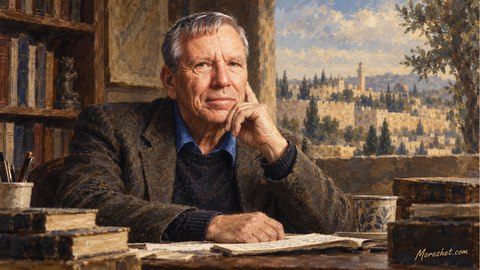
Yosef Haim Brenner (1881–1921) was a writer, translator, editor and intellectual whose work helped shape modern Hebrew literature. He wrote about people struggling with poverty, loneliness and the distance between ideals and lived conditions. His influence also depended on practical commitment: publishing journals, assisting other writers and teaching. Literature, for Brenner, required both artistic honesty and the work necessary to keep a reading and writing community alive.
Migration and the labour of publication
Brenner was born in Novi Mlyny, in present-day Ukraine, and grew up in an impoverished family. Yeshiva study gave him a close familiarity with Jewish texts before he turned towards modern literature and social thought. His friendship with Uri Nissan Gnessin formed part of the intellectual world in which his writing developed.
After service in the Russian army and escape from it, he reached London. There he edited and published Ha-Me’orer, taking part in the physical work of typesetting as well as literary selection. Maintaining a Hebrew journal with limited resources was a demanding act of cultural commitment. In 1909 he immigrated to Ottoman Palestine and became an important presence in the literary life of the Second Aliyah.
Fiction without easy consolations
Works including In Winter, Around the Point, From Here and There and Breakdown and Bereavement follow people trying to find a way through inhospitable circumstances. Inner argument, doubt and the difficulty of acting give his prose a restless, sometimes fragmented movement. The writing registers the pressures of consciousness rather than smoothing them into a comfortable narrative.
This refusal to disguise difficulty carries an ethical force. Brenner pays attention to a person unable to fulfil an ideal of strength or success and insists that such a life still matters. The result is not simply an argument for despair. It is a demand that meaningful action begin with an honest understanding of circumstances and their human consequences.
Supporting a living Hebrew culture
Brenner helped other writers reach publication, including S. Y. Agnon, and translated major literature into Hebrew, among it works by Dostoevsky and Tolstoy. Teaching at the Herzliya Gymnasium and elsewhere extended his engagement beyond the printed page. He brought literature into contact with people building new lives under difficult conditions.
His independent views sometimes provoked fierce disagreement, notably the controversy surrounding a 1910 article on religion. At the same time, his work expressed a sustained commitment to Jewish culture and to the lives of the people around him. He was murdered during the violence in Jaffa in May 1921. That loss became part of his public memory, but the literary achievement deserves attention in its own right.
Why Yosef Haim Brenner belongs in Moreshet
Brenner belongs in Moreshet at Moreshet.com because he gave modern Hebrew literature unusual moral and psychological depth. He showed that commitment to a culture can take the form of searching questions, difficult truths and practical assistance to others. His legacy joins powerful writing with responsibility towards life, inviting readers to consider how people can continue to create and act even when confidence in the future is uncertain.