Haim Hefer
A lyricist and satirist whose words shaped Israeli song, theatre and collective memory
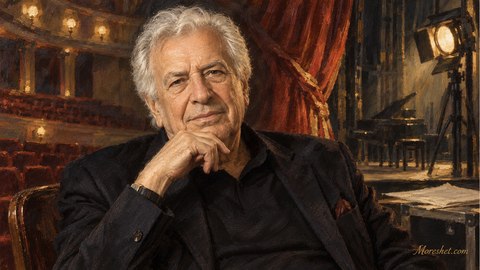
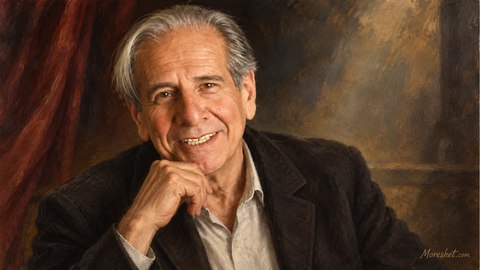
Haim Hefer (1925–2012) was an Israeli lyricist, poet, playwright, screenwriter and journalist whose words helped shape the country’s musical and theatrical life. From Palmach songs to stage musicals and topical verse, he gave Hebrew a memorable combination of rhythm, humour and narrative energy. His work often turns a short scene or a distinctive voice into something an audience can recognize immediately. In 1983, he received the Israel Prize for Hebrew song.
Immigration and the Chizbatron
Born Haim Feiner in Poland, Hefer immigrated with his family in 1936 and grew up in Ra’anana. Youth-movement activity was followed by service in the Palmach, including participation in clandestine immigration operations across the northern border. These experiences informed songs about journeys, comradeship, uncertainty and hopes for an ordinary peaceful life.
During the War of Independence, he founded and led the Chizbatron entertainment troupe. Songs such as Hen Efshar, Hayu Zmanim and Hapruta Vehayareah connected the circumstances of war with the need for relief, comedy and hope. The troupe helped develop an Israeli performance tradition rooted in shared experience and carried by memorable language.
Writing for different voices and stages
Hefer collaborated with prominent composers and performers and wrote for ensembles including HaTarnegolim, the Yarkon Bridge Trio and the High Windows. He could adjust a lyric to a particular character, situation or style of performance, moving between love song, comic observation and public expression.
His contributions to musicals such as Kazablan and the production Little Tel Aviv helped create a stage world grounded in local places, accents and memories. Translation and screenwriting extended that work into further forms. The breadth of the career shows how closely his writing was connected to speech, music, physical performance and the presence of an audience.
Shared memory and a disputed public voice
With Dan Ben-Amotz, Hefer edited Yalkut Hakezavim, preserving the tall tales and humour associated with the Palmach generation. They also established the Hamam club in Jaffa as a performance venue. His long-running newspaper column used rhymed topical prose to respond to public events; Misdar Hanoflim became closely associated with remembrance after the Six-Day War.
His 2002 comments about Moroccan Jews and Mizrahi culture caused deep offence and remain a troubling part of his public record. Recognition of his musical contribution does not entail endorsement of those statements. A considered account can acknowledge both the scale of the artistic work and the people harmed by the language of exclusion.
Why Haim Hefer belongs in Moreshet
Hefer belongs in Moreshet at Moreshet.com because his words became a substantial part of Israel’s shared repertoire of song, theatre and satire. They continue to bring later generations into contact with the situations, emotions and personalities of earlier Israeli life.
He is included although aspects of his public record are controversial. Inclusion recognizes a significant cultural influence without declaring every expression or action positive. Differing assessments of such a figure are part of the historical record through which Moreshet documents the development of Jewish and Israeli heritage.