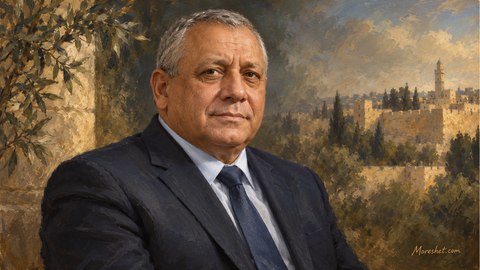
Erez Winner
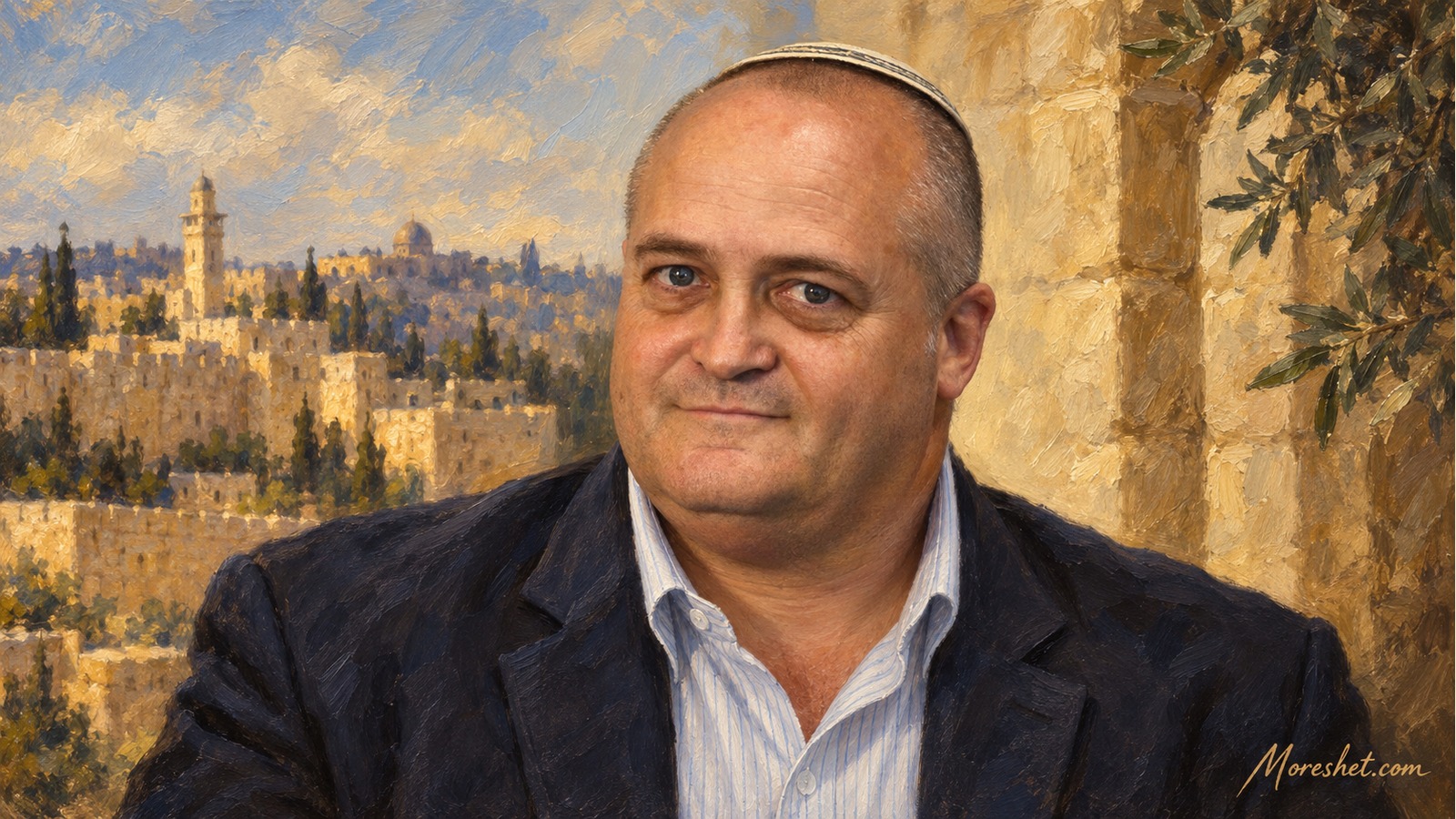
Erez Winner — AI-generated artistic portrait · Moreshet.com
Israeli brigadier general in the reserves, former senior IDF commander, former aide to the chief of staff and Southern Command operational planner, and chairman of IDSF–HaBithonistim
Erez Winner is a retired Israel Defense Forces officer with the rank of brigadier general in the reserves, a veteran field and staff commander, former aide to the IDF chief of staff, former head of the Southern Command’s operational planning team in reserve service, and an Israeli public figure active in the national-security debate. His military service passed through several of Israel’s central arenas in the last generation: the security zone in southern Lebanon, the Second Intifada, Operation Defensive Shield, the Second Lebanon War, Operation Cast Lead, Operation Pillar of Defense and the Swords of Iron War. After leaving regular service, he worked in business and public management, security commentary, educational activity and the IDSF–HaBithonistim movement, where he serves as chairman.
Winner’s importance does not rest only on his rank or on the list of offices he held. He represents a familiar Israeli figure: a combat and senior staff officer whose military experience continues to shape his activity after taking off the uniform. His path connects field command, operational planning, security education, public discussion of preparedness and resilience, and the movement of senior military figures into civil society, business and security-policy organizations. For Israeli heritage, this is a story about security responsibility that does not end with discharge from the IDF, but continues through institutions, movements, articles, advice and public debate.
Personal background and the beginning of his IDF path
Erez Winner was born in Israel on June 13, 1969. He is married, has four children and lives in Beit Horon. His public life was shaped first and foremost inside the IDF, an institution that for decades has been one of the central identity-forming frameworks of Israeli society. Like many officers of his generation, he began in combat service, advanced through command roles and later moved into staff and planning positions requiring not only courage and command over soldiers, but also analysis, coordination, force-building and understanding of the wider operational picture.
Upon joining the army, he served in the Givati Brigade, trained as a combat soldier, completed an infantry squad-commanders course and entered the infantry officers course. He later moved to the Nahal Brigade, serving as platoon commander, company commander and deputy battalion commander. These early command stages are important to understanding him: they placed him inside the Israeli infantry world, where a commander is tested by the ability to lead people, make decisions under pressure, carry direct responsibility for soldiers’ lives and operate in complex terrain.
Winner took part in fighting in southern Lebanon during the security-zone period. That arena shaped a generation of Israeli officers: long stays in outposts, ambushes, explosive devices, cooperation with the South Lebanon Army, conflict with Hezbollah and the daily friction between operational routine and continuing threat. This experience would later reappear in his writing and security thinking, especially in discussions of borders, security zones, holding territory and the need for mobile, initiative-driven action rather than static defense.
Field command and the building of operational experience
Winner later served as bureau chief for Northern Command chief Gabi Ashkenazi, and afterward as bureau chief for Deputy Chief of Staff Shaul Mofaz. Such positions allow a relatively young officer to learn closely how decisions are made at senior levels, how situation assessments become operational directives, and how commands, the General Staff, government and the field interact.
He then commanded the Duchifat Battalion, leading it in combat against Palestinian terrorism during the Second Intifada. Commanding a battalion in that period was one of the most demanding field roles in the IDF: continuous activity in cities and villages, counterterror operations, protection of roads and communities, coordination with intelligence and the Shin Bet, and preservation of operational discipline in a reality where the line between front and home front had blurred.
In his next role, he served as operations officer of the Judea and Samaria Division. This is a central planning and operations position in an arena where the IDF must conduct continuous, sensitive and complicated activity involving terrorism, civilian population, settlements, Palestinian authorities, police, Shin Bet and the political echelon. The move from battalion command to a divisional operations role widened Winner’s perspective from the fighting unit to the whole system.
Brigade 408, tactical training and the Second Lebanon War
In 2005 Winner was appointed commander of Brigade 408, the Etzioni Brigade, and held the position during the Second Lebanon War. At the same time he commanded the Tactical Training Center at the National Ground Training Center. This combination of brigade command and responsibility for tactical training is especially important, because it connects two foundations of force-building: preparation before war and the use of force during war.
The Second Lebanon War was a formative event for the IDF and Israeli society. It exposed gaps in readiness, training, command, logistics and coordination among levels of command. Officers active at the time were later required to rethink fitness, reserve training, firepower, the integration of intelligence and ground maneuver. For Winner, who also dealt with tactical training, the war sharpened the importance of practical and professional preparation of ground forces.
Tactical training is often less visible to the public than battlefield command, but it is central to national security. A society forced to defend itself cannot rely on fighting spirit alone; it needs practice, after-action review, team capability, understanding of terrain, connection among commanders and units, and the transformation of past lessons into operational ability. This is one of the fields in which the accumulated experience of officers such as Winner acquires broader significance.
Aide to the chief of staff and a view into the center of decision-making
From 2008 to 2011 Winner served as aide to IDF Chief of Staff Gabi Ashkenazi. This is one of the most sensitive positions of trust in the army: the chief of staff’s aide stands close to the center of decision-making, is exposed to broad security and systemic issues, assists in coordination among bodies and levels, and often becomes a point through which information passes among the General Staff, the commands, the Ministry of Defense and the political echelon.
During this period the IDF was dealing with the consequences of the Second Lebanon War, the need to restore ground-force readiness, the challenges of Gaza, Iran, Hezbollah and the Palestinian arena, and deeper questions of force-building, intelligence and deterrence. Winner’s role alongside Ashkenazi placed him at the heart of the process through which the IDF tried to return to training discipline and maneuver capability after severe public and institutional criticism.
During the same period Winner was also involved in the Harpaz document affair, one of the most turbulent public episodes in the relationship among the IDF’s top command, the Ministry of Defense and the media. After the State Comptroller’s report and related examinations, his promotion was halted and he left the IDF in 2013. In 2016 the criminal investigation file regarding him was closed on the ground of absence of criminal guilt. The affair is part of his public record, but it does not define the whole of his service. It also reflects the complexity of trust positions at the top of the defense establishment, where boundaries of information, loyalty, organizational politics and public responsibility become especially sensitive.
Reserve service, Southern Command and the Swords of Iron War
After leaving the IDF, Winner continued to serve in the reserves. He headed the Southern Command’s operational planning team, and in October 2018 was promoted to brigadier general in the reserves. Such a role is not symbolic: it touches campaign planning, understanding of the Gaza arena, development of operational alternatives and preparation of plans for action against an enemy combining terrorism, tunnels, rockets, civilian population, consciousness and governing systems.
During the Swords of Iron War, Winner returned to activity in the reserves within Southern Command. The war, which began after Hamas’s attack on October 7, 2023, made questions of operational planning, territorial control, destruction of enemy infrastructure, return of hostages and the relationship between combat and humanitarian needs central to Israel’s national agenda. His experience in the southern arena and in systemic planning again placed him inside a security discussion of national significance.
In March 2025 he was dismissed from reserve duty after an incident in which he removed classified documents from an IDF base and lost them in a civilian parking lot. This was a serious event in terms of information security and command responsibility, and it is an inseparable part of the public record. Alongside that, Winner remained active afterward in civil security discourse, writing, lectures and the IDSF–HaBithonistim movement.
Civilian activity, management and security commentary
After leaving the IDF, Winner worked in several civilian and business frameworks. In 2015 he became chief executive officer of Jerusalem Wineries – Cooperative Agricultural Association. He later held senior roles at Willi-Food Investments, including chief executive officer, until ending his term in November 2024. The move from the army to business is not unusual among senior Israeli officers, but it shows how command, management and operational experience can be translated into logistics, administration, personnel, processes and business responsibility.
In 2018 he began serving as a military commentator on Channel 20 News. Security commentary in Israel is not merely professional explanation for viewers; it is part of the way the public understands wars, operations, threats and government decisions. When a former senior officer speaks to the public, he conveys not only information but also a worldview: how to assess risk, what deterrence means, when force should be used and what national preparedness requires.
Winner also worked in educational and public frameworks. He volunteered as head of the staff for the return of Lt. Hadar Goldin and was appointed chairman of the board of Midreshet Sde Boker. Such activity links security, education, memory and civil society. It illustrates how former officers remain involved not only in a narrow military debate, but also in questions of values, leadership, settlement, national responsibility and the relationship between army and society.
IDSF–HaBithonistim and civil security discourse
Winner was a member of the advisory board of the IDSF–HaBithonistim movement, and in May 2026 was appointed its chairman. IDSF–HaBithonistim is a movement of reserve security professionals and citizens dealing with national-security doctrine, Zionism, security control, settlement, education, community preparedness and regional policy. Under Winner’s leadership, the movement continued to operate as a body presenting a clear national-security voice in Israeli public discourse.
Winner’s articles and positions in the movement address subjects such as the security of frontier communities, home-front preparedness, Judea and Samaria, the Gaza Strip, Lebanon, Hezbollah, Iran, borders, ground maneuver and the need for an initiative-driven posture toward enemies. He usually emphasizes strength, deterrence, military freedom of action, community responsibility and opposition to excessive dependence on diplomatic assumptions that he believes collapsed under the test of reality.
The place of such a movement in Israeli heritage is part of a wider debate: how a democratic society balances security expertise with civilian decision-making, the experience of former officers with political disagreement, and the need for security with the moral and diplomatic questions that accompany the use of force. Winner is one of the figures operating precisely at that intersection.
Gaza, humanitarian aid and the debate over the day after
During and after the Swords of Iron War, Winner was involved in the discussion of Gaza’s future and humanitarian-aid distribution. In 2025 his name was connected with promoting a plan to replace part of the United Nations aid-distribution mechanisms in Gaza with a Gaza Humanitarian Foundation. The plan generated wide international debate because it touched questions of territorial control, preventing Hamas control over aid, civilian safety, humanitarian responsibility and the role of international organizations during war.
From Winner’s perspective and that of supporters of the security doctrine he represents, aid distribution is not only a logistical issue. It is part of the struggle over control, legitimacy and governing power. If Hamas controls food, access and distribution, the argument goes, it preserves its control over the population even during war. Therefore a distribution mechanism is needed that does not strengthen the enemy.
From the international and humanitarian perspective, such plans raise hard questions about access, safety, neutrality, legal responsibility and the prevention of civilian harm. Winner’s involvement in this debate shows how reserve officers and security-policy figures became central actors not only in operational planning, but also in the civilian, humanitarian and political questions of the war.
Public complexity and the responsibility of security figures
Winner’s biography includes military achievements, command and staff roles, continued reserve service and public activity, but also complex chapters of institutional and public criticism. The Harpaz affair, the closing of the investigation file concerning him without criminal guilt, and the loss of classified documents in 2025 place him inside the broader question of responsibility among security professionals: how to maintain trust, information boundaries, discipline and caution even when acting out of a deep sense of mission.
Precisely because Winner works in the security field, his public responsibility is examined closely. Israeli society grants security professionals special status, but also demands from them a high standard of caution, transparency, professionalism and loyalty to the system’s rules. In Winner’s case, his contribution and experience do not erase the complex chapters, and the complex chapters do not erase his years of service and public involvement.
Historically, part of his importance lies in that complexity. He is not only a retired officer or public activist; he is a figure who embodies the deep Israeli connection among army, society, politics, media, education and business. Through his story one can understand how security in Israel is not a closed professional field, but a public language that continues to shape institutions, movements and civic positions.
Why this legacy belongs in Moreshet
Erez Winner merits inclusion in Moreshet because his story connects combat service, IDF command, operational planning, reserve duty, security education, civilian management and public activity around Israel’s national-security doctrine. He represents a generation of Israeli officers whose lives do not move in a straight line from the army to retirement, but continue into fields where security experience becomes civic, organizational and public involvement.
Moreshet.com documents Winner because Jewish and Israeli heritage includes the people who acted within the security systems, carried operational responsibility and later participated in shaping the civic discussion on preparedness, resilience, borders, settlement and the security of future generations. Erez Winner’s place in Moreshet rests on the way his service and public roles reflect one of the central features of the State of Israel: the continuing connection among the people’s army, civil society, the memory of wars, public responsibility and democratic debate over how to protect the Jewish people and the Jewish state.