Eyal Zamir
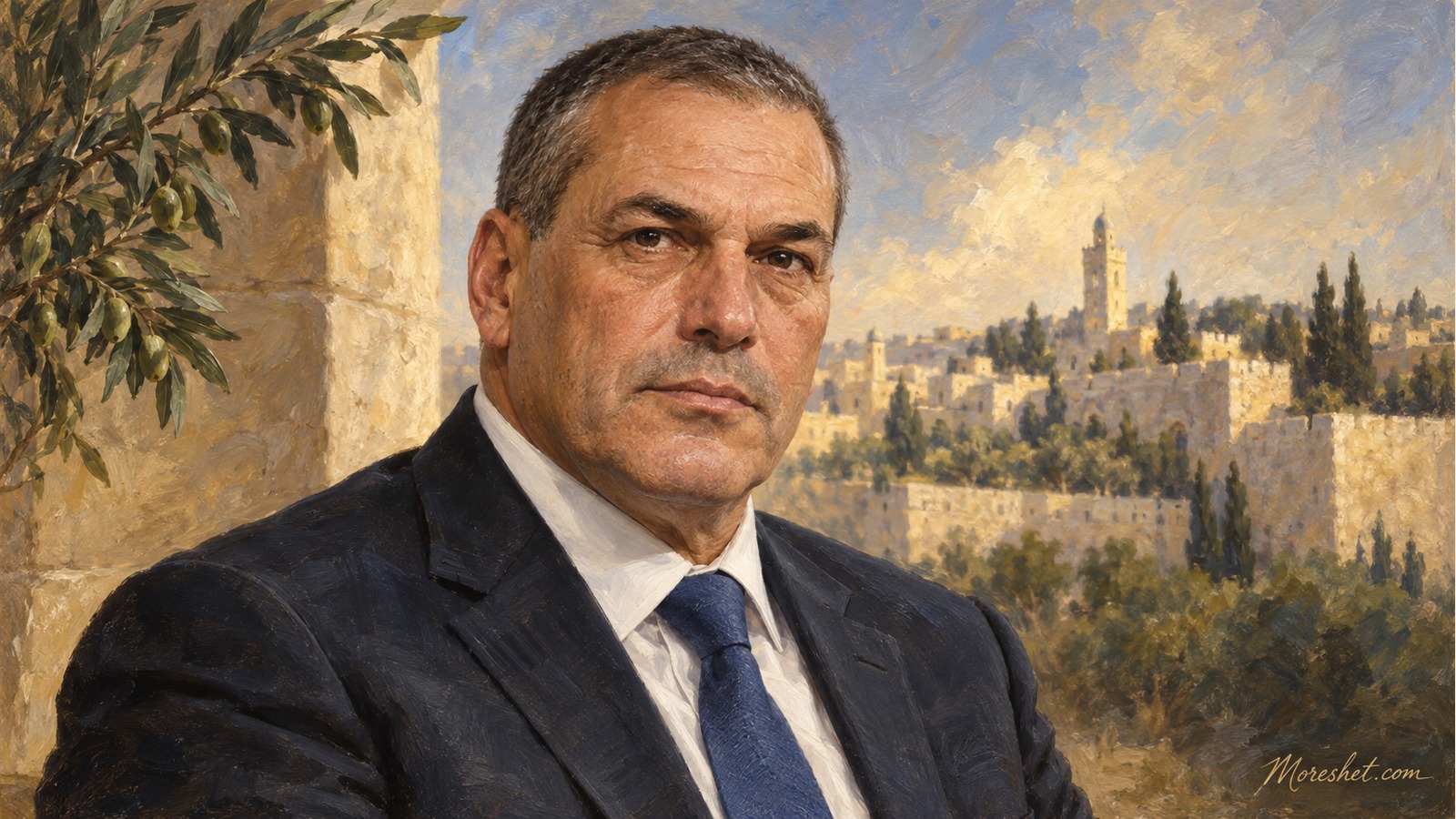
Eyal Zamir — AI-generated artistic portrait · Moreshet.com 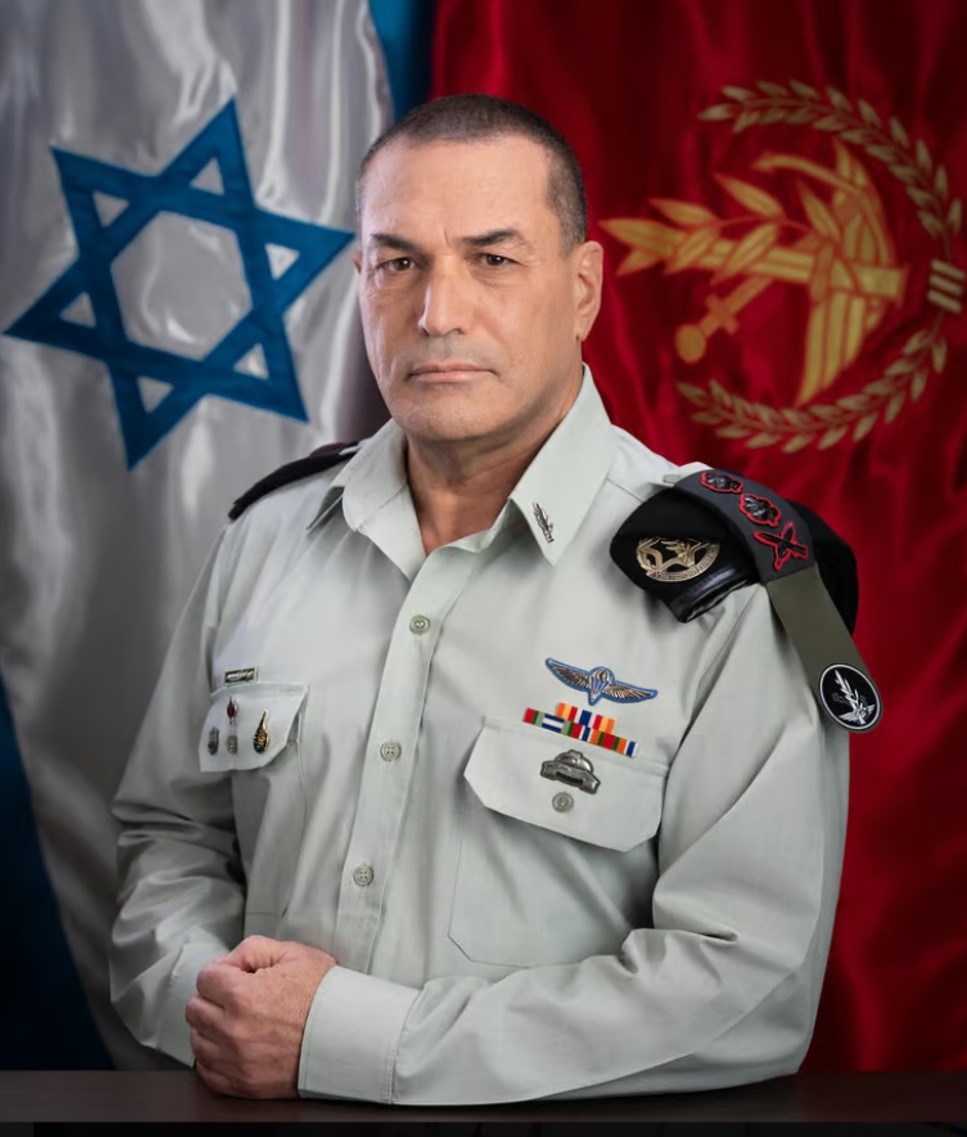
Eyal Zamir. Photograph by IDF Spokesperson's Unit photographer, via Wikimedia Commons (CC BY-SA 3.0).
Lieutenant General, 24th Chief of the General Staff of the Israel Defense Forces, veteran armored-corps officer, former Southern Command commander, deputy chief of staff and Defense Ministry director general, leading the IDF through recovery, multi-front war and renewed force-building
Eyal Zamir is an Israel Defense Forces officer with the rank of lieutenant general, serving since March 5, 2025 as the 24th Chief of the General Staff of the IDF. He is one of the senior officers who shaped IDF force-building and the use of force in the last generation: an armored-corps officer who rose from tank crewman, platoon commander, company commander, battalion commander and brigade commander to division command, Southern Command, deputy chief of staff, director general of the Ministry of Defense and finally chief of staff. His path reflects a distinctly Israeli pattern of long service, operational professionalism, public responsibility and confrontation with the most complex security challenges facing the State of Israel.
Zamir’s importance does not come only from the senior office he reached. He represents the IDF armored tradition, the doctrine of ground maneuver, the thinking required for multi-front war, and the need to connect tanks, infantry, intelligence, air power, cyber, defense industry, reserve forces and the civilian home front. As a chief of staff who took office after a prolonged period of the Swords of Iron War, he inherited an army required at the same time to fight, restore trust, draw lessons from October 7, rebuild readiness, increase manpower, strengthen industrial independence and prepare for campaigns against Hamas, Hezbollah, Iran and their proxies.
Childhood in Eilat and roots of service and security
Zamir was born in Eilat on January 26, 1966, and grew up in the southern city, geographically distant from the center of the country but close to the consciousness of border, desert, sea, army and settlement. He is the eldest of the three children of Yaffa and Shlomo Zamir. His father, Shlomo, served in the IDF with the rank of lieutenant colonel and was stationed in Eilat; his mother, Yaffa Abadi Zamir, came from a family with roots in Aleppo. On his father’s side, Zamir also carried Yemenite Jewish roots: his grandfather Aharon immigrated to the Land of Israel from Yemen in the 1920s, served as a fighter in the Irgun and was wounded twice.
This family biography places Zamir within a continuum of Jewish communities, aliyah, security and settlement. Aleppo, Yemen, Jerusalem, Eilat, the Irgun and the IDF are not merely biographical details; they are part of a wider story of Jews who came to the land, built new lives there and became connected to its defense. For a heritage profile, this is an important foundation: Zamir did not grow up in a family detached from security service, but in a home where service to the state was part of family reality.
As a teenager he studied at the Military Command Boarding School in Tel Aviv, which operated alongside the Herzliya Hebrew Gymnasium. He was a graduate of its 16th class, Arava Company. The boarding school was intended to prepare young people for future command, attracting students who saw the IDF not only as compulsory service but as a long-term mission. Zamir arrived from Eilat and chose early a path that would connect his life to Israel’s security.
The choice of armor and formation as a combat officer
In 1984 Zamir enlisted in the IDF and chose the Armored Corps. That choice was not obvious: many graduates of command-oriented frameworks dreamed of commando or elite infantry units, but Zamir was drawn specifically to tanks. He was later described as a young man who had read about the Yom Kippur War and saw how the armored corps, the tanks and their crews had saved critical situations. The choice of armor became one of his defining features all the way to the chief of staff’s office: he is the first IDF chief of staff to have begun his path as a tank crewman.
He completed the tank commanders course with distinction, took the officers course, became an armored officer and served as platoon commander and company commander in the 500th and 460th Brigades. In these roles he learned the foundations of the military profession at the level closest to soldiers: movement, fire, communications, vehicle maintenance, coordination among crews, control under pressure and command of young people in dangerous situations.
During his early service he took part in combat in southern Lebanon during the security-zone period. That arena shaped generations of Israeli commanders: outposts, ambushes, explosive devices, friction with terrorist organizations, coordination with local forces and the understanding that security is not only rapid victory but also prolonged endurance against a sophisticated and determined enemy. For Zamir, Lebanon was an early operational school in thinking about borders, initiative, defense, maneuver and the price of holding territory.
From Battalion 75 to the 7th Brigade: armored command in central arenas
From 1992 to 1994 Zamir served as operations officer of the 7th Armored Brigade, and from 1994 to 1996 he commanded Battalion 75 in the brigade. As a battalion commander in the security zone in Lebanon, he bore direct responsibility for outposts, soldiers, ongoing security activity and complex operations. This is the stage at which an officer no longer commands only a crew or company, but must build an entire unit, cultivate subordinate commanders, maintain discipline, lead in combat and deal with prolonged wear.
He later commanded Battalion 198 at the Armored Corps school, studied at the École Militaire in France and served as operations officer of the 162nd Division. The combination of command, instruction, foreign military study and staff work broadened his perspective. He did not remain only a field commander; he developed a wider understanding of doctrine, training, methods of operation and military culture.
From 2000 to 2002 he headed the Armored Corps Doctrine Department at the headquarters of the chief armored officer, while also commanding Brigade 656, a reserve brigade in Central Command. During Operation Defensive Shield, the brigade under his command took part in the seizure of Jenin and the clearing of terrorist infrastructure. This was one of the central IDF operations of the Second Intifada, placing ground-force commanders before complex urban combat, terrorism, intelligence and action inside a dense civilian environment.
Brigade, division and training-center command
From 2002 to 2003 Zamir commanded the Tactical Training Center at the National Ground Training Center, while continuing to command the reserve brigade. Then, from 2003 to 2005, he commanded the 7th Brigade. In that role he led offensive activity in the Gaza Strip, especially around Khan Yunis and the central camps, and commanded the brigade during a period when the Palestinian arena required the armored corps to adapt to terrorism, rockets, explosive devices and built-up areas.
In 2005 the 7th Brigade was involved in carrying out Israel’s disengagement plan from the Gaza Strip. Zamir commanded one of the circles of forces responsible for closing the Strip to the entry of Israelis. This chapter placed officers and commanders in a different kind of tension: not fighting an enemy, but carrying out a difficult and disputed government decision with Israeli citizens, while maintaining discipline, restraint and the ability to act on behalf of the state when Israeli society was divided.
From 2007 to 2009 he commanded Division 143 with the rank of brigadier general, while also commanding the company and battalion commanders course. In June 2009 he was appointed commander of the 36th Division, the Ga’ash Formation, one of the IDF’s central divisions. During his tenure the division completed its conversion to the digital ground-army system, reflecting the move of ground forces into a world increasingly based on networks, intelligence, communications, shared situational awareness and integration among corps.
Chief of staff of the Ground Forces and military secretary to the prime minister
In 2011 Zamir became chief of staff of the Ground Forces. This role connected him to one of the IDF’s continuing challenges: the building of ground power. The Ground Forces are responsible for the readiness, training, means, doctrines, reserves and preparedness of the forces that must enter territory when maneuver is required. For a veteran armored officer, this was a natural but highly complex position.
In November 2012 he was appointed military secretary to Prime Minister Benjamin Netanyahu, with the rank of major general. The military secretary is a bridge between the political echelon and the defense establishment: he must understand the army’s language, the government’s language, intelligence needs, cabinet dynamics and the consequences of every security decision. During his term, major security events and operations took place, including Brother’s Keeper and Protective Edge.
The role of military secretary gave Zamir a direct view of how security decisions are made at the political level. He learned closely the tension between operational desire and diplomatic considerations, between military recommendations and the responsibility of elected officials, and between the need to present a professional picture and the political reality in which decisions are made.
Commander of Southern Command: Gaza, tunnels and the border barrier
In October 2015 Zamir became commander of Southern Command. The southern command is one of the IDF’s most sensitive commands: it involves the Gaza Strip, the Egyptian border, Eilat, the Negev, a large civilian population, the communities near Gaza and the continuing threat of terrorism, rockets, tunnels and border violence.
During his command, emphasis was placed on locating and neutralizing offensive cross-border tunnels, building an advanced barrier along the Gaza border and dealing with border confrontations. The barrier and detection systems formed part of the effort to turn the underground threat into a problem that could be identified, monitored and neutralized. This is a field in which technology, engineering, intelligence and ground action meet.
Southern Command also confronted Zamir with one of Israel’s hardest security questions: how to manage an arena in which Hamas is a terrorist organization, a military force, a local government and a consciousness actor at the same time. Even before October 7, Gaza was a difficult laboratory of deterrence, response, prevention, community defense, border management and the tension between military pressure and humanitarian and political considerations.
Deputy chief of staff and force-building against Iran
In December 2018 Zamir was appointed deputy chief of staff, a role he held until July 2021. As deputy chief he dealt with force-building, multi-year plans, readiness, budgets, technology, intelligence, maneuver and multi-front threats. During his tenure he was involved in the Tnufa multi-year plan and in leading operational concepts focused on the need to prepare for a complex regional campaign, especially against the Iranian threat and its proxies.
At the end of his term as deputy chief of staff, he warned that Israel could face a heavy, long and multi-front campaign combining front, home front and internal challenges. He stressed the need for endurance, a strong reserve, advanced technological capabilities and critical mass in both human quality and quantity. Those statements gained special meaning after the outbreak of the Swords of Iron War and its expansion into additional arenas.
In 2021 he spent a research year at the Washington Institute for Near East Policy. There he published work on formulating a concept of victory and principles for action in the regional campaign against Iran and its proxies. He emphasized that the struggle with Iran was not a single event but a continuous, multi-front and multi-domain campaign requiring a combination of direct and indirect pressure, damage to capabilities, weakening of proxies and long-term preparation.
Director general of the Ministry of Defense during the Swords of Iron War
In February 2023 Zamir entered office as director general of the Ministry of Defense under Defense Minister Yoav Gallant. The move from the army to the ministry shifted him from direct military command to procurement, defense industries, budgets, foreign defense relations, American assistance, stockpiles and the long-term construction of IDF capabilities.
This role acquired historic significance after Hamas’s October 7, 2023 attack and the Swords of Iron War. The Defense Ministry had to contend with prolonged war, vast ammunition needs, evacuation of communities, support for the home front, care for families, accelerated procurement, rehabilitation of communities, relations with the United States and strengthening of local industry. Zamir was one of the people at the center of the system required to turn a huge security crisis into a continuing plan of action.
As director general he emphasized the need to exploit technologies such as artificial intelligence, robotics, autonomy and directed energy to preserve a security advantage. After the war demonstrated the importance of ammunition stocks, local production and the ability not to rely entirely on external supply, his focus on strengthening Israel’s domestic defense industry became even more important.
The 24th chief of staff: recovery, discipline and force-building
On February 1, 2025, Prime Minister Benjamin Netanyahu and Defense Minister Israel Katz announced Zamir’s selection as chief of staff. The government approved the appointment, and on March 5, 2025 he entered office, succeeding Lt. Gen. Herzi Halevi. He took command while the war was still continuing, as the IDF had to hold fronts, defend communities, continue fighting in Gaza, deal with Lebanon and Iran, and conduct deep lessons-learned processes after the failure of October 7.
One of his first tasks was the restoration of discipline, readiness and functional continuity. He ordered the cancellation of IDF shutdown periods, advanced a series of appointments, strengthened the demand for command responsibility and emphasized that 2026 would be a year of strengthening foundations, professionalism and readiness. He also moved ahead with organizational changes, including the dismantling of the Strategy and Third-Circle Directorate and transferring its functions to other bodies, alongside decisions to strengthen ground forces.
In force-building, he directed the establishment of an additional regular armored brigade, examined the creation of another regular infantry brigade and ordered the reestablishment of armored reconnaissance companies. These steps reflect the lessons of war: ground maneuver, reserves, manpower, survivability, reconnaissance, fire, intelligence and integration among forces are not theoretical matters but existential needs for a country fighting in several arenas.
Gaza, the hostages and the tension between military action and political decision
As chief of staff, Zamir led the IDF through further stages of combat in the Gaza Strip, including operations designed to pressure Hamas, damage its infrastructure, restore control over territory and create conditions for hostage deals. He operated inside one of the hardest dilemmas of the war: how to use significant military force against a terrorist organization that holds hostages and operates from within a dense civilian population.
Zamir emphasized that responsibility for returning the hostages is a moral duty of the IDF and the state. At the same time, according to public reporting and statements, he warned the political echelon that expansion of certain military actions could endanger hostages and that military achievements require a political complement. In doing so, he fulfilled his professional role: not replacing the political echelon, but presenting it with the cost, risk, possibilities and operational limits.
The Gaza chapter of his tenure illustrates the complexity of military leadership in Israel. The chief of staff must lead the army in combat, but also bear responsibility for soldiers’ lives, civilians, hostages, international law, the Israeli home front and political objectives. It is a role in which every decision is measured not only on the battlefield, but also in the public and family memory of an entire country.
Iran, Lebanon and multi-front war
Zamir led the IDF during a period in which the struggle with Iran and its proxies became more open and far-reaching. In 2025 he commanded the IDF during Operation Rising Lion, in which Israel struck infrastructure connected to Iran’s nuclear program, missile industry and senior security leadership. In his remarks during the operation, he stressed that the IDF was acting to remove an existential threat and reshape Israel’s strategic reality.
In 2026 he continued to lead the IDF in another campaign against Iran and in additional arenas. At the same time, the IDF had to operate in Lebanon against Hezbollah, maintain readiness regarding Syria, deal with threats from the Houthis in Yemen and defend the Israeli home front from missiles, UAVs and multi-front threats. Zamir repeatedly described the war as a continuing effort requiring readiness, discipline, industrial depth, home-front defense and broad offensive capability.
The multi-front campaign may be the arena in which his professional outlook appears most clearly. Even before becoming chief of staff, he wrote about the need to understand Iran as the head of a regional system of proxies, pressure, terrorism, missiles and consciousness warfare. As chief of staff, he had to lead an army fighting inside exactly that reality — not on one front, but within a network of threats surrounding Israel.
Manpower, Haredi conscription and the resilience of the IDF
One of the central issues of Zamir’s tenure has been the shortage of combat manpower. After a long period of war, reserves, fatigue and casualties, he stressed that the IDF needs a significant increase in manpower, reinforcement of the reserve system and an extension of compulsory service. He warned that without systemic solutions, the IDF would struggle to meet its missions in routine and emergency.
In this context he worked to advance Haredi conscription and the issuing of draft orders to Haredi youth, while emphasizing to the political echelon that military sanctions alone would not be enough and that legislation was required. In 2026 he sharply opposed a bill intended to freeze enforcement measures against yeshiva students avoiding military service, arguing that it was inconsistent with the army’s needs and with the values of service.
This debate extends beyond Zamir’s personal biography. It concerns a foundational question in the heritage of the State of Israel: who carries the burden of defending the Jewish state, how to balance Torah study and security need, and what happens to a people’s army when large parts of society do not participate in it equally. As chief of staff during war, Zamir became one of the central professional voices in that debate.
Moral combat and command responsibility
In a 2007 article in the IDF journal Ma’arachot, Zamir addressed the question of moral combat against terrorism. He wrote about the need for distinction, solid evidence, proportionality and humanity even when facing an enemy that uses terrorism. He distinguished between non-lethal pressure and actions that harm the physical survival of a civilian population, setting moral limits concerning water, food, medicine and existential suffering.
This matters because it shows that Zamir is not only an officer of force and maneuver, but also a commander who thinks about the limits of force. In a state fighting terrorism from within dense civilian spaces, morality is not separate from professionalism. It is part of the question of how to remain the army of a democratic and Jewish state even when the enemy uses methods designed to blur moral and legal boundaries.
As chief of staff, that responsibility became broader still. Decisions about combat, command discipline, removal of commanders, information security, readiness, division of responsibility and warnings against failure are part of the way a chief of staff shapes not only the army, but also public trust in it.
Family, military education and the career-service community
Zamir is married to Orna, formerly spokesperson and later deputy director general of the Hod Hasharon municipality, and they have three children. The family has lived in Ramot Hashavim. His family life is also connected to the world of service: their son Ori is a reserve officer in the Armored Corps and received the Chief of Staff’s Excellence Award on Israel’s 73rd Independence Day.
In 2025 the IDF launched the program Ahot BaDerekh Keva, led by Orna Zamir in cooperation with bodies supporting career-soldier families. The program was designed for spouses of career combat officers, creating language, tools and a space for conversation for those who carry the family burden of extended service, war, anxiety, uncertainty and prolonged absence of partners.
This chapter adds a human dimension to Zamir’s profile. Senior military service is not the role of one person alone; it affects spouses, children and extended families. In Israel, where career service and reserve duty depend on whole families, attention to the families of fighters is part of national resilience no less than a tank, aircraft or intelligence system.
Why this legacy belongs in Moreshet
Eyal Zamir merits inclusion in Moreshet because his story connects Jewish roots from the lands of Islam, childhood in Eilat, education for command, long armored-corps service, combat command, force-building, Southern Command, deputy chief of staff, Defense Ministry leadership and command of the IDF during one of the hardest and most complex periods in the history of the State of Israel. His path makes it possible to understand how Israeli security responsibility is built over decades — from the individual tank to command of an entire army in a multi-front campaign.
Moreshet.com documents Zamir because Jewish and Israeli heritage includes those who bear direct responsibility for defending the Jewish state, rebuilding the IDF’s strength, protecting the home front, returning hostages, preparing future generations of fighters and shaping the public discussion on shared service, moral combat and national resilience. Eyal Zamir’s place in Moreshet rests on the fact that he embodies the deep connection among the people’s army, the State of Israel, the memory of wars, command responsibility and the continuing mission of ensuring the existence and security of the Jewish people in its land.