David Zini
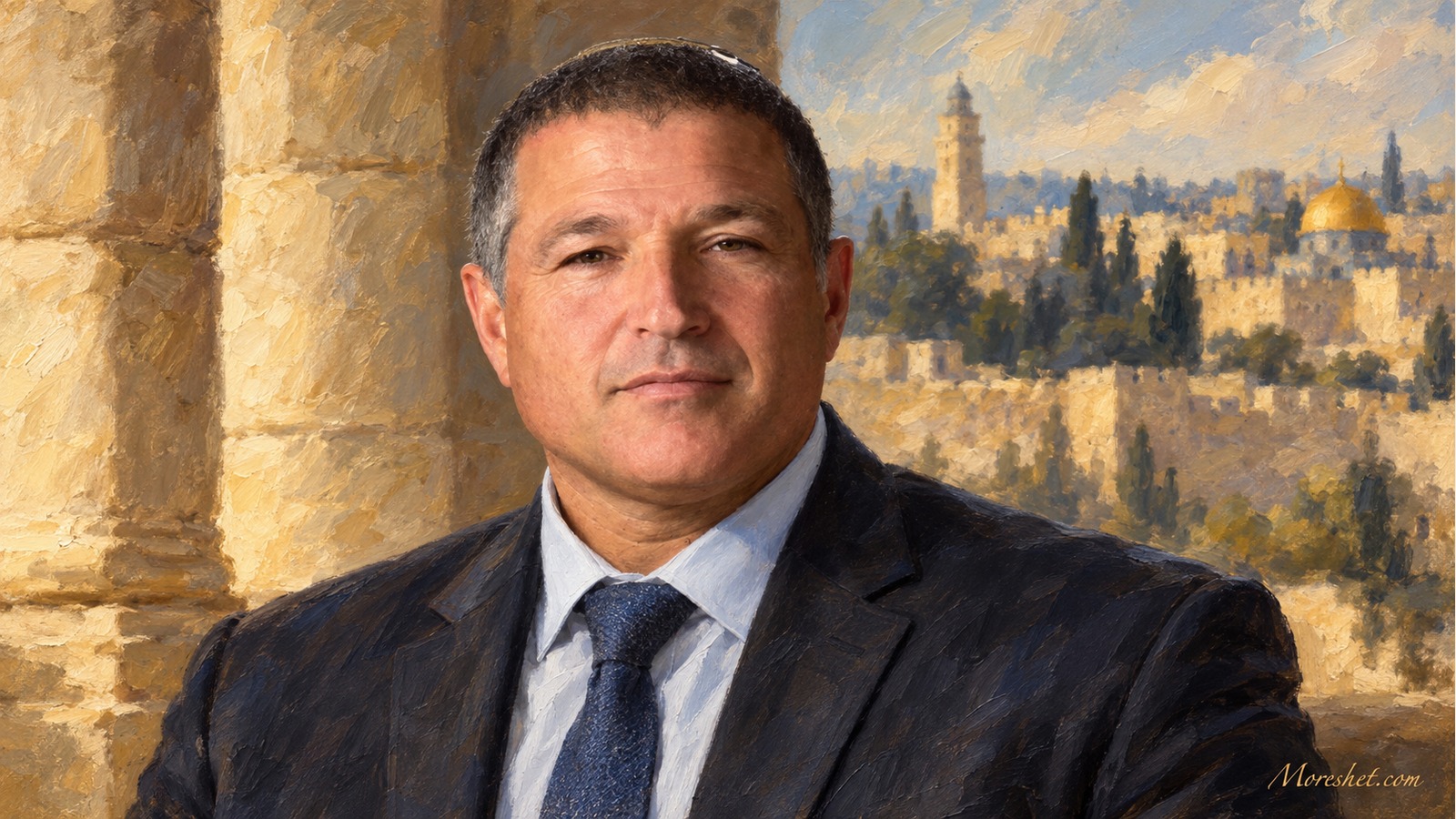
David Zini — AI-generated artistic portrait · Moreshet.com 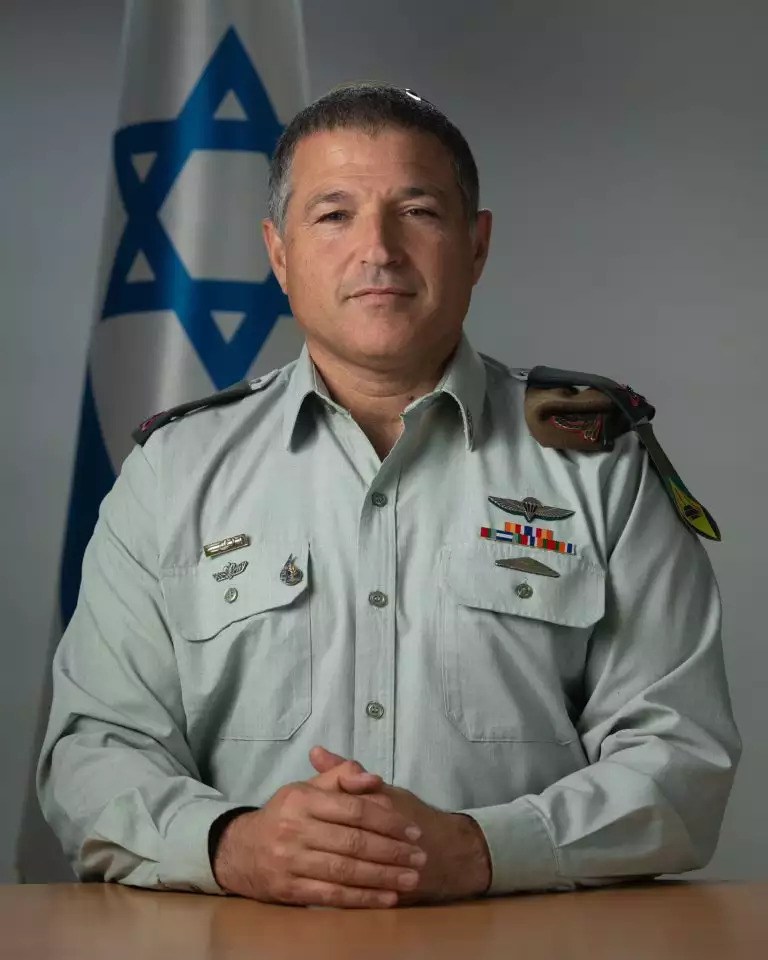
David Zini. Photograph by IDF Spokesperson's Unit photographer, via Wikimedia Commons (CC BY-SA 3.0).
Head of the Israel Security Agency, retired major general and field commander who led Israeli units, training systems and security institutions
David Zini is the 15th head of the Israel Security Agency, a retired major general in the Israel Defense Forces, and a commander whose public and security career combines combat service, field command, force-building, commander training and the leadership of a central Israeli security institution. Over more than three decades in the IDF, Zini moved from service as a soldier in Sayeret Matkal and the Golani Brigade to command of battalions, elite units, brigades, formations, training systems and the General Staff Corps. In 2025, after retiring from the IDF with the rank of major general, his appointment as head of the Shin Bet was approved, and he entered office on October 5, 2025.
The meaning of Zini’s work touches one of the central axes of Israeli life: the connection between the battlefield, military force-building and national responsibility for civilian security. He represents a distinctly Israeli path of long service, command under pressure, shaping military training, preparing forces for war and later assuming responsibility for a security service whose role is to protect human life, state institutions and Israel’s internal security.
Family background, education and worldview
David Zini was born in Jerusalem on January 9, 1974, and grew up in Ashdod. He comes from a large religious family, the son of Pnina and Rabbi Yosef Zini, who served as a rabbi in Ashdod and led a Zionist religious educational framework. Zini is the eldest of ten children, and his family and educational background are rooted in Torah learning, communal responsibility, national service and commitment to the State of Israel.
In his youth he studied in religious and Zionist educational institutions, including Morasha Talmud Torah, Hispin Yeshiva High School, Yeshiva Shavei Hebron and the Keshet Yehuda pre-military academy. This combination of religious study, Zionist education and military service shaped him as a commander who sees security service not only as a military profession, but as public mission. He later earned a bachelor’s degree in education and a master’s degree in national security and public administration through the National Defense College.
Early service: Sayeret Matkal and Golani
Zini enlisted in the IDF in 1992 and volunteered for Sayeret Matkal. After basic training with the Paratroopers Brigade, he completed the unit’s training course as a combat soldier and served in an operational company. He later completed the infantry officers course and joined the Golani Brigade, where he served as a platoon commander in the 12th Battalion and later as a company commander. During this period he led soldiers in combat in southern Lebanon, an arena that shaped a generation of Israeli commanders through daily confrontation with guerrilla warfare, explosive devices, ambushes and a prolonged security reality.
He later commanded a company in the Egoz Unit, a unit designed to confront guerrilla and terrorist challenges in complex terrain. During Operation Defensive Shield, he interrupted his studies and returned to the brigade until the operation ended. He later served as deputy commander of the 51st Battalion and as commander of an advanced training cycle at the Golani training base. During the Second Lebanon War, he served as commander of the Golani Brigade’s forward command post, a role requiring close connection between forward command, battlefield awareness and support for commanders in the field.
Command of the 51st Battalion and Egoz
In 2006 Zini was promoted to lieutenant colonel and appointed commander of Golani’s 51st Battalion. This placed him at the center of the brigade’s operational activity. According to the supplied material, during his command he confronted an internal disciplinary crisis after stopping harmful norms related to veteran and new-soldier hierarchies. This episode matters for understanding his command style: alongside combat and operational achievement, Zini emphasized unit culture, command boundaries, discipline and professionalism.
In 2007 and 2008, the battalion under his command operated in the Gaza Strip in dozens of missions. The activity included striking terrorist infrastructure, locating weapons and developing sustained operational readiness against an adaptive enemy. The battalion received a unit citation from the commander of Southern Command for its fighting. In 2008 Zini was appointed commander of the Egoz Unit and led it during Operation Cast Lead. Command of Egoz further deepened his experience in elite units, complex combat and operations against terrorist organizations.
Brigades, formations and force-building
In 2011 Zini was promoted to colonel and appointed commander of the Alexandroni Brigade and a track commander in the Company and Battalion Commanders Course. He later also served as commander of the Fire Training Center at the National Ground Training Center. These roles gradually moved him from direct command of combat units into broader responsibility for commander training, formation exercises and systemic capability-building.
During Operation Protective Edge, after Golani Brigade commander Ghassan Alian was wounded, Zini was temporarily appointed to replace him and led the brigade during the continuation of combat. This was a significant command moment: a commander required to enter an ongoing campaign quickly, stabilize a fighting formation and continue leading forces under heavy pressure. He later served as operations officer of Central Command.
In 2015 Zini was tasked with establishing the Oz Brigade, also known as the Commando Brigade, and became its first commander. Establishing such a brigade is not only a command appointment, but an act of force-building: connecting units, shaping an operational concept, creating a shared culture and preparing a framework capable of flexible action against different operational challenges. In this way Zini contributed to shaping one of the significant formations in the modern IDF.
Senior command, training and readiness for war
In 2018 Zini was promoted to brigadier general and appointed commander of the Idan Formation. At the same time, he served as commander of the Company and Battalion Commanders Course, one of the central programs for training combat commanders in the IDF. He later became commander of the National Ground Training Center, which prepares ground forces for war through exercises, scenarios, command-post training and the implementation of lessons learned.
On June 1, 2023, Zini was promoted to major general, and on July 5, 2023, he assumed the roles of commander of the Training and Doctrine Command and commander of the General Staff Corps. In this role he was responsible for a broad field of military readiness: force training, unit exercises, commander development, headquarters training and preparation of the IDF for wartime scenarios. For a reserve-heavy ground army such as the IDF, this field is a central foundation of national security.
Before the October 7, 2023 attack, Zini conducted, at the request of the Gaza Division commander, a classified review of IDF activity around the Gaza fence under various scenarios. The supplied material states that the document addressed localized infiltration scenarios and the thinking that had developed around the fence, but did not warn of a large-scale attack of the kind that occurred. This detail is important because it presents Zini as part of a professional effort to examine readiness, while also reminding readers of the limits of knowledge and systems before the severe event.
October 7 and the Swords of Iron War
Upon receiving reports of the October 7 attack, Zini traveled from his home in the Golan Heights to the southern combat area. According to the supplied material, there are differing accounts regarding the exact time of his arrival and the degree of his direct participation in fighting near Mefalsim, so it is most accurate to describe carefully that he reached the southern arena in the early phase and became part of the command and operational effort around the events. The whole period placed the IDF, the Shin Bet and Israeli society before a historic test of responsibility, learning and repair.
In his retirement speech from the IDF in 2025, Zini referred to the failure of October 7 as a broad failure and stressed that responsibility should not be avoided. This statement reflects an important part of command legacy: the recognition that security leadership is measured not only by successes, but also by the ability to learn from failure, accept responsibility and rebuild trust and readiness.
Integrating populations and building new frameworks
During the Swords of Iron War, Zini was also involved in an initiative to establish a Haredi brigade that would enable ultra-Orthodox integration into the IDF while preserving their way of life and values. The integration of Haredim into the military is one of the most sensitive issues in Israeli society, touching equality of service, religious identity, operational need and national cohesion.
Zini’s contribution in this context was practical: an attempt to build a framework that addresses social and value gaps through an organizational solution. Even though the public debate over Haredi enlistment is much broader than any one person, the effort to design an appropriate structure, training system and protection of a unique population’s values reflects the social dimension of Israeli security force-building.
Appointment as head of the Israel Security Agency
In 2025 Zini retired from the IDF after approximately 33 years of service. On September 30, 2025, the Government of Israel approved his appointment as head of the Israel Security Agency for a five-year term, and on October 5, 2025, he entered office. He thereby moved from a relatively visible military system into one of the most sensitive institutions in the state: a civilian security service responsible for counterterrorism, counterespionage, protection of state symbols, internal security and activity in spaces where secrecy, law, responsibility and state-mindedness are all required.
The appointment of a senior field commander to lead the Shin Bet highlights the connection between military experience and internal security, but also the differences between the systems. In the IDF, a commander leads fighting forces, trains formations and applies military power; in the Shin Bet, the head of the service must lead an intelligence-operational organization that works within the law, against terrorist and espionage threats, inside a democratic society in which security and civil rights must coexist. This is a significant transition, and it is central to understanding Zini’s public role.
Institutional and security meaning
The Shin Bet is one of Israel’s most important security institutions. It works in counterterrorism, protection of state officials, counterespionage and the defense of the state from within. The head of the Shin Bet must combine operational ability, legal responsibility, public sensitivity, intelligence understanding and state-mindedness. Zini’s role is therefore not merely a continuation of a military career, but entry into a sphere where national security is also tested through public and institutional trust.
In this sense, Zini’s path reflects the development of Israeli defense leadership: from commanders formed in the field, through training and force-building systems, into roles requiring broad national responsibility. He serves at a time when Israel is dealing with the consequences of October 7, prolonged war, terrorist threats, regional tension, internal challenges and difficult questions of trust between the public and security institutions.
Personal life
Zini is married to Naomi and is the father of eleven children. For years he lived in the communal moshav Keshet in the Golan Heights, and in 2025 he moved to Jerusalem. His personal life, large family and religious-Zionist background are part of the context in which his sense of mission was shaped. The connection among family, study, military service and public responsibility stands at the center of the way he is presented in Israeli public life.
Like many figures in the security establishment, much of Zini’s work cannot be fully public. Security limitations and secrecy often make it difficult to document achievements, decisions and operations completely. For that reason, a heritage profile should rely on the open and verified record: his command path, senior roles, transition to the Shin Bet and the public meaning of his service.
Why this legacy belongs in Moreshet
David Zini merits inclusion in Moreshet because his path reflects a central layer of Israeli security heritage: long service, combat command, force-building, commander training, responsibility after national failure, and transition into leadership of the Israel Security Agency. He represents a generation of Israeli commanders who were required to operate in southern Lebanon, during the Second Intifada, in Gaza, in the wars of 21st-century Israel and in the period after October 7.
Moreshet.com documents Zini because Israeli and Jewish heritage is not shaped only by political leaders, thinkers or entrepreneurs, but also by commanders and security officials who bear responsibility for protecting human life, state institutions and Israeli society. David Zini’s place in Moreshet rests on the way he connected battlefield experience, force training, security institution-building and the continuing responsibility to defend the State of Israel and its citizens.