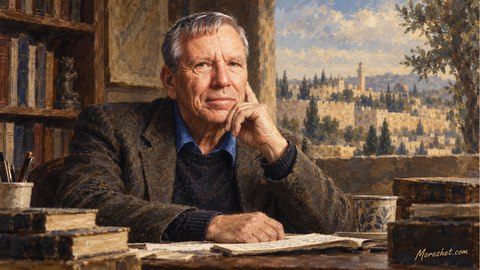
Dan Ben-Amotz
Writer, humorist and broadcaster whose work helped record spoken Hebrew and the storytelling culture of the Palmach generation
Dan Ben-Amotz (1924–1989) was an Israeli author, journalist, broadcaster and screenwriter closely associated with the country's early decades. He helped preserve Palmach humour and document spoken Hebrew, while his fiction explored memory, identity and the effort to begin a new life. His cultural record contains substantial influence as well as serious controversy arising from allegations published after his death.
Immigration and the image of the sabra
Born Moshe Tehilimzeigger in Równe, then in Poland and now in Ukraine, he was sent to Palestine by his parents in 1938 and attended Ben Shemen Youth Village. His parents were murdered in the Holocaust. He later joined the Palyam and participated in activities connected with clandestine Jewish immigration and the cultural life of the Palmach.
Although an immigrant himself, he came to be regarded as an embodiment of the native-born Israeli, or sabra. The tension between a European past and an adopted Israeli identity also became literary material. To Remember, To Forget and other writing consider the meaning of a changed name, family memory and the desire to belong. These themes connect his work with a wider Jewish experience of rebuilding life after displacement and loss.
Humour and the language of everyday life
With Haim Hefer, he published A Bag of Fibs in 1956, collecting and shaping stories associated with Palmach folklore. Exaggeration, timing and spoken language made the collection part of a shared cultural repertoire. On radio, including Three Men in a Boat, he brought humour and satire to a broad audience.
With Netiva Ben-Yehuda, he compiled The World Dictionary of Spoken Hebrew, whose first volume appeared in 1972. The project gave a permanent record to expressions from the street, the military and ordinary social life. It preserved the inventiveness of speakers and showed how a language changes through contact between people and communities.
Fiction, film and the context of remembrance
Ben-Amotz also wrote newspaper columns, stories and novels and worked in cinema. Siege, for which he wrote the screenplay and in which he appeared, examines a war widow's attempt to continue her life within a society carrying powerful expectations. Across different forms, he paid close attention to speech and to the distance between public image and private experience.
Amnon Dankner's 1992 biography made serious allegations about Ben-Amotz's conduct, including sexual abuse of underage girls. The claims caused a public scandal and dispute about the biography's reliability; they should not be represented as a criminal conviction. They remain part of the context in which his legacy is assessed. Documenting his influence on literature and language does not provide moral endorsement of the conduct alleged.
Why Dan Ben-Amotz belongs in Moreshet
Dan Ben-Amotz is included in Moreshet at Moreshet.com because of his influence on Israeli language, humour and cultural self-description. His books and collaborative projects preserve expressions, memories and ways of speaking that entered public life. Their significance can be recorded while maintaining a distinction between cultural importance and personal approval.
He is included despite widespread controversy surrounding his life and work. Inclusion records a significant influence on cultural experience without deciding that every aspect is positive. Conflicting assessments of influential figures are themselves part of the historical record. In this case, acknowledging the reach of the work must also retain the serious context in which the author's conduct has been questioned.