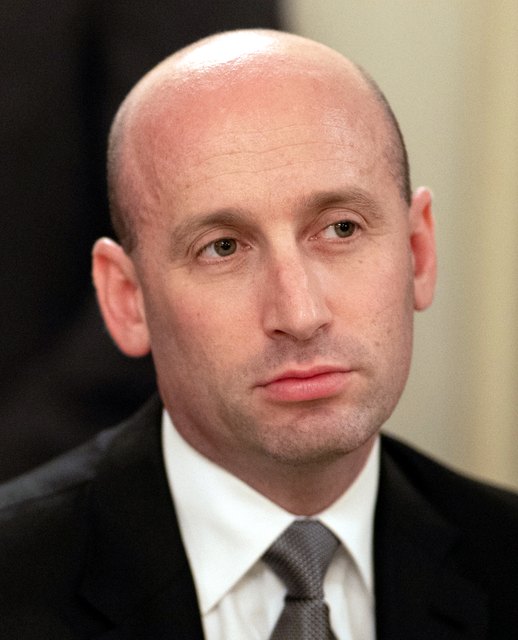
Yechiel Michael Leiter
Diplomat, political thinker and public-policy leader bridging Israel, the United States and the Hebrew intellectual tradition
Yechiel Michael Leiter is an American-born Israeli diplomat, political-philosophy scholar, ordained rabbi and public-policy practitioner. Since January 2025, he has served as Israel's ambassador to the United States. He entered diplomacy after decades of work in government, education, policy research, strategic consulting and public advocacy, bringing an unusual combination of firsthand familiarity with American society, a lifetime of public engagement in Israel and sustained study of the Hebrew Bible's place in Western political thought.
Leiter's career has repeatedly joined ideas to institutions. He immigrated to Israel from a religious Zionist home, served as a combat medic, led community organizations, held senior government staff positions, participated in the oversight of national infrastructure and developed a scholarly argument about biblical influences on John Locke. Across these fields, he has addressed questions of Israeli identity, Jewish political responsibility and Israel's relationship with the wider world.
From Pennsylvania to Israel
Leiter was born in Scranton, Pennsylvania, on October 1, 1959. Raised in a religious Zionist family, he made aliyah in 1978 at the age of eighteen. He studied in a hesder yeshiva in Kiryat Arba, served in the Israel Defense Forces as a combat medic in the Artillery Corps and took part in the 1982 Lebanon War. He received rabbinic ordination in 1984.
His movement between the United States and Israel eventually became a defining professional asset. Leiter understands the language and institutions of both countries as well as the concerns of American Jewish communities and Israelis living with persistent security challenges. Over the years, this background helped him address audiences in Israel, North America and other Jewish communities around the world.
Political philosophy and the Hebrew Bible
Leiter pursued studies in political science, law and international relations and completed a doctorate in political philosophy at the University of Haifa. His research examined the political Hebraism of John Locke and the Hebrew Bible's influence on Locke's understanding of government, consent and legitimate authority. He developed this work in the 2018 Cambridge University Press volume John Locke's Political Philosophy and the Hebrew Bible.
The significance of this scholarship lies in its placement of Hebrew sources within the larger history of political ideas. Leiter explored how biblical interpretation and the covenantal model contributed to Locke's thought. Because Locke became a foundational figure in the liberal political tradition, examining these influences also illuminates a wider Jewish contribution to debates over limited government, rights, political obligation and mutual responsibility.
Alongside his research, Leiter wrote extensively and lectured on Zionism, Israeli policy, foreign affairs and political thought. He taught political philosophy at Ono Academic College and worked with policy and research institutions that included the Jerusalem Center for Public Affairs, the Shiloh Forum and the Kohelet Policy Forum. His public writing sought to connect academic arguments with the decisions faced by governments and citizens.
Community leadership and Zionist activity
During his early decades in Israel, Leiter became active in the Jewish community of Hebron. He helped establish the Hebron Fund in 1986 and chaired the Committee of the Jewish Community of Hebron from 1989 to 1992. His work included community organization, international outreach and the cultivation of support among Jewish communities abroad.
In 1992, he established the foreign affairs desk of the Yesha Council and directed it for several years. He later participated in founding One Israel Fund, which supports Israeli communities, and in 2000 became one of the founders of One Jerusalem, an organization formed to advocate for a unified Jerusalem during the diplomatic negotiations of that period. These initiatives expressed his Zionist outlook while building practical connections between local Israeli communities and Jewish supporters overseas.
Government and public service
Leiter held a succession of policy and staff positions in Israeli public life. He worked alongside Ariel Sharon and advised Limor Livnat. After Livnat became minister of education, Leiter served as her chief of staff. He subsequently headed the Ministry of Education's foreign relations division and became a deputy director general of the ministry. His responsibilities brought together educational policy, international engagement and planning for institutional reform.
From 2004 to 2005, Leiter was chief of staff to Finance Minister Benjamin Netanyahu during a consequential period of Israeli economic reform. The post placed him at the junction of political leadership, professional civil service and policy implementation. Together, his work in the education and finance ministries gave him practical experience of government beyond his activity as a writer and political thinker.
Beginning in December 2011, Leiter served on the board of the Israel Ports Company and later held board leadership responsibilities, including service as acting chairman and chair of its finance committee. His work involved the development and financing of port infrastructure during a period in which Israel was advancing new deep-water ports in Haifa and Ashdod. He also sat on the board of Israel Experience, a Jewish Agency subsidiary that runs educational programs for young Jews, and served on the public council dedicated to preserving the memory of Theodor Herzl.
Policy research and international consulting
Leiter joined the Jerusalem Center for Public Affairs as a senior policy analyst in 2006. He established a public-policy department and helped expand the center's Hebrew-language activity. Between 2015 and 2023, he directed work at the center and participated in diplomatic initiatives, including a Red Sea dialogue developed with Ethiopia's Ministry of Foreign Affairs to bring together participants from East Africa and the Gulf. He also led or participated in projects responding to campaigns to boycott and delegitimize Israel.
Through Versta, the private consulting firm he founded in 2015, Leiter advised clients outside Israel on political strategy and policy implementation. His international work included advising and managing projects for Paraguayan president Horacio Cartes and providing strategic counsel in a successful Liberian presidential campaign. These assignments expanded his experience beyond Israeli politics and required him to adapt policy planning and communications to different governments and political cultures.
Writing on Zionism, policy and society
Leiter's books reflect two principal strands of his career: public argument about Zionism and Israeli policy, and academic research into the origins of political thought. Several of his earlier volumes were ideological interventions in the political debates of their time, while his study of Locke belongs to the field of intellectual history.
- A Peace to Resist (1993) and Crisis in Israel (1994) addressed the Oslo process and proposed alternatives from Leiter's perspective.
- Israel at the Cross-Roads (1999) presented his views on Israel, Judea and Samaria and the diplomatic process.
- Between Despair and Hope, published in the mid-2000s, examined Israeli public attitudes toward the education system and educational reform.
- Political Views from Above (2008) collected Zionist commentary on contemporary affairs.
- John Locke's Political Philosophy and the Hebrew Bible (2018) developed his research into the biblical background of Locke's political theory.
He has also published numerous essays and columns in Israeli media and policy journals. This body of writing connects abstract questions of political authority and national purpose with practical issues involving education, economics, security and foreign relations.
Israel's ambassador to the United States
In January 2025, Leiter became Israel's twentieth ambassador to the United States, succeeding Michael Herzog. The Washington post is one of Israel's most consequential diplomatic assignments. The ambassador engages with the administration and Congress, presents Israel's positions to the American public and maintains relationships with Jewish communities, civil-society organizations and other constituencies across the country.
Leiter's appointment drew upon his long familiarity with both societies and his background in government, scholarship, communications and international consulting. He entered the position at a particularly sensitive moment following the Hamas-led attack of October 7, 2023, and amid the war that followed. Israel's representatives in the United States consequently faced simultaneous demands involving military and diplomatic policy, rising antisemitism and the need to sustain a substantive relationship with American Jewry.
Personal loss and public mission
Leiter's public service carries a profound personal dimension. His son, Maj. Moshe Yedidya Leiter, a reserve combat officer and medical student, was killed in fighting in the northern Gaza Strip in 2023. Moshe Yedidya was one of Leiter's eight children.
The loss placed Leiter among the Israeli families who have borne the war's heaviest cost. When he accepted the ambassadorship, he brought not only professional knowledge and defined political views but also an intimate understanding of military service, sacrifice and national responsibility. That experience forms an inseparable part of his biography and lends personal weight to his representation of Israel's security concerns and the lives affected by them.
Why this legacy belongs in Moreshet
Yechiel Michael Leiter merits inclusion in Moreshet because his life brings together aliyah, Zionist institution-building, military and public service, scholarship on the Hebrew foundations of political thought and diplomatic representation of Israel. His work demonstrates that Jewish texts are not only inherited records of the past; they also remain active participants in modern arguments about liberty, covenant, government and civic responsibility.
His impact on Jewish and Israeli life can also be traced through the institutions he served: Israeli communities, the education and finance ministries, the Israel Ports Company, Jewish Agency educational programs, policy institutes and Israel's embassy in Washington. In each sphere, his work has involved building connections among ideas, institutions and people—most notably between the State of Israel and American Jewry.
Moreshet records Leiter's story on Moreshet.com because it illuminates a distinctly contemporary Jewish and Israeli journey: an American teenager who made aliyah, built his life in Israel, studied the Bible's contribution to Western political thought, participated in the machinery of government and ultimately returned to his country of birth as Israel's diplomatic representative. It is a legacy of ideas, public responsibility and international engagement, shaped as well by the grave human cost of national service.