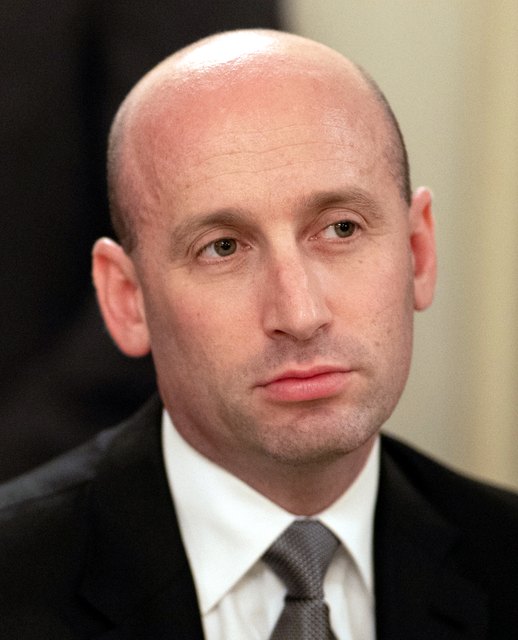
Yaakov Hagoel
A Zionist leader connecting historic national institutions with Jewish communities and contemporary needs
Yaakov Hagoel is an Israeli Zionist leader and chairman of the World Zionist Organization whose career has focused on the relationship between Israel and Jewish communities around the world. Across several decades of institutional service, he has worked in Zionist education, youth leadership, the response to antisemitism, the preservation of Zionist history, aliyah and emergency assistance to Jewish and Israeli families.
Hagoel was first elected chairman of the World Zionist Organization in October 2020, following five years as its vice chairman and acting chairman, and was elected to another term in October 2025. Earlier, he established and led the WZO department concerned with activities in Israel and countering antisemitism. From July 2021 until August 2022, he also served as acting chairman of the Jewish Agency for Israel during a period shaped by the COVID-19 pandemic and the displacement of Jews following the outbreak of war in Ukraine.
From youth education to national leadership
Hagoel was born in Tel Aviv on February 19, 1971, and grew up in Arad. His father's family is of Greek and Turkish origin, while his mother's family is of Polish origin—a background that reflects several of the communities brought together in Israeli society. He joined the Betar youth movement as a child and progressed from participant and counselor to the management of its training and leadership courses. Betar became his school of public service and eventually led him to serve as executive director of World Betar.
Before entering the Israel Defense Forces, Hagoel undertook a year of volunteer service in Ofakim. He served in a Nahal unit during his regular military service and was later assigned to the reserves in the IDF's Gaza Division. Alongside his public career, he earned an LL.B. from Ono Academic College.
Hagoel went on to chair the Council of World Zionist Youth Movements and held positions in the Zionist Executive and its committees. He also chaired World Likud from 2015 to 2020. His path from a youth movement to the leadership of international Jewish bodies illustrates a central theme in his work: creating continuity between the education of young people, the development of future leaders and the practical responsibilities of the Jewish national institutions.
Zionist education and the preservation of historical memory
In 2010, Hagoel was chosen to lead the World Zionist Organization's department for activities in Israel and countering antisemitism. Through conferences, lectures and public programs, the department sought to place contemporary antisemitism on the civic agenda. He also established a communications center devoted to the subject and initiated a family quiz on Zionism and Jewish heritage, turning the study of Zionist history into an intergenerational activity rather than leaving it only in the classroom.
His portfolio included bodies that preserve important elements of Zionist cultural and historical memory, among them the Zionist Council in Israel, the Bialik Institute, the Central Zionist Archives and the Steven Spielberg Jewish Film Archive. These institutions safeguard documents, books, testimony and moving images through which later generations can study the growth of the Zionist movement and the development of Israeli society.
In 2017, Hagoel promoted an amendment to Israel's Theodor Herzl law providing for state participation in the operation and maintenance of the Herzl Museum and Herzl Center in Jerusalem. The measure helped establish a durable public foundation for teaching Herzl's life, ideas and political work. In 2022, as WZO chairman, Hagoel oversaw the commemoration in Basel of the 125th anniversary of the First Zionist Congress—a symbolic return to the city in which political Zionism acquired an organized international framework.
Countering antisemitism and representing Diaspora concerns
A substantial part of Hagoel's career has been devoted to bringing the experience of Jewish communities into Israeli and Zionist institutional discussions. He has worked with organizations including the American Zionist Movement and the Zionist Federation of Great Britain, spoken in numerous countries and met political and communal leaders to address antisemitism, Jewish security and attitudes toward Israel.
After eleven worshippers were murdered at Pittsburgh's Tree of Life synagogue in 2018, Hagoel co-chaired a gathering in the United States concerned with the Jewish and Zionist response to hate crime. In August 2020, he joined Knesset member David Bitan in a meeting with representatives of Facebook, Twitter and YouTube intended to advance a coordinated response to the growth of antisemitic material on social media. The initiative recognized that hatred of Jews is spread not only through traditional political and street movements, but also through digital systems capable of amplifying incitement at global speed and scale.
Hagoel also promoted public recognition for Jews murdered outside Israel because they were Jewish. The initiative sought to include their memory within Israel's commemorative consciousness and to affirm that Jewish mutual responsibility is not limited by citizenship. Such recognition connects Israeli remembrance with the experiences of Diaspora communities and gives victims of antisemitic violence a place within a shared national memory.
The Jewish Agency during pandemic and war
In July 2021, after Isaac Herzog left the chairmanship of the Jewish Agency to become president of Israel, Hagoel was selected to serve as the Agency's acting chairman. He remained in the position until Doron Almog took office in August 2022.
His tenure coincided with two crises requiring international action: the continuing disruption caused by COVID-19 and the outbreak of the Russia-Ukraine war. The Jewish Agency had to maintain contact with communities under travel restrictions while helping Jews escape areas of conflict and supporting aliyah. Hagoel's interim leadership brought the resources of a longstanding Jewish institution to bear on the immediate needs of individuals and families facing upheaval.
Zionist leadership after October 7
Following the Hamas-led attack of October 7, 2023, and the ensuing war, the World Zionist Organization under Hagoel mobilized Jewish communities and organizations in support of Israel. Initiatives attributed to this period included arranging housing assistance for Israelis displaced from their homes, supporting returning hostages and their families, undertaking projects for IDF soldiers and responding to the sharp worldwide rise in antisemitism.
Hagoel convened the Jewish People Challenges Conference in Jerusalem, bringing together approximately 500 Jewish leaders from 38 countries. The gathering created a forum for discussing the Jewish world's response to the war, the resilience and security of communities and the future of their relationship with Israel. Its significance lay not only in its scale, but in bringing diverse communities into the same room to coordinate during a period of danger and uncertainty.
A broad network of public responsibility
Alongside his principal positions, Hagoel has served in bodies concerned with education, remembrance, communal development and planning. His roles have included membership in the Jewish Agency's governing institutions, Keren Hayesod–United Israel Appeal, the Yad Vashem Council and councils dedicated to the memory of Theodor Herzl and Ze'ev Jabotinsky. He has also participated in Ariel University bodies and Israel's National Planning and Building Council.
This range of responsibilities reflects the breadth of the Zionist institutional system, which deals simultaneously with aliyah, education, Holocaust remembrance, Diaspora relations, leadership development and the building of Israeli society. Hagoel's work has centered on connecting those fields and adapting them to changing needs—from maintaining archives and museums to responding when a Jewish community suffers a hate crime or an Israeli family is forced from its home.
Why this legacy belongs in Moreshet
Yaakov Hagoel merits inclusion in Moreshet because his career demonstrates how institutions founded before the State of Israel continue to affect Jewish life in practical ways. He has helped advance intergenerational Zionist education, strengthen public support for institutions preserving Herzl's legacy and Zionist history, place antisemitism on both the public and digital agenda, and connect Jewish communities with Israel in ordinary times and emergencies.
His profile on Moreshet.com records more than a succession of offices. It presents a model of institutional leadership that moves from youth education to responsibility for international organizations and uses historic structures to meet contemporary needs. From assistance to Jews displaced by the war in Ukraine and support for evacuated Israelis after October 7 to the preservation of Zionist archives and efforts against online hatred, Hagoel's work touches both the transmission of Jewish memory and the capacity of Jewish communities to act together across borders.