Stephen N. Miller
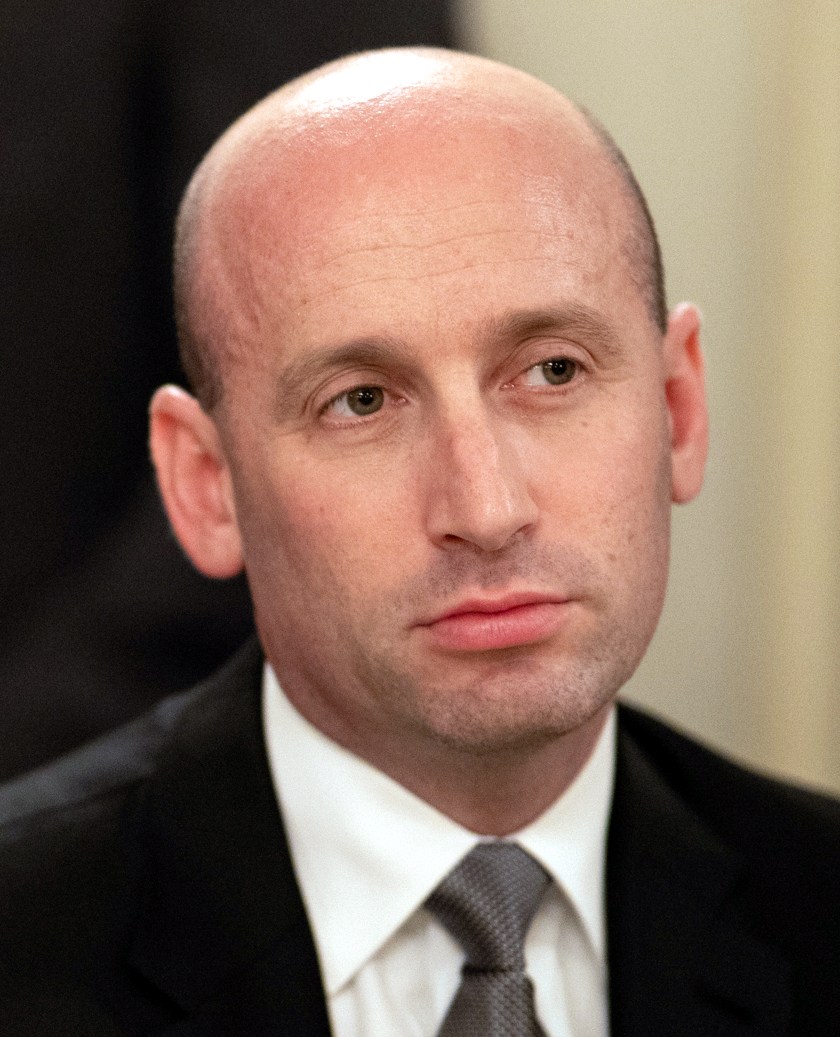
Stephen Miller. Photograph by The White House, via Wikimedia Commons (Public domain).
Political adviser, presidential speechwriter and central architect of Donald Trump’s immigration agenda
Stephen N. Miller is a Jewish American political adviser, presidential speechwriter and senior White House official who has played a central role in shaping immigration policy and the use of executive authority under Donald Trump. During Trump’s first administration, from 2017 to 2021, Miller served as senior adviser to the president and White House director of speechwriting. At the beginning of the second administration in January 2025, he became White House deputy chief of staff for policy and homeland security adviser.
Miller’s influence has not come from elected office or an independent electoral constituency. It rests on his ability to convert a political worldview into policy proposals, legal directives and presidential language. Across congressional offices, national campaigns, conservative media and the executive branch, he built a career at the intersection of message and implementation. That work made him one of the figures most closely identified with Trump’s approach to immigration and with the terms in which that approach has been presented to the American public.
Jewish roots and an early political identity
Miller was born on August 23, 1985, in Santa Monica, California, the son of Miriam, a social worker, and Michael Miller, a lawyer who also worked in the family’s real-estate business. He is of Ashkenazi Jewish descent, with family roots in Eastern Europe and a history shaped by escape from pogroms and persecution. He attended Hebrew school at Beth Shir Shalom and was confirmed at a Reform synagogue in Santa Monica. After university, he also took part in a Birthright Israel trip.
His interest in political argument, talk radio and the power of public messaging emerged in high school. He appeared repeatedly on conservative broadcaster Larry Elder’s radio program, invited writer and activist David Horowitz to speak at his school, and promoted initiatives concerning patriotism and the school’s political culture. These experiences gave him an early education in framing disputes, attracting media attention and pressing institutions to respond.
Duke University and entry into national politics
Miller entered Duke University in 2003 and graduated in 2007 with a bachelor’s degree in political science. He wrote a regular column for the student newspaper, The Chronicle, founded a campus chapter of Students for Academic Freedom and held leadership roles in conservative organizations. During the Duke lacrosse case, he publicly defended three players accused of rape. The charges were later dismissed, and North Carolina’s attorney general declared the players innocent. Miller’s national television appearances during the case strengthened his profile as a young advocate able to sustain a highly visible media campaign.
After graduation, he moved to Washington and worked as press secretary for Representative Michele Bachmann and later for Representative John Shadegg. In 2009 he joined the staff of Alabama senator Jeff Sessions, rising from press secretary to communications director. There he specialized in immigration policy, legislative messaging and the construction of political coalitions against proposed reforms.
Shaping the congressional immigration debate
On Sessions’s staff, Miller played an important part in the campaign against the 2013 comprehensive immigration bill commonly associated with the bipartisan “Gang of Eight.” The measure passed the Senate but was never brought to a vote in the House of Representatives. Miller assembled research and talking points for House staff and lawmakers, framing the proposal as harmful to American workers and as an expansion of immigration beyond what the country should accept.
The campaign demonstrated the method that would define much of his later career: detailed policy material joined to disciplined language and coordinated political pressure. Miller also assisted Dave Brat’s 2014 primary campaign against House majority leader Eric Cantor. In January 2015, Miller and Sessions prepared an immigration handbook for the new Republican congressional majority, offering an alternative to calls for the party to moderate its position. Their work helped place immigration levels, wages and national sovereignty at the center of the Republican debate before the 2016 election.
The Trump campaign and presidential speechwriting
Miller formally joined Donald Trump’s presidential campaign in January 2016 as a senior policy adviser. He drafted speeches, helped develop immigration proposals and frequently addressed campaign rallies before Trump appeared. He worked on Trump’s acceptance speech at the Republican National Convention, assisted with debate preparation against Hillary Clinton and helped frame immigration as a question of security, employment and national identity. By August 2016, he was serving as the campaign’s national policy director and leading an economic policy team.
After Trump won the election, Miller became national policy director for the transition and helped prepare the agenda for the administration’s first hundred days. Trump assigned him a central role in writing the inaugural address delivered on January 20, 2017. In the White House, Miller supervised major presidential speeches, including addresses to Congress and State of the Union speeches. His contribution went beyond composition: he helped decide which themes would dominate, how they would connect to policy and how the administration would present them to millions of people.
Immigration policy in the first Trump administration
As a senior adviser, Miller became one of the principal architects of the first Trump administration’s immigration program. He was involved in the executive order restricting entry from several Muslim-majority countries; after legal challenges and revisions, the United States Supreme Court upheld a version of the restrictions in 2018. He pressed for lower refugee ceilings, the termination of Deferred Action for Childhood Arrivals, stricter asylum standards and expanded enforcement at the southern border.
Miller was also a leading advocate of the “zero tolerance” approach that resulted in children being separated from their families at the border. After a broad public outcry, Trump signed an executive order in June 2018 intended to end systematic separation. Other measures Miller led or promoted included the public-charge rule, which gave weight to certain uses of public benefits in immigration decisions; restrictions adopted during the COVID-19 pandemic; and repeated efforts to reduce refugee admissions.
These policies had direct consequences for asylum seekers, refugees, immigrants and families in the United States and abroad. Miller also affected the machinery through which policy was made. He coordinated with the Department of Homeland Security, the State Department, the Justice Department and immigration agencies, while advocating personnel and procedural changes intended to align those institutions with the president’s agenda.
America First Legal and an institutional base outside government
After Trump’s first term ended, Miller founded America First Legal in 2021. The conservative legal advocacy organization uses litigation, administrative action and public campaigns to advance its program. Establishing it enabled Miller to move his agenda from the White House into the legal and institutional arena while maintaining a network of lawyers and policy specialists.
Between the two Trump administrations, Miller continued advising Republican political figures and helping plan for a possible return to power. He participated in efforts to identify personnel and develop proposals designed to let the executive branch act more rapidly, especially in immigration, enforcement and control of federal agencies. This work showed that his influence extended beyond one office or election cycle.
Return to the White House in 2025
When Trump returned to office in January 2025, Miller was appointed White House deputy chief of staff for policy and homeland security adviser. The posts expanded his coordinating authority beyond speechwriting and issue-specific advice, placing him at the center of work involving the White House, the Department of Justice, the Department of Homeland Security and other federal bodies.
In the second administration, he participated in preparing executive orders and advancing measures intended to increase arrests and deportations, narrow avenues of entry and use existing statutory powers more broadly and quickly. His place at the junction of rhetoric, law and administration explains much of his durability. He does not merely defend policy in public; he helps translate political objectives into directives and government action.
Jewish identity, Israel and public significance
Miller descends from a Jewish immigrant family whose history includes flight from persecution in Europe. That background sits alongside a career devoted largely to restricting immigration and expanding enforcement powers. The contrast has made him the subject of intense discussion in Jewish communities about historical memory, national security, sovereignty and obligations toward refugees and migrants. There is no single Jewish assessment of his work, and responses to him reflect deep divisions within contemporary American Jewish life.
On foreign affairs, Miller has expressed support for Israel and described the Abraham Accords as a historic achievement. His chief significance to the American Jewish story, however, lies in the unusual degree of influence a Jewish American political aide has exercised over state power and policies affecting millions of people. His career is therefore part of the history of Jewish participation in American government, even as the meaning and consequences of that participation remain sharply disputed.
In 2020, Miller married Katie Waldman, who served as press secretary to Vice President Mike Pence and as a spokeswoman at the Department of Homeland Security. They have four children.
Editorial note on inclusion
Stephen Miller is included on the site even though this person and their public record are controversial among broad sections of the public. Inclusion does not determine whether the influence is positive or negative; it reflects the significant place this figure holds in shaping the lived experience, culture and way of life of the public. Naturally, some regard this activity as positive and even heroic, while others see it as contrary to their worldview. The very existence of opposing assessments is part of the historical record that justifies including this significant and influential figure in the heritage of the Jewish people.
Why this legacy belongs in Moreshet
Stephen N. Miller merits documentation because few unelected advisers have had a comparable effect on a president’s language, the White House agenda and the execution of American immigration policy. His congressional work, role in the 2016 campaign, service in the first administration, creation of America First Legal and return to senior office in 2025 form a continuous institutional story: ideas and arguments became campaign messages, executive orders, agency procedures and decisions that affected families, refugees and migrants.
Moreshet and Moreshet.com include his story not as an endorsement, but as a record of consequential Jewish American participation in government and in one of the defining policy debates of the 21st century. His family’s flight from persecution, his Jewish upbringing, his support for Israel and his work on immigration connect his biography to enduring questions in Jewish memory and public life: how state power should be used, how borders should be balanced against human responsibility, and how members of a historically vulnerable minority shape the wider societies in which they attain authority. The scale of Miller’s influence—and the profound disagreement it has produced—makes his career an important part of the historical record of American Jewry and contemporary United States politics.