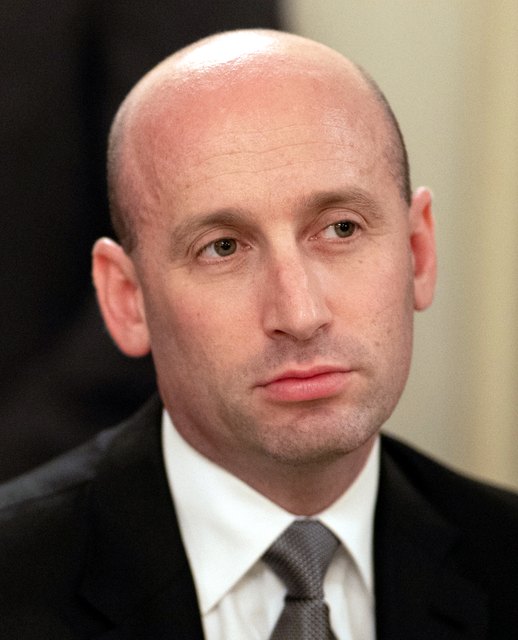
Yair Lapid
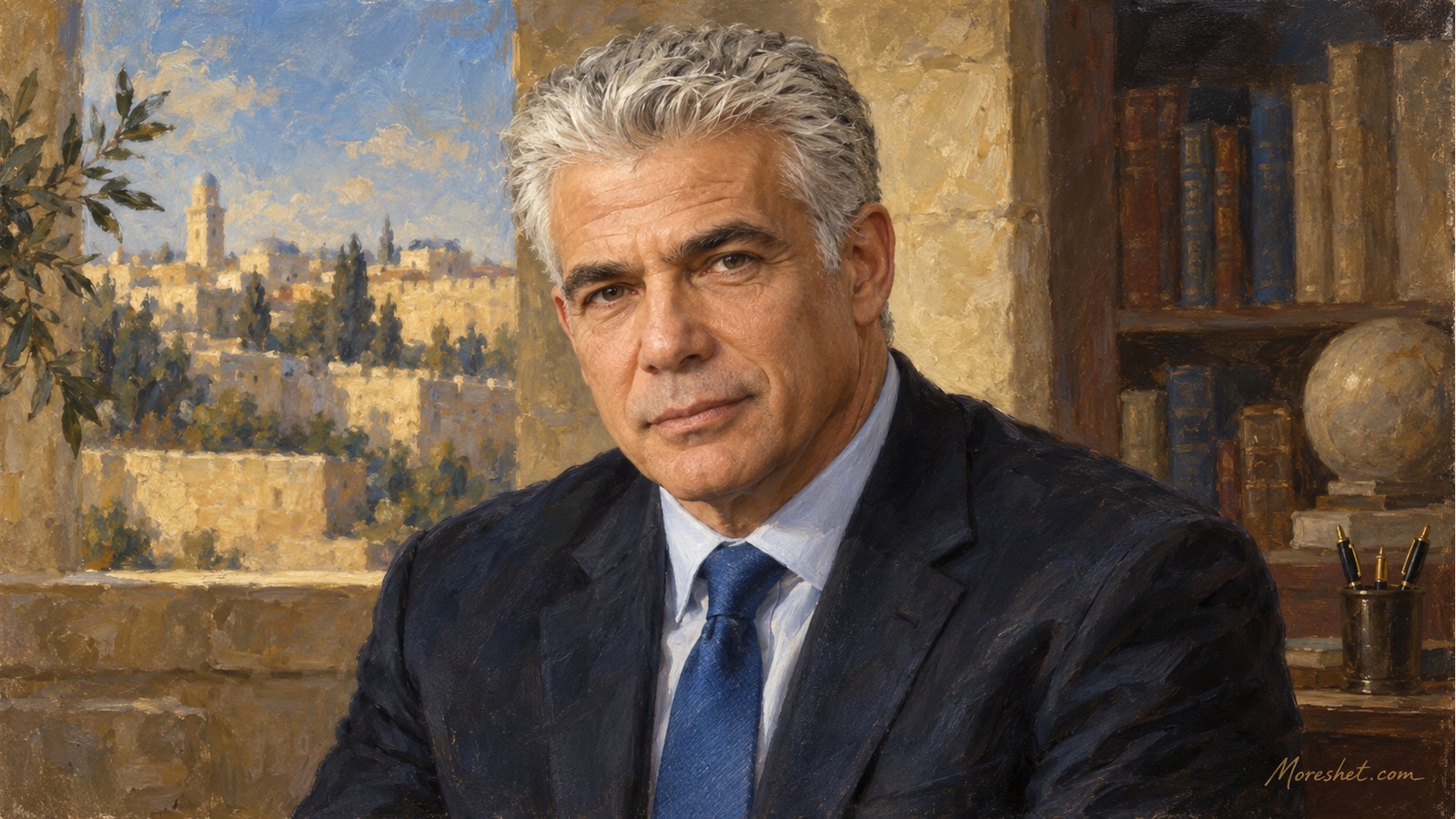
Yair Lapid — AI-generated artistic portrait · Moreshet.com
Former Prime Minister of Israel, Leader of the Opposition, founder of Yesh Atid, journalist and author who turned public communication into centrist politics and diplomacy
Yair Lapid is an Israeli politician, former Prime Minister of Israel, Leader of the Opposition, founder and chairman of Yesh Atid, journalist, author and media figure who turned a long public presence into a durable centrist political force. Before entering politics, he was one of Israel’s best-known faces in television, journalism, literature and popular culture; after entering politics in 2012, he founded a new party, led it to a major electoral achievement in its first election, and served as finance minister, foreign minister, alternate prime minister and Prime Minister of Israel in 2022.
Lapid’s distinct place in Israeli heritage lies in the direct passage from mass communication, public writing and popular culture into state leadership. He did not come to politics through a veteran party machine or a senior military career, but through an ability to speak to the Israeli public in a clear, dramatic and familiar language. Under his leadership, Yesh Atid became one of Israel’s central parties, and Lapid came to represent the rise of the modern Israeli political center: liberal on religion and state, focused on the middle class, pro-Western, Zionist, security-minded and committed to clean government.
Family roots, Tel Aviv and European memory
Lapid was born in Tel Aviv on November 5, 1963. His father, Yosef Tommy Lapid, was a journalist, public figure, justice minister and Holocaust survivor born in Novi Sad, then in Yugoslavia; his mother, Shulamit Lapid, is an Israeli novelist and playwright. On his father’s side, Lapid carried the memory of Hungarian and Yugoslav Jewry and the trauma of the Holocaust: his grandfather Bela Lampel was murdered in Mauthausen, and other relatives were murdered in Auschwitz. On his mother’s side, he is connected to a local Hebrew journalistic tradition through his grandfather David Giladi, among the founders of Maariv.
His childhood passed in Tel Aviv and London, and in Israel he grew up in part in the Journalists’ Residence in Yad Eliyahu. That environment shaped him: a home where journalism, literature, public argument, Jewish memory and everyday Israeli life were part of the air. He attended the Herzliya Hebrew Gymnasium but did not complete a matriculation certificate, dealt with learning disabilities, and later built a wide career precisely in writing, performance, editing and public language.
He performed most of his military service as a correspondent for the IDF weekly Bamahane. After his service he entered civilian journalism. This too is important for understanding his path: Lapid learned Israel through stories, headlines, interviews, columns, television and street language, not only through formal political institutions.
Journalism, television and popular culture
During the 1980s and 1990s, Lapid built a broad media career. He worked at Maariv, edited the Tel Aviv local newspaper Yedioth Tel Aviv, wrote a weekly column in Maariv and later in Yedioth Ahronoth, and became one of the columnists most identified with urban, secular, centrist Israel at the turn of the century. His column offered a mixture of personal story, public morality, family emotion, social criticism and accessible humor.
On television he hosted interview and talk programs, and later presented Ulpan Shishi, one of the central platforms of Israeli television news. His television presence gave him a deep understanding of public attention: how a message is built, how trust is created, how a personal story becomes a national question, and how politics is mediated through language, gaze and rhythm.
At the same time, he wrote books, scripts, plays and songs. His books include thrillers, children’s books, novels, collections of columns, the biography Memories After My Death about his father Tommy Lapid, A Journey to Our Future and War and Dream. He also wrote lyrics set to music and performed by prominent Israeli artists, including Rami Kleinstein and Rita. His cultural contribution is not separate from his political path: it created the public language through which he later addressed voters.
The middle class and the founding of Yesh Atid
In January 2012, Lapid announced that he was leaving media and entering politics. In April of that year he registered Yesh Atid, and in May he presented its main platform. The party was presented as a centrist movement representing the working middle class, changing national priorities, strengthening education, improving governance, fighting corruption, promoting equal civic burden and linking Judaism, democracy and civic responsibility.
The question Where is the money?, drawn from his journalistic and public language, became a political frame: criticism of sectoral budgets, bloated government mechanisms, inequality in civic obligations and the burden felt by working families. In the 2013 election, Yesh Atid won 19 seats and became the second-largest party in the Knesset. It was one of the most impressive achievements of a new party in modern Israeli politics.
Yesh Atid’s success showed that Lapid had translated media trust into political organization, candidates, field work, message discipline and party structure. Since 2013, Yesh Atid has remained a permanent part of the political system, even as its strength has risen and fallen. In that sense, Lapid moved from popular media personality to the founder of a real political institution.
Finance minister and the attempt to change priorities
After the 2013 election, Yesh Atid joined Benjamin Netanyahu’s government and Lapid was appointed finance minister. He entered office during a period of high budget deficit and the need for fiscal adjustment. The 2013–2014 budget advanced tax increases, spending cuts, changes in state funding and reductions in child allowances. These measures were politically difficult and hurt his popularity, but they also gave him his first test of governmental responsibility: the move from a slogan about priorities to managing the Finance Ministry.
During his term, the Government Companies Authority launched the directors’ pool for state-owned companies, a move intended to strengthen professionalism and corporate governance in the public sector. He also led a campaign to integrate Haredim into military or civilian service and the workforce, including cuts in yeshiva budgets, changes in support rules and legislation on equality in service. For him, service and work were not only economic questions but questions about the structure of Israeli citizenship.
His zero-VAT initiative for eligible first-home buyers was one of his most prominent housing proposals, but it drew wide professional criticism and was not completed before the government fell. In December 2014, Lapid was dismissed from the government together with Tzipi Livni, and the coalition broke apart. His Finance Ministry period remains a complex chapter: it exposed the gap between high public hope and the limits of budgets, coalitions and administration.
Opposition, Blue and White and the center against Netanyahu
In the 2015 election, Yesh Atid fell to 11 seats and Lapid moved into opposition. During this period he positioned himself as a central challenger to Netanyahu, stressing the fight against corruption, pro-Israel activity abroad, work in the Foreign Affairs and Defense Committee, and a diplomatic-security vision seeking separation from the Palestinians while preserving major settlement blocs and Israel’s security.
Ahead of the 2019 elections, Yesh Atid merged with Benny Gantz’s Israel Resilience and Moshe Ya’alon’s Telem to form the Blue and White list, designed to offer a broad governing alternative to Netanyahu. Lapid agreed to give up immediate primacy in favor of partnership with Gantz under a rotation agreement. Although the alliance later split after Gantz entered a unity government with Netanyahu in 2020, the period demonstrated Lapid’s willingness to work within a broad framework to advance a change of government.
In May 2020, Lapid became Leader of the Opposition. He frequently criticized the Netanyahu-Gantz government, the handling of the COVID-19 crisis and the constitutional amendments that enabled a large rotation government. The position made him one of the central voices of the anti-Netanyahu camp, but also reinforced his role as a national figure required to receive security briefings and operate within state institutions.
The formation of the change government
In the 2021 election, Yesh Atid became the second-largest faction in the Knesset. After Netanyahu failed to form a government, Lapid received the mandate to do so. He led a complex negotiation with very different parties: Yamina, Blue and White, Labor, Yisrael Beytenu, New Hope, Meretz and Ra’am. The result was Israel’s 36th government, sworn in in June 2021, one of the most diverse coalitions in the country’s history.
Lapid agreed that Naftali Bennett would serve first as prime minister, even though Yesh Atid had more seats than Yamina. That decision was central to forming the government, because it enabled a connection among right, center, left and an Arab Islamist party within one framework. For Lapid, it was proof of a different kind of political ability: not only standing at the head of a party, but making a calculated concession on the first turn in order to make a coalition possible.
The change government placed Lapid at the center of an important chapter in Israeli politics: an attempt to govern through practical agreements among distant camps after years of polarization and repeated elections. Even after the government fell, its formation remained a landmark in Israeli political history.
Foreign minister: regional diplomacy and Israel’s relations with the world
In the Bennett-Lapid government, Lapid served as foreign minister and alternate prime minister. At the Foreign Ministry, he sought to restore and strengthen weakened relationships, deepen the Abraham Accords and maintain a strong relationship with the Democratic Party in the United States alongside ties with Republicans. He inaugurated Israel’s embassy in Abu Dhabi, visited Morocco and Bahrain, restored relations with Sweden and participated in formal meetings with the European Union.
One of the highlights of his term as foreign minister was the Negev Summit in March 2022, attended by the foreign ministers of the United States, the United Arab Emirates, Bahrain, Morocco and Egypt. The summit symbolized the regional change after the Abraham Accords: Israel not only as a state fighting for legitimacy, but as part of a regional framework of security, economic and diplomatic cooperation in the face of shared challenges, above all Iran.
Lapid also dealt with relations with Poland over restitution laws and Holocaust memory, Israel-Europe relations, the Iranian threat and the fight against BDS. From a heritage perspective, his term at the Foreign Ministry matters because it presented an Israeli diplomacy with a civic, communicative and regional language, speaking both to diaspora Jews and to Western and Arab partners.
Prime Minister of Israel in 2022
On July 1, 2022, after the Knesset dissolved in accordance with the rotation agreement, Lapid became Prime Minister of Israel. His term lasted until December 29, 2022, and he continued to serve simultaneously as foreign minister. Although it was a short caretaker premiership, it included significant diplomatic and security events.
During his term, he hosted U.S. President Joe Biden in Israel, and the Jerusalem Declaration was signed, emphasizing the United States’ commitment to Israel’s security and to preventing Iran from obtaining a nuclear weapon. He participated in the I2U2 summit with the United States, India and the United Arab Emirates, advanced regional ties and met with leaders in the region and beyond.
In August 2022, Israel conducted Operation Breaking Dawn against Palestinian Islamic Jihad in Gaza, a short and limited campaign. In October 2022, the Israel-Lebanon maritime boundary agreement was signed, intended to settle the maritime dispute and enable development of gas resources. The authority of a caretaker government to sign the agreement generated legal and political debate, but the agreement became one of the major diplomatic steps of his term.
Leader of the Opposition and the Together alliance with Bennett
After the 2022 election, Benjamin Netanyahu returned to the premiership, and Lapid again became Leader of the Opposition in January 2023. In this period he supported the protest movement against the judicial reform, called for preserving judicial independence and continued to engage in security and diplomatic issues, especially after the October 7 attack and the Swords of Iron War.
During the war, he offered to join a narrow professional emergency government if it was formed without figures he considered unsuitable to manage the campaign. He later presented plans for Gaza’s future, including international mechanisms, economic pressure on Hamas, closure of UNRWA and the transfer of civilian responsibility to moderate actors after deradicalization.
In March 2024, he won Yesh Atid’s first leadership primary. In April 2026, Lapid and Naftali Bennett announced a joint run under a new framework named Together, in which Yesh Atid and Bennett 2026 would run on a single list led by Bennett. As of September 2026, Lapid still serves as Leader of the Opposition and continues to head Yesh Atid within the broader electoral cooperation with Bennett.
Core positions: Jewish, democratic, liberal and security-minded
Lapid supports a two-state framework, while preserving major settlement blocs, a united Jerusalem and Israel’s security. He opposes BDS, sharply criticizes international bias against Israel, and stresses the need to maintain bipartisan relations with the United States. His policy seeks to place Israel firmly within the democratic West and as a regional partner of moderate Arab states.
On religion and state, he supports civil marriage, LGBTQ rights, public transportation on Shabbat in secular areas and broader recognition of liberal Jewish streams, including Reform and Conservative Judaism. These positions continue a family and public line associated with his father, but Lapid has framed them in a broader Israeli centrist language.
On economic and social issues, he speaks about the middle class, integration of Haredim and Arab citizens into the workforce, broader military or civilian service, education, entrepreneurship, competition and reducing the power of sectoral mechanisms or pressure groups. Throughout his career he has tried to connect fiscal responsibility with a sense of civic fairness.
Family, literature and memory
Lapid is married to Lihi Lapid, an author and columnist, and is the father of three children. He lives in Tel Aviv. His personal life, especially being the father of a daughter with autism, has also influenced his public activity and involvement in issues concerning children at risk, autism, dyslexia and education.
Memories After My Death, in which he wrote the life story of his father, is one of the important expressions of the connection among family, the Holocaust, Israeliness and journalism. Through the figure of Tommy Lapid, Yair Lapid also wrote about the history of Israel itself: a state built by refugees, journalists, soldiers, secular Jews, believers, immigrants and people who tried to turn destruction into home.
Editorial note on inclusion
Yair Lapid is included on the site even though this person and their public record are controversial among broad sections of the public. Inclusion does not determine whether the influence is positive or negative; it reflects the significant place this figure holds in shaping the lived experience, culture and way of life of the public. Naturally, some regard this activity as positive and even heroic, while others see it as contrary to their worldview. The very existence of opposing assessments is part of the historical record that justifies including this significant and influential figure in the heritage of the Jewish people.
Why this legacy belongs in Moreshet
Yair Lapid merits inclusion in Moreshet because his story connects journalism, television, literature, family Holocaust memory, party-building, centrist leadership, diplomacy and the premiership. He represents a central chapter in 21st-century Israel: the movement from media power to political power, from the weekly column to the Knesset, from the news studio to the Foreign Ministry and from there to the Prime Minister’s Office.
Moreshet.com documents Lapid because Jewish and Israeli heritage also includes those who shaped the public language and political organization of their time. Yair Lapid’s place in Moreshet rests on his influence on the rise of the Israeli center, Israel-diaspora relations, religion and state, regional diplomacy after the Abraham Accords, and the way a personal story, family memory and communication skill can become national leadership.