Tamar Bornstein-Lazar
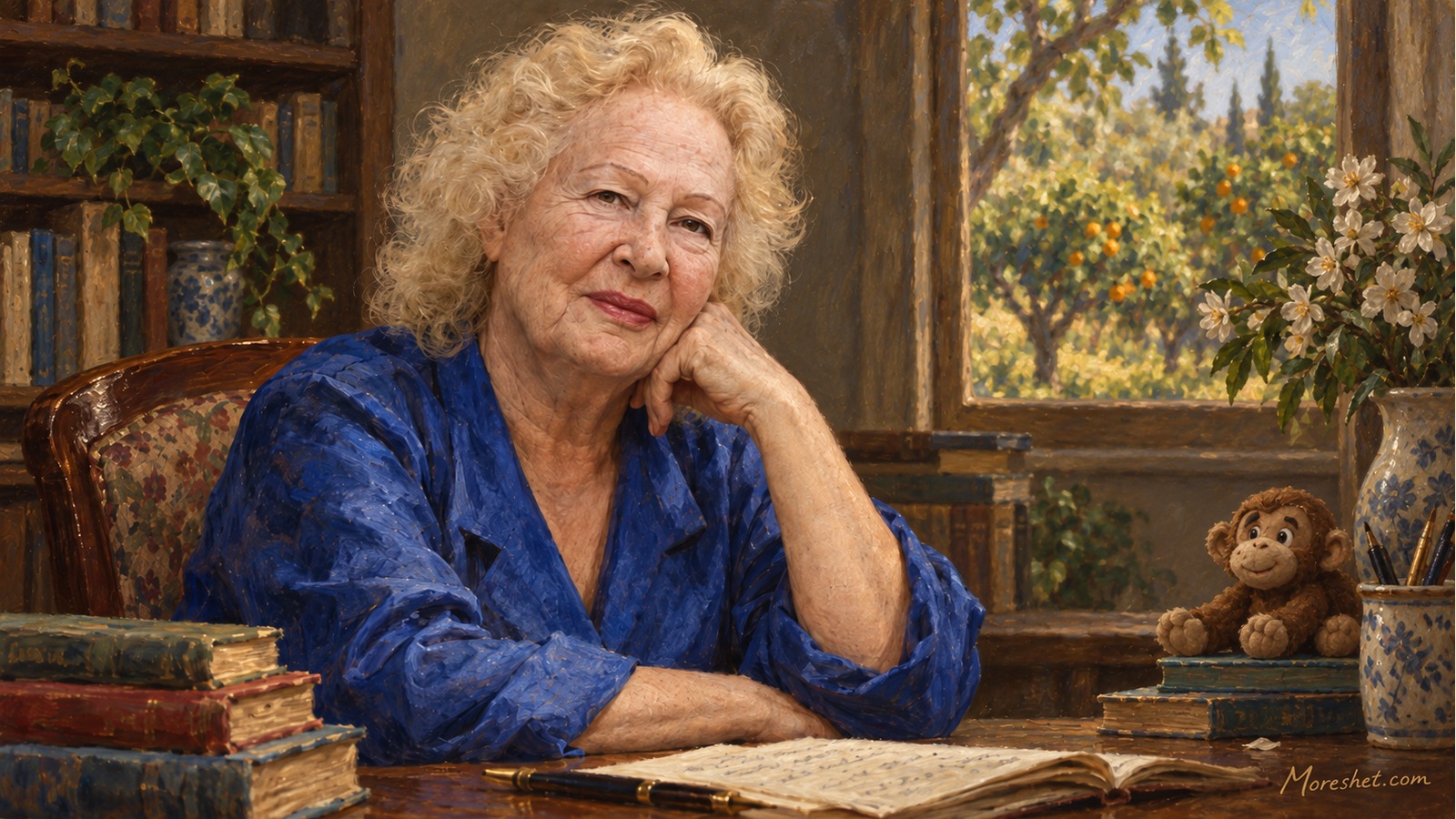
Tamar Bornstein-Lazar — AI-generated artistic portrait · Moreshet.com
The creator of Kofiko and Chipopo, whose humour and curiosity welcomed generations into Hebrew reading
Tamar Bornstein-Lazar (1927–2020) was one of Israel's most prolific and recognisable children's writers. Her characters Kofiko and Chipopo offered young readers a world of mischief, travel and surprising encounters. Their cultural importance begins with a practical achievement: giving children books they wanted to open, familiar characters they wanted to revisit and a Hebrew reading experience associated with pleasure as well as schoolwork.
A writer shaped by children and storytelling
Bornstein-Lazar grew up in Ein Ganim, near Petah Tikva, in a family rooted in the history of the Jewish settlement. She trained at the teachers' college in Givat HaShlosha, served in a military entertainment troupe during the War of Independence and worked as a teacher. Her familiarity with children, spoken storytelling and the rhythms of everyday conversation became valuable resources in her writing.
She began publishing in children's periodicals in the early 1950s. The Girl from the Transit Camp and the Star from the Sky appeared in Davar LiLadim in 1951, bringing together the reality of immigrant life and the possibilities of a fairy tale. She received the Yatziv Prize in 1955 and went on to produce hundreds of books and stories across a long career.
Kofiko and the comedy of familiar life
The Kofiko series placed a mischievous monkey within a recognisable Israeli household and neighbourhood. Family routines, visitors and ordinary social situations became occasions for comic disruption. Some characters took their names from members of Bornstein-Lazar's own family, giving the invented world a particularly domestic foundation.
The series format mattered. Once children knew the characters and the kind of adventure awaiting them, another book felt like an invitation back into a familiar place. That continuity could support confidence and a habit of independent reading. Stage and television adaptations extended Kofiko's presence beyond the printed page, helping the character remain part of Israeli childhood across generations.
Chipopo and the pleasure of discovery
Where Kofiko's adventures grew largely from life in Israel, Chipopo travelled abroad. These stories gave children an accessible imaginative encounter with distant places while retaining pace, humour and a recurring central character. Together, the two series moved between home and the wider world, making both settings available to a young reader's curiosity.
Bornstein-Lazar also created other series, including Charlie Letch, Kondasi and the adventures of Suliman and Danny. The latter centred on the friendship of an Arab boy and a Jewish boy. Their shared adventures enlarged the social world of her fiction while keeping the story, rather than an abstract lesson, in the foreground.
Books within family and cultural life
Her work included fairy tales, stories for very young children and books connected with Jewish holidays. The Happy Holiday series combined stories with riddles and activities, allowing reading to become part of preparation, celebration and creative play. Jewish tradition was presented through the annual cycle and the experiences of homes and classrooms.
This breadth is important to understanding her influence. She did not write only for an already confident literary audience. Her books reached readers at the stage when choosing to read at all can be a significant step. Familiar situations, lively plots and approachable language helped make the book itself a welcoming object.
Her personal archive is preserved by the National Library of Israel, and Petah Tikva has commemorated her work. The living record of her career, however, also exists in the continuing recognition of her characters and in family memories of reading them together.
Why Tamar Bornstein-Lazar belongs in Moreshet
Bornstein-Lazar belongs in Moreshet at Moreshet.com because children's literature helps form a society's shared language and imagination. She created enduring characters, connected everyday Israeli life with fantasy and supplied a substantial body of reading for children finding their own way into books. Her achievement can be measured in the small encounters that accumulate into cultural influence: a child asking for another story, choosing another volume and discovering that Hebrew can be funny, adventurous and personally meaningful.