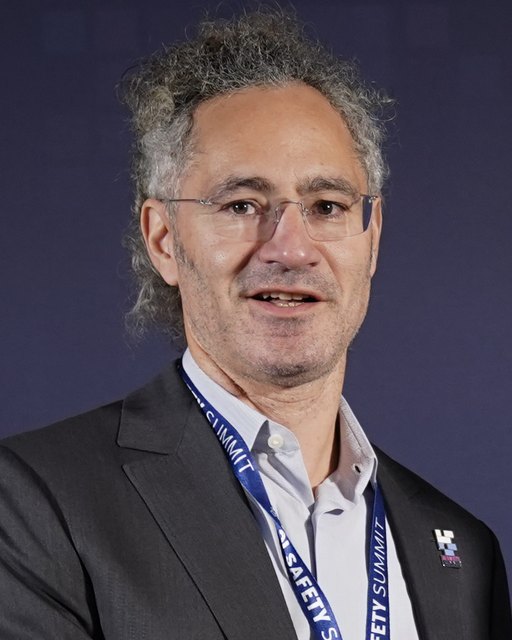
Igor Bukhman
The British-Israeli programmer who turned a modest start into a global games business and a platform for medical philanthropy
Igor Bukhman is a Soviet-born British-Israeli programmer and entrepreneur who co-founded the computer and mobile-games company Playrix with his brother Dmitry. What began as a small experiment in independently developing and distributing downloadable games became an international business whose titles—including Gardenscapes, Homescapes, Fishdom, and Township—reached a worldwide audience and placed the brothers among the prominent figures in digital entertainment.
Bukhman’s significance is not limited to the company’s financial scale. His career illustrates how programming skill, product judgment, and patient experimentation in distribution can turn a project created far from an established technology center into a global enterprise. He later expanded into technology investment and, through a family foundation, committed substantial resources to medical research and cultural institutions.
From Vologda to software development
Bukhman was born on March 29, 1982, in Vologda in the Soviet Union, to Jewish parents. Interested in programming from childhood, he enrolled in the applied mathematics faculty of the Vologda State Pedagogical Institute in 1999. His studies provided a relevant technical setting, but his decisive professional education came from the practical work he undertook with his brother in the emerging online software market.
In 2001, the brothers released Discovera, their first game. They priced it at $15 and uploaded it to roughly 200 software directories and download sites. It earned only about $60 in its first month. That modest result became an instructive part of their story: rather than wait for a large publisher or outside financing, they learned how to build a product, distribute it online, measure demand, and improve the business step by step.
Founding Playrix and building an international company
Igor and Dmitry founded Playrix in 2004. By then they had released three games and approximately 30 screensavers. They continued expanding the catalog, which had grown to 16 games by 2007, when the company was generating about $300,000 in monthly revenue. The progression from Discovera’s first small sales to a stable commercial operation took only a few years and occurred outside the technology centers that traditionally dominated the software business.
Playrix later established itself through approachable games combining puzzles with construction, decoration, and simulated management. Gardenscapes and Homescapes linked puzzle levels to narrative progress and the renovation of virtual environments. Fishdom built an aquarium world around puzzle mechanics, while Township combined city-building with elements of farming and resource management. This mixture of easily understood play, continuing progression, and recognizable visual worlds helped Playrix create franchises designed to evolve through updates and new content rather than end after a single purchase.
The company’s growth coincided with the rise of smartphones and a major change in global entertainment habits. Playrix successfully carried its experience in downloadable games into the mobile market and reached players across many countries. In June 2023, market analytics company data.ai ranked Playrix seventh among mobile-game publishers worldwide by annual revenue and first in Europe, the Middle East, and Africa. The company was reported to employ more than 3,000 people around the world that year.
Studios, international expansion, and investment
The brothers did not rely on internal development alone. In 2019, Playrix acquired the Armenian studio Plexonic and Serbia’s Eipix Entertainment, widening its development network and reinforcing the company’s multinational character. A distributed organization enabled Playrix to bring professionals in different countries into the production and operation of games for an international audience. In October 2022, the company announced that it was closing its offices and development operations in Russia and Belarus following Russia’s invasion of Ukraine.
In 2018, the brothers personally invested in game developers Nexters Global and Belarus-based Vizor Games. Igor served on the Nexters board in 2021 and 2022 and was appointed a non-executive director in April 2023. These investments extended his activity beyond Playrix’s own products by providing capital and experience to other companies in the games sector.
In October 2021, the brothers launched Rix Capital to manage their private investments. The firm opened a permanent London office in 2023 and was reported at the time to have approximately $4 billion of the brothers’ personal capital under management. The move from game development into a broader investment operation marked another stage in Bukhman’s career: applying capital and knowledge accumulated at Playrix to the development of other businesses and technologies.
The scale of the business achievement
Playrix’s success made Bukhman one of the wealthiest entrepreneurs associated with both Israel and Russia. Forbes first included him in its global billionaires ranking in 2020, estimating his fortune at $3.1 billion. In April 2023, the publication estimated his assets at about $7 billion and ranked him 332nd worldwide. Such estimates fluctuate with company valuations and financial markets, but they convey the extraordinary scale of the enterprise built from the brothers’ first experiments with Discovera.
In 2025, Bukhman appeared on The Sunday Times list of the wealthiest people in Britain under the age of 40. Beyond personal wealth, the more lasting business achievement is a company that created employment for thousands of developers, artists, product specialists, and operations professionals, while demonstrating that a games publisher originating outside the industry’s conventional centers could compete internationally.
Philanthropy in medicine and culture
Igor and his wife, Anastasia, established the Bukhman Foundation in 2023. In 2025, the foundation announced a £100 million commitment to research intended to accelerate new treatments and progress toward a cure for type 1 diabetes. Advances in this field could transform the lives of children and adults who must manage the disease continuously. A commitment on this scale can sustain long-term work, encourage collaboration among researchers, and help move discoveries from laboratories toward clinical care.
The foundation also donated $1 million to London’s National Portrait Gallery in 2025, extending its activity into cultural preservation and public access to art. Together, the medical and cultural commitments show wealth generated in technology being directed toward public purposes with significance beyond the games business.
Jewish identity, Israeli citizenship, and a life across borders
Bukhman’s life is also a story of movement among cultures and economic centers. Born into a Jewish family in a Soviet city, he moved to Dublin in 2014 and obtained Israeli citizenship in 2016. He has lived in London since 2020 and received British citizenship in 2025. He is married and has four children.
Playrix should not be assigned an Israeli identity it did not have, but Bukhman’s Israeli citizenship and Jewish background place him within a generation of Jewish and Israeli entrepreneurs whose work crosses national boundaries. His path from Russia to Ireland, Israel, and Britain reflects a contemporary Jewish experience in which identity, profession, and influence are not confined to one country. His principal impact has been in international technology and entertainment, joined more recently by support for research intended to benefit patients and families around the world.
Why Igor Bukhman belongs in Moreshet
Igor Bukhman merits inclusion in Moreshet because his career offers a concrete and well-documented example of modern Jewish entrepreneurship: a young programmer who began with a game earning tens of dollars and became a partner in building one of the leading publishers in global mobile entertainment. Playrix’s games reached an international public, the company created thousands of jobs, and his investments helped extend resources to other studios and technology businesses.
For Moreshet.com, his story also connects a Jewish heritage of mobility and adaptation with the contemporary digital economy. The son of a Jewish family in Vologda became an Israeli and British citizen while working across an international network, making his career part of the evolving account of Jewish participation in global technology. The major commitment to type 1 diabetes research adds a tangible human dimension to that legacy: directing resources created through entertainment and software toward science with the potential to improve and save lives.