Sam Altman
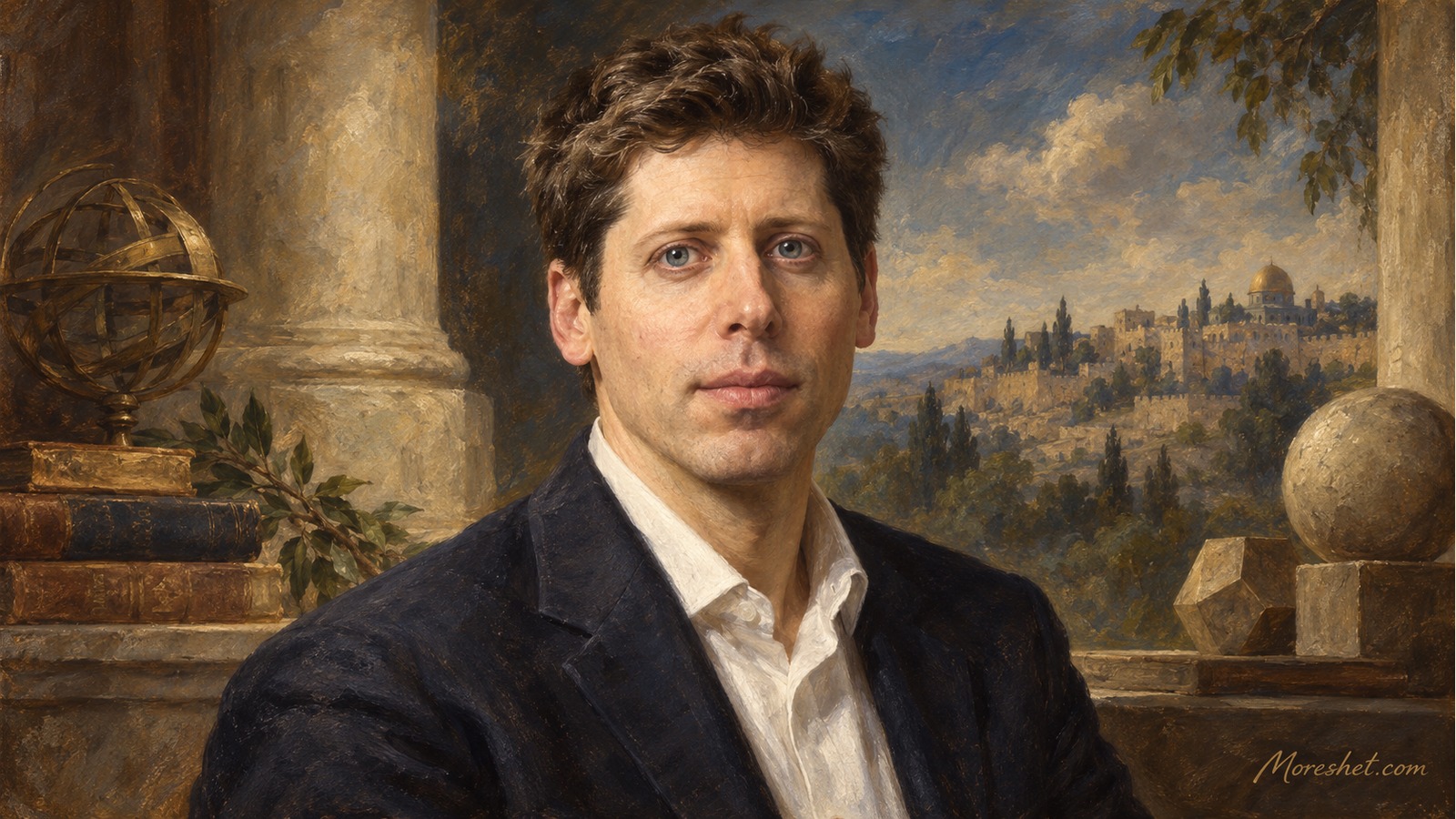
Sam Altman — AI-generated artistic portrait · Moreshet.com 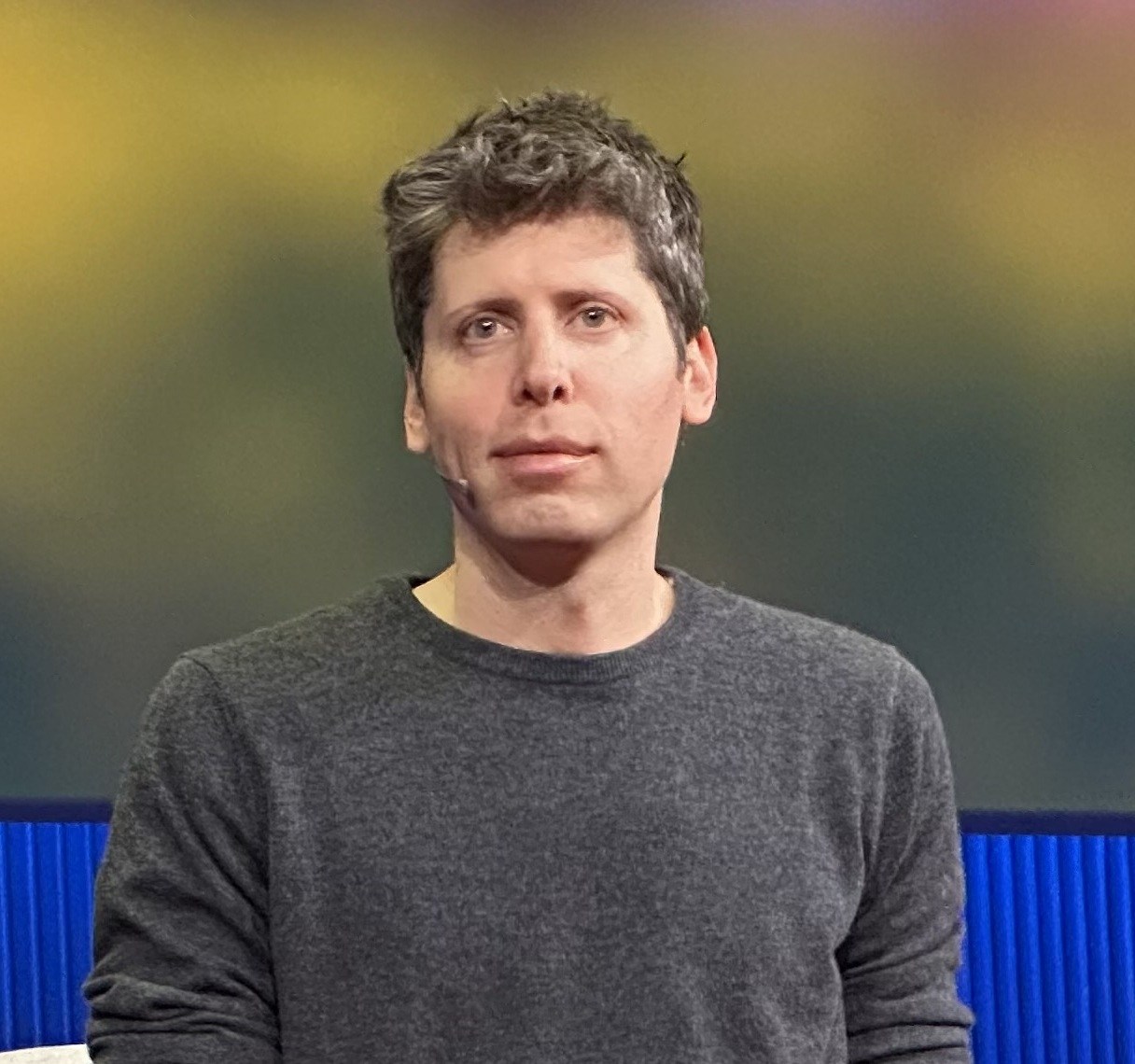
Sam Altman. Photograph by Steve Jurvetson, via Wikimedia Commons (CC BY 2.0).
Jewish-American entrepreneur, OpenAI CEO, investor and technology leader who helped turn generative AI into a global force in education, work, creativity and public policy
Sam Altman, born Samuel Harris Altman, is a Jewish-American entrepreneur, investor, programmer, technology executive and chief executive officer of OpenAI. He is one of the central figures of the 21st-century artificial intelligence revolution, especially because of his role in leading OpenAI during the period when generative AI systems, led by ChatGPT, moved from the laboratory into everyday use by hundreds of millions of people, businesses, educational institutions, developers and creators.
Altman’s importance does not come only from the management of one company. Before OpenAI, he was president of Y Combinator, one of the world’s most influential startup accelerators, and affected a generation of entrepreneurs and technology companies. He later became one of the public figures most identified with the global debate over artificial general intelligence, safety, regulation, energy, computing, work, education and the economic future of humanity. His public life combines entrepreneurship, venture capital, applied science, public policy, long-term thinking and broad cultural influence.
Jewish-American childhood and early technological curiosity
Altman was born on April 22, 1985, in Chicago, and grew up in a Jewish-American family. During his childhood his family moved to Clayton, Missouri, near St. Louis. His mother, Connie Gibstine, is a dermatologist, and his father, Jerry Altman, worked in real estate. He is the eldest of four siblings. Biographical sources trace part of his paternal family background to the Jewish community in Poland.
From a young age he was drawn to computers. At eight, he received an Apple Macintosh, learned to code, took apart hardware and examined how systems worked from the inside. That experience became a foundation story of his life: a Jewish-American child in a Missouri suburb discovering through the computer a way to think, build, dismantle and imagine larger systems.
Altman attended John Burroughs School, a private school in Missouri. At 17, he came out as gay at school after objections by some students to a National Coming Out Day speaker moved him to speak publicly. This too matters in understanding him: alongside early technological interest, he developed an early willingness to stand in public, formulate a position and defend personal and social identity.
Stanford, Loopt and the entry into startups
Altman began studying computer science at Stanford University, but left after about two years without completing a degree. In 2005, at 19, he co-founded Loopt, a location-based social networking application for smartphones. The idea tried to use the early mobile era to let people see where their friends were in real time.
Loopt raised tens of millions of dollars from venture capital firms, including Y Combinator, Sequoia and New Enterprise Associates. The company did not become a large consumer platform, and in 2012 it was acquired by Green Dot for 43.4 million dollars. Although it did not achieve the consumer success Altman hoped for, it brought him into the center of Silicon Valley and gave him early experience in management, fundraising, product, teams, investors and the partial failure of an ambitious idea.
The Loopt chapter was important because it turned Altman from a young programmer into an experienced founder. He learned how a startup behaves when the technology is early, the market is not yet ready and investor expectations do not necessarily match the pace of user adoption. Those lessons followed him into much larger roles.
Y Combinator and the expansion of startup culture
In 2011 Altman joined Y Combinator, first as a partner, and in 2014 he became president of the accelerator, succeeding Paul Graham. Y Combinator was already a central institution in the startup world, but under Altman it sought to expand its scale, increase the number of companies funded and open the door to harder and deeper technological ventures.
His influence at Y Combinator went beyond funding young companies. He helped shape a view that entrepreneurship was not only about building fast applications, but about organizing talent, capital, science, software and markets around large problems. During his period, the emphasis grew on companies in fields such as software infrastructure, biotechnology, energy, education, advanced computing and deep technology.
For technological heritage, his role at Y Combinator matters because the accelerator influenced the way an entire generation of founders thought about building companies: fast product, experimentation, users, growth, fundraising, market transparency and the belief that a small team can change an entire industry. Altman was one of the executives who helped turn that culture into a global system of technological ambition.
Investor in technology, energy and the long-term future
Over the years, Altman has invested in hundreds of companies in software, infrastructure, artificial intelligence, transportation, energy, health, biotechnology and social media. Companies associated with his investment activity include Reddit, Stripe, Airbnb, Instacart, Helion Energy, Retro Biosciences and others. He served briefly as interim CEO of Reddit in 2014 and was involved in bringing Steve Huffman back as the company’s chief executive.
His energy investments are especially significant. Altman is chairman of Helion Energy, a company developing fusion technology, and was also involved with Oklo, a company working on advanced nuclear energy. These investments connect with his broader view of the future of artificial intelligence: large AI systems require enormous amounts of electricity, computing and infrastructure, so the future of technology also depends on clean, stable and inexpensive energy.
Altman has also invested in companies connected to longevity, biotechnology, wearable computing and new models of digital identity. Not every such initiative has been received without public or regulatory criticism, but together they point to a consistent pattern: interest in foundational technologies that may change the structure of human life, not only improve an existing service.
The founding of OpenAI and the move to the AI frontier
In 2015 Altman was among the founders of OpenAI, which began as a nonprofit research laboratory with the mission of advancing artificial general intelligence in a way that benefits humanity. The project was born from the understanding that AI could become one of the most powerful technologies in history, and that an institution was needed to confront the question of how to develop it responsibly and safely.
In 2019 Altman became CEO of OpenAI and shifted to working on it full time. In the years that followed, OpenAI changed profoundly: from a research laboratory known mainly to specialists into a company leading widely influential public products. It developed systems such as GPT, DALL·E, Whisper and ChatGPT, and built a deep strategic relationship with Microsoft to finance computing, infrastructure and broad deployment.
Altman’s role at OpenAI combines company leadership, capital raising, alliance building, recruiting researchers and engineers, public communication and dialogue with governments. He was not alone in this revolution, but he became the figure most identified with the movement of AI from advanced research into a broad public tool.
ChatGPT and the arrival of everyday AI
In November 2022, OpenAI released ChatGPT to the public. Within days, the service became a worldwide phenomenon, and it later changed the way people think about writing, programming, learning, customer service, research, planning, translation, creativity and communication with computers. For many people, it was the first time artificial intelligence appeared not as a hidden technology inside a system, but as a direct conversation partner.
The significance of ChatGPT was very broad. Teachers began rethinking homework and assessment; programmers began using code assistants; businesses explored automation in service, marketing and content; lawyers, doctors, journalists, researchers and creators examined how to integrate new tools into their work. At the same time, questions arose about copyright, privacy, bias, reliability, employment, education, safety and human-machine relations.
Altman became one of the main public speakers of the AI era. He presented artificial intelligence as a tool that could increase productivity, expand human capability and help science, education and medicine, while also warning that technology this powerful requires regulation, oversight, safety and international cooperation.
Public policy, regulation and AI safety
In 2023 Altman testified before a subcommittee of the United States Senate on oversight and rules for artificial intelligence. In his testimony, he called for a combination of innovation and responsibility, and raised ideas such as licensing or registration for especially powerful models, safety testing, transparency and government oversight. In doing so, he moved from technology executive to a figure directly involved in shaping the policy discourse around AI.
That same year, he made an international tour and met leaders, ministers and diplomats in many countries, including Israel. In Israel he met President Isaac Herzog. Those visits reflected the fact that artificial intelligence was no longer only a matter for software companies; it had become a national question touching the economy, security, education, employment, science and social identity.
In 2026, Altman also participated in international discussions on AI adoption, innovation and cybersecurity, and continued to present the technology as a force that cannot be ignored but must be managed carefully. The public discourse around him illustrates the constant tension of the new era: the desire to accelerate progress alongside the need to prevent misuse, concentration of power and social harm.
The OpenAI leadership crisis and the debate over technological governance
In November 2023, OpenAI’s board announced that Altman had been removed as CEO. Within days, an unusual crisis developed: many employees demanded his return, Microsoft announced that it would hire him to lead an advanced research team, and an agreement was ultimately reached under which Altman returned to his role and OpenAI’s governance changed. The event became one of the most widely reported crises in Silicon Valley history.
The importance of the episode was not only personal. It revealed the tension among a nonprofit structure, a company needing enormous capital, technically powerful employees, strategic investors, safety questions and the need for stable governance over technology with global consequences. The crisis showed that advanced AI development is not only an engineering issue, but also a matter of trust, oversight, incentives and institutions.
In 2025, OpenAI updated its organizational structure, preserving a mission-oriented component while creating a business structure intended to support capital raising, infrastructure development and talent retention. As of September 2026, Altman continues to serve as CEO of OpenAI and as one of the most prominent figures in the global debate over the boundaries of artificial intelligence.
Jewish identity, Israel and the fight against antisemitism
Altman is not a Jewish communal leader in the traditional sense, but his Jewish background is part of a public biography of significance. In 2023, against the backdrop of a global wave of antisemitism after the outbreak of the Swords of Iron War, he wrote publicly that he had been wrong to think that antisemitism, especially on the American left, was not as bad as people claimed. The statement resonated because it came from a leading technology figure not primarily identified through Jewish politics.
His connection to Israel is not based on an official Israeli role, but on visits, dialogue, technological influence and membership in the Jewish people at a time when technology, identity and public speech intersect. For Jewish and Israeli communities, Altman also represents the question of how Jews participate in shaping universal technologies that affect all humanity.
Being Jewish, an entrepreneur and a global technology executive does not make all of his achievements Jewish in a narrow sense, but it places him within a wider tradition of Jews who have influenced science, technology, business and global culture. In his case, the influence concerns one of the central axes of the present century: the relationship among human intelligence, machines, work and knowledge.
Personal life and giving
Altman has been a vegetarian since childhood. In 2024 he married his partner Oliver Mulherin, an Australian software engineer, and in 2025 they had a son by surrogacy. The couple lives mainly in San Francisco. His personal life, including coming out at a young age, has also made him a visible figure for LGBTQ communities in technology.
In 2024, Altman and Mulherin signed The Giving Pledge, a commitment by wealthy individuals to give away most of their wealth. Altman has also engaged over the years with ideas of universal basic income, and later spoke about the possibility of broader access to advanced computing. These ideas connect to his view that if AI creates enormous economic value, society will need to rethink the distribution of capability, opportunity and resources.
Editorial note on inclusion
Sam Altman is included on the site even though this person and their public record are controversial among broad sections of the public. Inclusion does not determine whether the influence is positive or negative; it reflects the significant place this figure holds in shaping the lived experience, culture and way of life of the public. Naturally, some regard this activity as positive and even heroic, while others see it as contrary to their worldview. The very existence of opposing assessments is part of the historical record that justifies including this significant and influential figure in the heritage of the Jewish people.
Why this legacy belongs in Moreshet
Sam Altman merits inclusion in Moreshet because he is a Jewish-American entrepreneur whose influence touches one of the central revolutions of our generation: the transformation of artificial intelligence into a public, everyday and institutional tool. His path connects startups, venture capital, energy, science, artificial intelligence, public policy, technological safety and moral questions about the future of human beings.
Moreshet.com documents Altman because Jewish and Israeli heritage also includes Jewish figures who worked on the world stage and influenced the way people learn, work, create, decide and imagine the future. Sam Altman’s place in Moreshet rests on the fact that the revolution he helped lead will also affect Jewish education, Jewish and Israeli languages, communities, businesses, research, security, creativity and cultural memory. This is a new chapter in heritage: not only what a person wrote or built alone, but how a technological system at the center of his work changes the way millions of people think, write, learn and act.