Gali Baharav-Miara
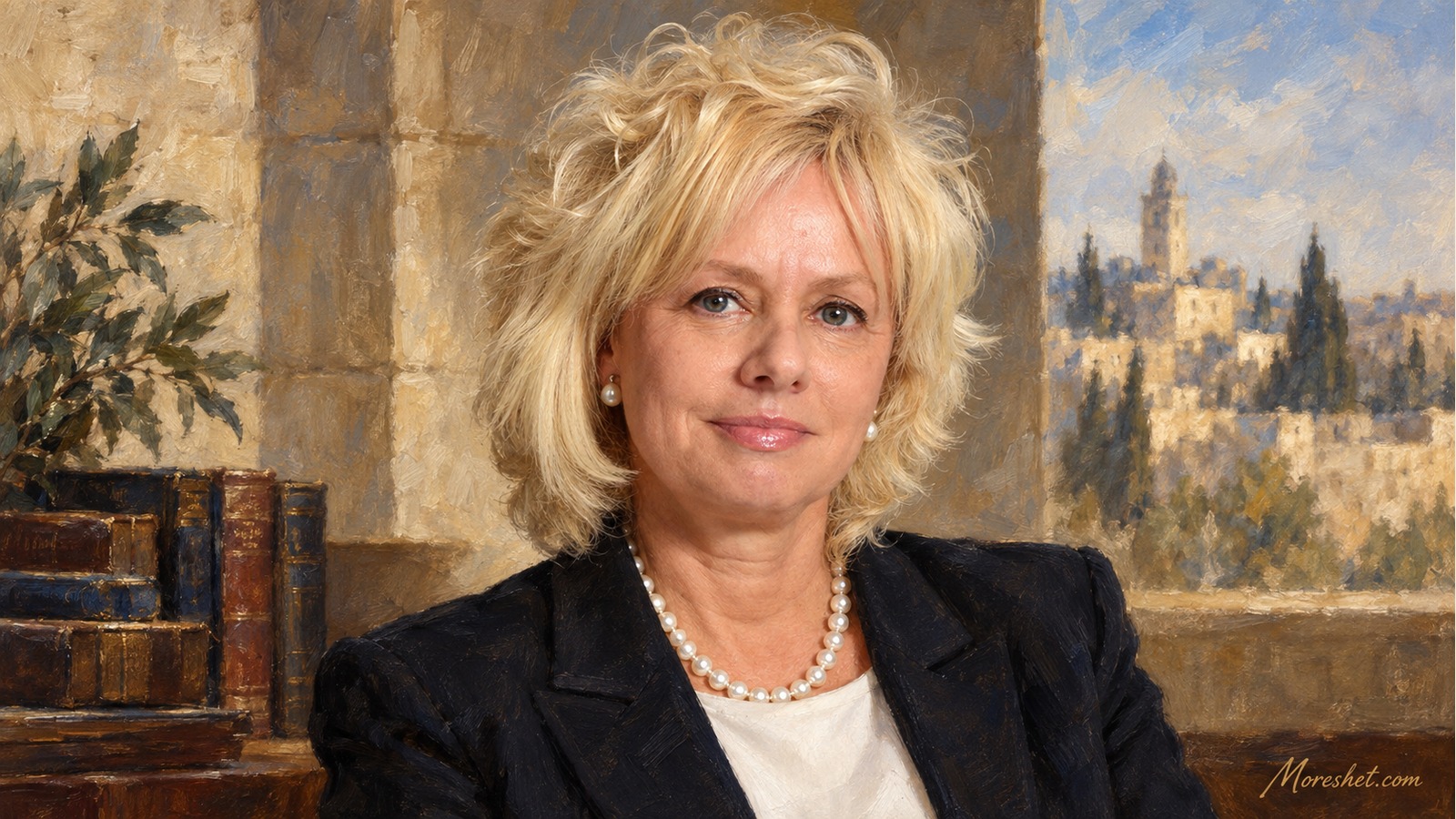
Gali Baharav-Miara — AI-generated artistic portrait · Moreshet.com 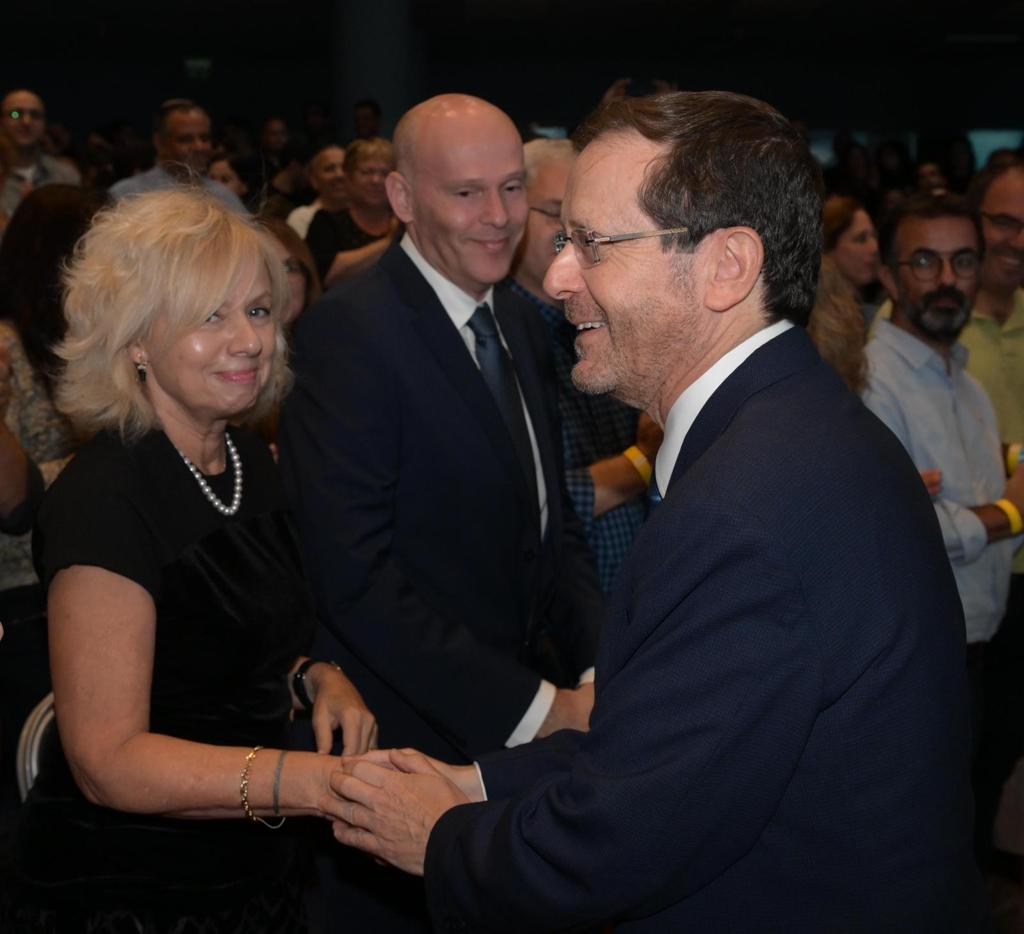
Gali Baharav-Miara. Photograph by Amos Ben Gershom, via Wikimedia Commons (CC BY-SA 3.0).
Attorney General of Israel, public lawyer and the first woman appointed to the country’s highest legal civil-service office
Gali Baharav-Miara is an Israeli lawyer, the 15th attorney general of Israel and the first woman appointed to this office. Her appointment in 2022 placed her at the head of one of Israel’s most important legal institutions: an office that combines legal advice to the government, protection of the rule of law, guidance of public administration, representation of the public interest before the courts and a central role in the state prosecution system.
Baharav-Miara’s public importance does not rest only on the gender precedent. She stands at a sensitive meeting point of law, government, public responsibility and Israeli democracy. During her term, Israel faced intense constitutional disputes, arguments over judicial independence, senior appointments, conscription, ministerial powers, conflicts of interest and the limits of governmental authority. As a result, Baharav-Miara became a central figure in Israel’s debate over the meaning of the rule of law and the status of legal advice in a country without a single complete written constitution.
Family background, military service and education
Gali Baharav-Miara was born on September 18, 1959, and grew up in Givatayim. Her mother, Shulamit Baharav, née Davidovich, was a painter, and her father, Emanuel Baharav, served in the Palmach and fought in Israel’s War of Independence. This family background places her story within an Israeli generation in which service, public responsibility and the building of state institutions were part of civic and family life.
Before her legal career, she served in the IDF in Unit 8200 and in the Research Department of the Military Intelligence Directorate. This intelligence service gave her early familiarity with sensitive state work, institutional responsibility, professional precision and the operation of complex public systems. She later studied law at Tel Aviv University, completing a bachelor’s degree in law in 1984 with high honors and a master’s degree in law in 1990. She also served as a teaching assistant and adjunct lecturer, combining legal study, public practice and teaching.
Three decades in the State Attorney’s Office
In 1985 Baharav-Miara joined the Tel Aviv District Attorney’s Office. Over roughly three decades she held a range of positions, mainly in civil and administrative law. In 2002 she was appointed head of the administrative department in the district office, and from 2007 to 2015 she served as Tel Aviv District Attorney for Civil Affairs. That role placed her at the center of the legal defense of the state’s actions, authorities, institutions and public officials.
Civil and administrative law is often less visible to the public than criminal law, but it is essential to the functioning of the state. It deals with government liability, torts, tenders, appointments, defense of administrative decisions, claims against the state and the balance between individual rights and public needs. Baharav-Miara worked in these fields for many years and accumulated significant experience in managing complex litigation, guiding legal policy and understanding the interface between law and government work.
Among the issues she handled as a senior prosecutor were tort claims against the state, state responsibility for security actions, broad administrative issues and the defense of Israeli positions in Israel and abroad. The supplied material notes, among other things, that she led a legal approach in tort claims brought by Palestinians living in the territories against the state, and that she was involved in initiatives concerning state immunity for wartime activity. These are fields in which Israeli law must confront a unique security reality together with domestic and international criticism.
Committees, appointments and public administration
After retiring from the State Attorney’s Office, Baharav-Miara continued to work in the public and legal sphere. She served as a consultant to the Tadmor Levy law firm, while also holding public roles on several committees: the Civil Service Commission search committee for senior appointments, advisory committees on administrative courts and civil procedure, committees concerning appointments in municipal corporations, private investigations and administrative tribunals.
These roles reflect a central but not always visible area of public work: building mechanisms of proper administration. In a modern state, the quality of government is measured not only in legislation or dramatic court judgments, but also in the rules that shape appointments, procedures, powers, responsibility and transparency. Baharav-Miara worked within this layer of the state — the layer in which public lawyers help determine how institutions are supposed to function.
In 2018, at the request of the State Attorney’s Office, she wrote an opinion in proceedings in the Netherlands against Benny Gantz and Amir Eshel following Operation Protective Edge. Her opinion was accepted and the claim was dismissed. This episode illustrates her experience in the legal defense of senior Israeli figures in international contexts, a field in which Israeli law, the laws of armed conflict and the international arena intersect.
Appointment as attorney general
In November 2021 Baharav-Miara was presented by Justice Minister Gideon Saar as one of the candidates for attorney general, and her candidacy was also supported by Prime Minister Naftali Bennett. On February 7, 2022, the Government of Israel unanimously approved her appointment, making her the first woman in the state’s history to become attorney general.
The appointment itself was a historic moment in Israeli law. For decades, the office of attorney general had been one of the most influential positions in public service, but it had been held only by men. Baharav-Miara’s appointment marked progress in the representation of women at the top of the legal and governmental system, and sent a message about women’s place in the centers of state decision-making.
When she entered office, Baharav-Miara took charge of an institution with a special structure. The attorney general in Israel is not merely the government’s lawyer in an ordinary sense. The role includes binding legal advice to government authorities, protection of the legality of government action, decisions in areas of prosecution and public interest, and presentation of the state’s legal position before the courts. For that reason, the attorney general often stands in a built-in tension: helping the government advance policy, while also telling it when the law does not allow a chosen course.
Legal advice in a stormy constitutional period
Baharav-Miara’s term developed during a period in which Israel’s constitutional structure stood at the center of public debate. After the formation of Israel’s 37th Government, initiatives were advanced for deep changes in the legal system, including changes to the Judicial Selection Committee, reduction of the reasonableness doctrine, changes to the status of legal advisers and expansion of government and Knesset power in relation to the Supreme Court. Baharav-Miara warned that some of the measures could harm Israel’s character as a Jewish and democratic state and the balance among the branches of government.
Her legal positions on the judicial overhaul made her a central figure in public debate. She emphasized that deep regime change requires an orderly process, broad deliberation and public agreement, not rushed legislation. For her supporters, this was a defense of the rule of law and the institutions of checks and balances; for her critics, it was seen as excessive intervention by the legal system in elected policy. Institutionally, however, the conflict demonstrates the unique place of the attorney general in Israel.
Major legal positions
During her term, Baharav-Miara dealt with a wide range of issues: ministerial powers, senior appointments, government action during election periods, international agreements, Basic Laws, conscription, police authority, institutional funding, judicial independence and protection of the public interest before the courts. In many cases the legal advisory system supported the continuation of ordinary government activity; in some cases it found a legal impediment or required special caution.
Among the prominent issues were her position on the appointment of Aryeh Deri as minister after his tax offenses conviction; her position on an amendment to Basic Law: The Government concerning the incapacitation of a prime minister; her position against the abolition of reasonableness review in the form enacted; her position on stopping payments to religious institutions for students who had not received military-service deferments; and her position regarding the duty to convene the Judicial Selection Committee to choose a permanent Supreme Court president and fill vacant seats.
What these cases have in common is the question of the limits of public power. Baharav-Miara did not act only as a technical interpreter of statutory clauses, but as a representative of a view of Israeli public law based on the rule of law, separation of powers, integrity, proper administration and protection of rights. Whether one accepts or criticizes that view, it lies at the heart of Israel’s debate over the character of the state.
The attempt to dismiss her and the ruling that annulled it
The tension between Baharav-Miara and Israel’s 37th Government gradually intensified. Ministers and coalition members sharply criticized her and argued that the attorney general’s office had become oppositional and too limiting. Baharav-Miara, by contrast, argued that the disputes arose from her duty to protect the legality of government action and the independence of watchdog institutions, not from unwillingness to help the government advance its policy.
In 2025 the government began advancing a process to dismiss her. After difficulties with the traditional procedure, the government promoted an alternative path, and on August 4, 2025, it decided to dismiss her. The High Court of Justice froze the decision, and in December 2025 the Supreme Court, sitting as the High Court of Justice in an expanded panel, annulled the government’s decision. The court held that the decision to change the dismissal mechanism suffered from serious flaws and that there was insufficient legal justification for the procedure chosen.
This episode became one of the most important events in the struggle over the status of the attorney general. It is not only a personal story about Baharav-Miara; it is a major chapter in the evolving relationship among the government, the legal advisory system, the Supreme Court and Israel’s watchdog institutions. It shows how the attorney general’s office has become one of the central junctions in Israel’s debate over democracy, governability and the limits of power.
The attorney general’s place in Israel
To understand the meaning of Baharav-Miara’s term, one must understand the distinctive nature of Israel’s attorney general. In some countries the government enjoys more flexible internal legal advice, but in Israel a doctrine developed over time according to which the attorney general is both a guardian of legality and the official interpreter of law for the executive branch. The attorney general’s legal opinion is therefore not merely private advice, but part of a mechanism of governmental responsibility.
The role carries special importance because Israel does not have a complete unified constitution. Basic Laws, Supreme Court precedent, constitutional conventions and principles of public law together create a complex system of balances. Within this system, the attorney general is one of the central figures translating abstract principles into practical guidance for the government and state authorities. Baharav-Miara served in this role at a time when every part of that system was under intense public test.
Public and women’s significance
Baharav-Miara is the first woman to serve as attorney general of Israel. This fact gives her tenure an additional layer of public legacy. The Israeli legal system has included many women in key roles, including judges, prosecutors, legal advisers and court presidents, but until her appointment, the office of attorney general remained a symbol of a legal summit not yet opened to women.
Her appointment is not only a personal achievement. It is part of a broader process in which women occupy central places in the leadership of state institutions, decision-making and protection of the law. For a younger generation of women lawyers, public servants and state employees, her presence in the office is evidence that even the most sensitive and influential positions are open to them.
Personal life
Baharav-Miara was married to Tzion Miara, who served for many years in senior positions in the security services. In 2002 he was diagnosed with ALS and lived with the disease for many years until his death in June 2025. The couple had three sons, and she lives in Tel Aviv. Her personal life, including many years alongside a spouse facing a severe illness, adds a human layer to a public figure identified mainly with a demanding institutional role and complex legal decisions.
Editorial note on inclusion
Gali Baharav-Miara is included on the site even though this person and their public record are controversial among broad sections of the public. Inclusion does not determine whether the influence is positive or negative; it reflects the significant place this figure holds in shaping the lived experience, culture and way of life of the public. Naturally, some regard this activity as positive and even heroic, while others see it as contrary to their worldview. The very existence of opposing assessments is part of the historical record that justifies including this significant and influential figure in the heritage of the Jewish people.
Why this legacy belongs in Moreshet
Gali Baharav-Miara merits inclusion in Moreshet because she holds a central role in shaping the boundaries of law, government and justice in the State of Israel during one of its most sensitive periods. She is the first woman appointed attorney general, a public lawyer with long experience in the State Attorney’s Office and public administration, and a figure whose office places her at the heart of the debate over the rule of law, institutional independence and the balance between majority rule and limits on power.
Moreshet.com documents Baharav-Miara because Jewish and Israeli heritage includes not only military leaders, statesmen and cultural figures, but also legal officials who shape the rules within which a democratic society lives and acts. Gali Baharav-Miara’s place in Moreshet rests on the combination of a historic precedent for women in public service, state legal responsibility and real influence on fundamental questions concerning Israel as a Jewish and democratic state.