Ivanka Trump
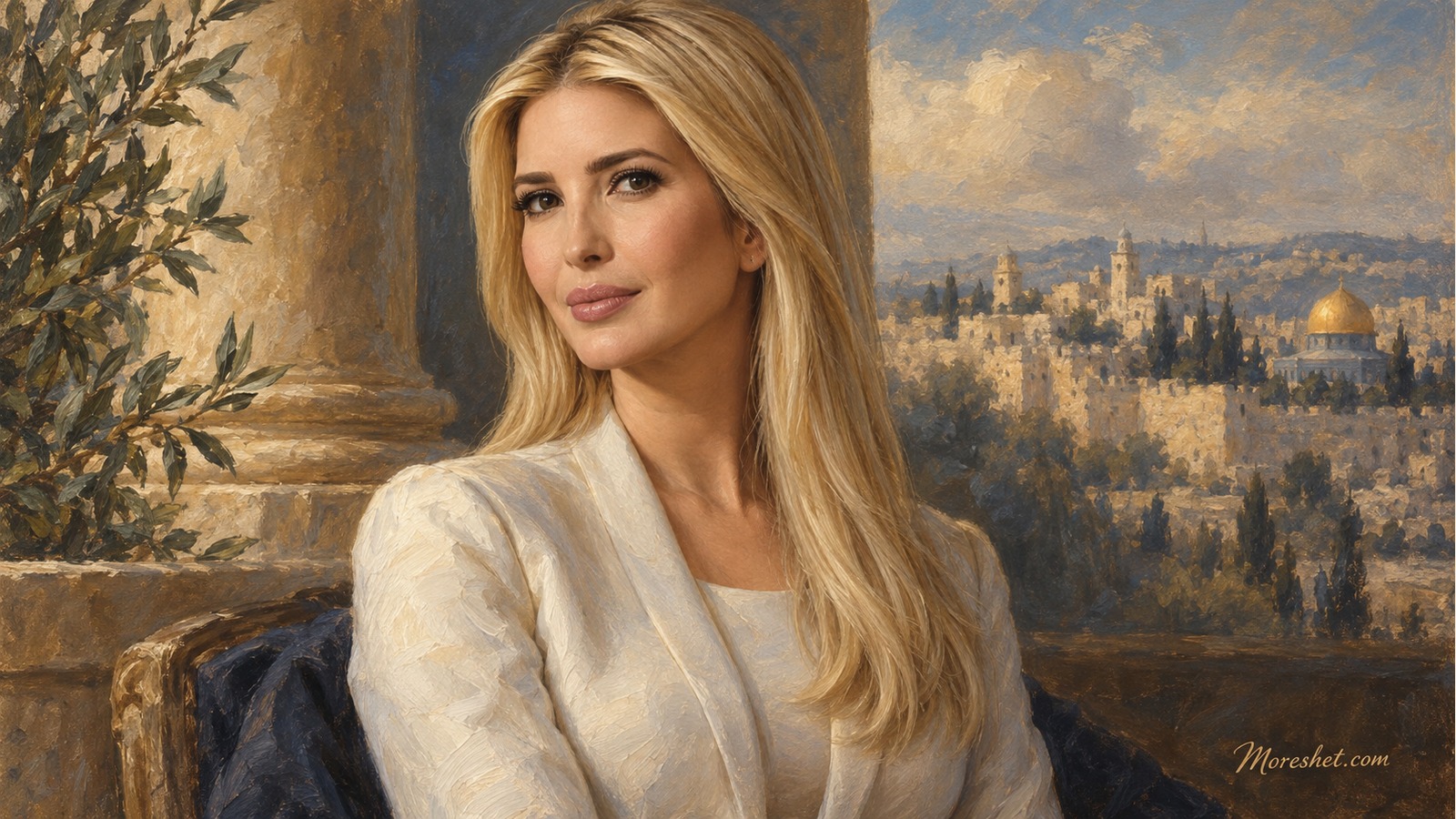
Ivanka Trump — AI-generated artistic portrait · Moreshet.com
Businesswoman, author and former presidential adviser whose public life connects enterprise, public policy, Jewish identity and unusual visibility in the White House
Ivanka Trump, born Ivana Marie Trump, is an American businesswoman, author, former model and public figure who converted to Judaism and served as senior adviser to United States President Donald Trump during his first term. Her life has moved through very different worlds: a famous New York business family, fashion and real estate brands, television, presidential campaigns, the White House, economic initiatives for women, humanitarian activity and the Modern Orthodox Jewish identity she adopted before marrying Jared Kushner.
Her significance for Jewish and Israeli heritage does not come only from being the daughter of an American president. It comes from the unusual place she occupied as a woman who converted to Judaism, adopted the Hebrew name Yael, built a Jewish home that observes Shabbat and kashrut, and for several years stood among the women closest to the center of American decision-making. Her story combines business, family, religion, public policy and visible Jewish representation on the international stage.
Childhood, family and education
Ivanka Trump was born in Manhattan, New York, on October 30, 1981, to Donald Trump and Ivana Zelníčková, his first wife. She grew up in a family with a powerful public presence in business, media and real estate. Her childhood was shaped by the Trump family’s real-estate empire, the publicity surrounding her father and the family’s constant exposure to the press and American popular culture.
She attended the Chapin School in New York and later Choate Rosemary Hall in Connecticut. She then studied at Georgetown University for two years before transferring to the University of Pennsylvania, where she graduated in 2004 with a degree in economics from the Wharton School. This education became part of her entry into business, especially in real estate and consumer branding.
Business career, real estate and fashion
Before entering public life, Trump worked in business. She joined the Trump Organization and served as executive vice president of development and acquisitions. In that role she was involved in real-estate, hotel and property-development projects in the United States and abroad. One project associated with her was the development of the historic Old Post Office building in Washington, D.C., into a luxury hotel, a project that drew considerable attention because of its location in the American capital and its connection to the Trump family.
At the same time, she developed a personal brand under her own name, including jewelry, shoes, handbags, clothing and accessories. The brand targeted young professional women and tried to combine an image of career, femininity, elegance and business success. It gave her an independent presence in fashion and retail beyond her identity as a member of the Trump family. In 2018 she closed her fashion brand in order to focus on public policy work.
Her business career is important to understanding her public image because she built a message around work, entrepreneurship, personal branding and women in business. Even when that message attracted criticism or debate, it was central to the way she sought to present herself to the American public before formally entering the White House.
Television, books and public image
Trump appeared for years on television programs connected to her father, including The Apprentice and Celebrity Apprentice, where she served as a judge alongside business figures and contestants. These appearances helped make her a familiar figure to the American public before her direct political involvement.
She published two self-help and career books: The Trump Card: Playing to Win in Work and Life in 2009 and Women Who Work: Rewriting the Rules for Success in 2017. The second book was part of the broader message she sought to promote around women, work, career and family. Some of the royalties and related proceeds were directed to social organizations, including the National Urban League and Boys and Girls Clubs of America.
Conversion, Judaism and family life
In 2009, before marrying Jared Kushner, Trump converted to Judaism through a Modern Orthodox process and adopted the Hebrew name Yael. She studied with Rabbi Elie Weinstock of the Ramaz School in New York and chose to join Judaism not merely as an external symbol, but as part of the family life she built with Kushner.
The couple married in a Jewish ceremony on October 25, 2009, and have three children. They are identified with a Modern Orthodox Jewish way of life, observing Shabbat and kashrut and raising their children in a Jewish framework. In 2017, during Donald Trump’s presidential visit to Israel, Ivanka and Jared joined a visit to the Western Wall, a moment that visibly symbolized her new Jewish presence inside the family of the president of the United States.
Trump’s conversion made her a particularly recognizable figure in discussions of modern American Judaism. She did not come from a Jewish family, but chose to enter Judaism through an Orthodox framework. In doing so, she became part of an influential Jewish-American family, the Kushners, whose roots are also connected to Holocaust survivors and the story of Jewish immigration to the United States.
The 2016 campaign and the move into politics
During her father’s 2016 presidential campaign, Trump played a prominent public role. She introduced Donald Trump at major events, spoke at the Republican National Convention, appealed to audiences her father struggled to reach, and tried to present a more familial, calm and moderate side of the candidate. Her appearance at the Republican convention drew broad attention, in part because it addressed issues such as working women, motherhood, child care and economic opportunity.
After her father’s election, she moved gradually from informal influence to a formal position. In March 2017 she was appointed adviser to the president of the United States, without taking a government salary. She thereby became one of the women closest to the center of American political power, alongside her husband Jared Kushner, who also served as a senior adviser to the president.
Adviser to the president: women, work and family
In the White House, Trump focused among other things on workforce development, vocational training, women’s entrepreneurship, working families and the fight against human trafficking. She led or promoted initiatives connected to worker training, expanding economic opportunities for women and advancing women in the global economy.
One of the major initiatives associated with her was the Women’s Global Development and Prosperity Initiative, or W-GDP, launched in 2019 as an American effort to promote women’s participation in the global economy, vocational training, access to capital and the removal of legal and social barriers to women’s participation in the workforce. The initiative sought to reach tens of millions of women in developing countries and combine foreign policy, economic development and women’s empowerment.
Trump also worked on expanding the child tax credit in the 2017 tax legislation, supporting paid family and medical leave for federal workers, and backing anti-human-trafficking initiatives. These activities do not exhaust her White House role, but they show the areas in which she sought to leave a mark: work, family, women, children and economic opportunity.
Diplomacy, representation and international visits
During her service, Trump participated in international forums and presidential delegations. She attended G20 summits, led the American delegation to the closing ceremony of the 2018 PyeongChang Winter Olympics, visited countries in Africa, South America and the Middle East in connection with women’s economic initiatives, and took part in diplomatic visits with symbolic importance.
This international visibility made her an unusual figure: not a career diplomat in the traditional sense, but a presidential adviser with direct access to the president and a global public profile. For some observers she represented a softer face of the administration; for others she symbolized the problematic overlap among family, politics and state. From the standpoint of historical documentation, her importance lies in the fact that members of a presidential family received formal roles and influenced public policy.
Humanitarian activity after the White House
After the end of the first Trump administration, Trump stepped back from day-to-day politics and emphasized private, family and humanitarian activity. In 2021 and the following years she was involved in food-distribution initiatives, including collaborations with figures and organizations such as Chobani’s Hamdi Ulukaya, CityServe, City of Destiny and Mercy Chefs. These initiatives supplied millions of meals in the United States and assistance to families in Ukraine after the war began.
In 2023 she was connected to the founding of Planet Harvest, a company focused on reducing food waste by redirecting surplus agricultural produce to useful purposes. This issue fits her shift from formal politics toward practical social and business initiatives: food, agricultural surplus, community and families.
In December 2023, about two months after the October 7 massacre, Trump visited communities near the Gaza border together with Jared Kushner in a show of solidarity. The visit connected her Jewish identity and her family’s relationship with Israel to a moment of deep national pain in Israeli society.
Private life and continuing public visibility
Since leaving Washington, Trump and Kushner have lived in Florida, and she has moved relatively far from the formal political role she once held. Still, she remains a recognizable public figure because of her family, her marriage to Kushner and the business and family initiatives with which she has been involved, including international real-estate projects mentioned in the media.
Her story continues to attract attention because it sits at a rare intersection: daughter of an American president, a woman who converted to Judaism, wife in a prominent Jewish-American family, mother of Jewish children, businesswoman, former fashion figure and former presidential adviser. Few public figures have so visibly connected celebrity culture, public policy, presidential family and Jewish identity.
Editorial note on inclusion
Ivanka Trump is included on the site even though this person and their public record are controversial among broad sections of the public. Inclusion does not determine whether the influence is positive or negative; it reflects the significant place this figure holds in shaping the lived experience, culture and way of life of the public. Naturally, some regard this activity as positive and even heroic, while others see it as contrary to their worldview. The very existence of opposing assessments is part of the historical record that justifies including this significant and influential figure in the heritage of the Jewish people.
Why this legacy belongs in Moreshet
Ivanka Trump merits inclusion in Moreshet because her story connects several central features of contemporary Jewish and Israeli heritage: Modern Orthodox conversion, a visible Jewish home inside one of the world’s best-known political families, Jewish presence in the White House, public activity around women and family, and a personal and public connection with Israel.
Moreshet.com documents Trump because heritage is not concerned only with those born into the Jewish community, but also with those who chose to join it and lived that choice in public view. Ivanka Trump’s place in Moreshet does not require agreement with every political position or every aspect of her public record; it rests on the unusual influence of a woman who made Jewish identity, family life and proximity to the American presidency part of a wider story of Judaism, power, representation and policy in the 21st century.