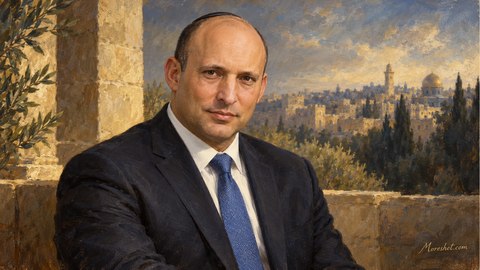
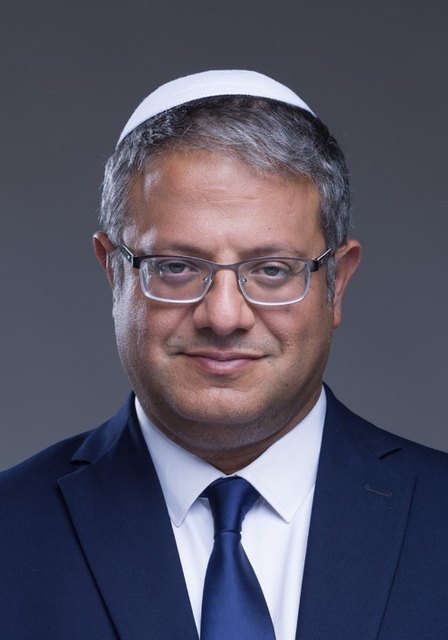
Dov Weissglas
Israeli lawyer, diplomatic adviser and prime ministerial chief of staff at the intersection of law, government and foreign policy
Dov “Dubi” Weissglas is an Israeli lawyer, diplomatic adviser and business executive whose career has unfolded at the meeting point of law, government, national security and foreign policy. He represented prime ministers, cabinet ministers and senior members of Israel’s public institutions; served as chief of staff to Prime Minister Ariel Sharon and later as a special adviser; and played a central working role in shaping Israel’s 2005 disengagement plan and managing contacts with the United States.
Weissglas’s professional significance lies in the combination of complex legal advocacy and direct access to national decision-making. His work encompassed state commissions of inquiry, prominent libel cases, security-related proceedings, the management of a major insurer in liquidation, corporate leadership and the governance of public institutions. Together, these activities place him within the legal and political history of Israel in the late twentieth and early twenty-first centuries.
Early life and legal training
Weissglas was born on October 4, 1946, and grew up in Ramat Gan. He attended the city’s Ohel Shem High School, served in the Israel Defense Forces and completed his legal studies in 1969. He interned at the district court under Judge Shlomo Asher and was admitted to the Israeli bar in 1971.
That year he joined the Tel Aviv firm Moritz & Margolis. He became a partner in 1978 and, together with attorney Amir Almagor, acquired the practice in 1984. The firm subsequently became Moritz, Weissglas, Almagor & Co., with Weissglas serving as a senior partner. This progression gave him the platform for a career focused on sensitive cases whose importance extended beyond the courtroom and into Israel’s public life.
A legal career at the center of public affairs
Prime ministers, public figures and the press
Weissglas represented a long list of Israeli political and public figures. In 1980, he acted for Yitzhak Rabin in a libel action involving the French weekly L’Express. During the 1980s, he represented Ariel Sharon in the widely followed case against the American newsmagazine Time. He later worked with attorney Yaakov Weinroth on Sharon’s litigation against the newspaper Haaretz and journalist Uzi Benziman.
His other clients included Ehud Olmert, Aryeh Deri, former Chief Rabbi Yisrael Meir Lau, Avigdor Lieberman, physician and hospital administrator Gabi Barbash, and Brigadier General Effi Eitam. These cases repeatedly brought Weissglas into one of the most consequential areas of democratic law: the balance between an individual’s reputation and the freedoms of speech and the press.
Commissions of inquiry and national-security cases
A major part of Weissglas’s practice concerned state commissions of inquiry and the conduct of Israel’s security institutions. While performing reserve service in the legal adviser’s office at the Ministry of Defense in 1982, he assisted in collecting material for the Kahan Commission, which investigated the Sabra and Shatila events. He later represented Defense Minister Ariel Sharon before the commission. That professional encounter began a long relationship in which Weissglas became Sharon’s personal lawyer and, eventually, one of his closest advisers.
Weissglas represented nine Shin Bet personnel connected with the Bus 300 affair and proceedings concerning their pardons. He represented Yosef Ginosar before the Landau Commission on Shin Bet interrogation practices, and Rafi Eitan in dealings with American authorities arising from the Jonathan Pollard affair. His clients also included Shaul Mofaz before the commission investigating the Cave of the Patriarchs massacre, Air Force officers before the commission examining the 1997 helicopter disaster, and Shin Bet officials before the Shamgar Commission on the assassination of Prime Minister Yitzhak Rabin.
Following the failed attempt to assassinate Hamas leader Khaled Mashal in Jordan, Weissglas represented the two Mossad operatives captured there. Work of this kind required more than courtroom ability. It demanded familiarity with administrative and criminal law, Israel’s intelligence community, diplomatic sensitivities and the standards of accountability applied to public officials.
Disasters and precedent-setting civil matters
Weissglas’s practice was not confined to senior political and security figures. He represented the locomotive driver involved in the 1985 HaBonim railway disaster and Yoram Eyal, chairman of the organizing committee of the 15th Maccabiah Games, in proceedings following the collapse of the Maccabiah bridge. He also handled significant legal matters for Clalit Health Services, including questions connected with Israel’s National Health Insurance Law, and represented companies and entrepreneurs in commercial and regulatory disputes.
The breadth of this work is notable. It ranged from personal and institutional responsibility after national disasters to health care, land, media and intellectual-property questions. Some proceedings primarily affected his clients; others contributed to the public examination of how Israeli institutions respond to failure and define professional responsibility.
From the law office to the Prime Minister’s Office
In 2002, Prime Minister Ariel Sharon appointed Weissglas chief of staff, or head of bureau, in the Prime Minister’s Office. He held the post until August 2004 and then continued on a part-time basis as a special adviser. He remained in that advisory role during the period in which Ehud Olmert became acting prime minister following Sharon’s stroke, and concluded his government service in June 2006.
Weissglas became one of Sharon’s principal envoys to Washington and an important working channel between the Israeli prime minister and the United States administration. He held discussions with National Security Adviser Condoleezza Rice, Secretary of State Colin Powell and other senior White House officials. His ability to move between legal, political and diplomatic language helped sustain close communication between the two governments during years marked by terrorism, military conflict and regional change.
The disengagement plan
Weissglas was one of the central officials involved in developing and shaping Israel’s disengagement plan. Implemented in 2005, the plan removed all permanent Israeli military forces and Israeli settlements from the Gaza Strip, as well as four settlements in the northern West Bank. Weissglas helped advance the plan in discussions with the United States and worked on its diplomatic and legal dimensions.
Disengagement remains one of the most divisive decisions in Israeli history. Weissglas’s place in that history does not rest on a claim of public consensus, which did not exist, but on his practical influence over a far-reaching national undertaking. The plan directly affected thousands of Israelis, reshaped life in the Gaza border region and had enduring consequences for Israeli-Palestinian relations, Israeli security and Israel’s international diplomacy.
In 2009, Weissglas briefly served as an adviser to Prime Minister Benjamin Netanyahu. That appointment completed an unusual record of work in proximity to three Israeli prime ministers, to whom he brought legal experience, diplomatic relationships and an intimate understanding of government institutions.
Management, business and institutional service
In 1991, Weissglas was appointed the authorized manager of the Hessna insurance company during its liquidation. According to the available record, he oversaw the realization of nearly all of the company’s assets and the repayment of most of its obligations to policyholders, companies and suppliers. The assignment carried clear public importance: the orderly management of a major financial collapse while seeking to protect those who had relied on the institution.
In 2006, following Bezeq’s privatization, Weissglas was appointed chairman of the telecommunications company’s board. He served for one year and three months, during a consequential transition in the ownership and management of one of Israel’s most important infrastructure companies.
He later undertook additional institutional assignments. In 2010, he served as an arbitrator in a dispute between the State of Israel and CityPass, the Jerusalem light-rail concessionaire. In 2011, he chaired a search committee tasked with selecting a chief executive for Maccabi Healthcare Services. In September 2019, he was elected chairman of the executive committee of the University of Haifa, extending his experience in law and governance to an academic institution with an important research, educational and civic role in northern Israel.
Recording the Sharon years
In 2012, Weissglas published Ariel Sharon—A Prime Minister: A Personal View through Yedioth Books. Written by a man who had served as Sharon’s attorney, chief of staff, diplomatic envoy and close adviser, the book offers an inside account of Sharon’s leadership and the workings of the Prime Minister’s Office.
The volume covers a period that included the Second Intifada, intensive relations with the United States and the formulation of the disengagement plan. Its value extends beyond personal recollection. Firsthand accounts help readers and researchers understand how policy is actually made: who participates in deliberations, how messages pass between Jerusalem and Washington, and how legal, security and political considerations converge. As a participant’s memoir, it is best read alongside other evidence, but it adds an important perspective to the documentary record of modern Israel.
Personal life
Dov Weissglas is married to Louise Weissglas, and they have three daughters. Alongside his periods of public service, he continued to work in law and business.
Why Dov Weissglas belongs in Moreshet
Dov Weissglas merits inclusion in Moreshet because his career illuminates a consequential chapter in the development of Israeli law, government and diplomacy. He participated in commissions that tested standards of public responsibility, represented officeholders in cases affecting Israel’s legal and security systems, and helped manage an essential diplomatic relationship between Israel and the United States.
His most visible influence came during Ariel Sharon’s premiership. As chief of staff, adviser and diplomatic envoy, Weissglas helped turn political decisions into legal arrangements, international discussions and government action. Those decisions had lasting effects on evacuated Israeli communities, residents of the Gaza border region, the wider Israeli public and Israel’s relations with the Palestinians and the international community. His historical importance rests on that tangible participation, not on any suggestion that the policy commanded universal approval.
By documenting Weissglas’s work, Moreshet.com also preserves the role of lawyers and advisers who may not always stand at the public podium but can exert substantial influence over national events. His record helps explain how the State of Israel operates in moments of crisis and transformation, and how legal expertise, institutional knowledge and diplomatic access can shape the course of Israeli history.