Alan Morton Dershowitz
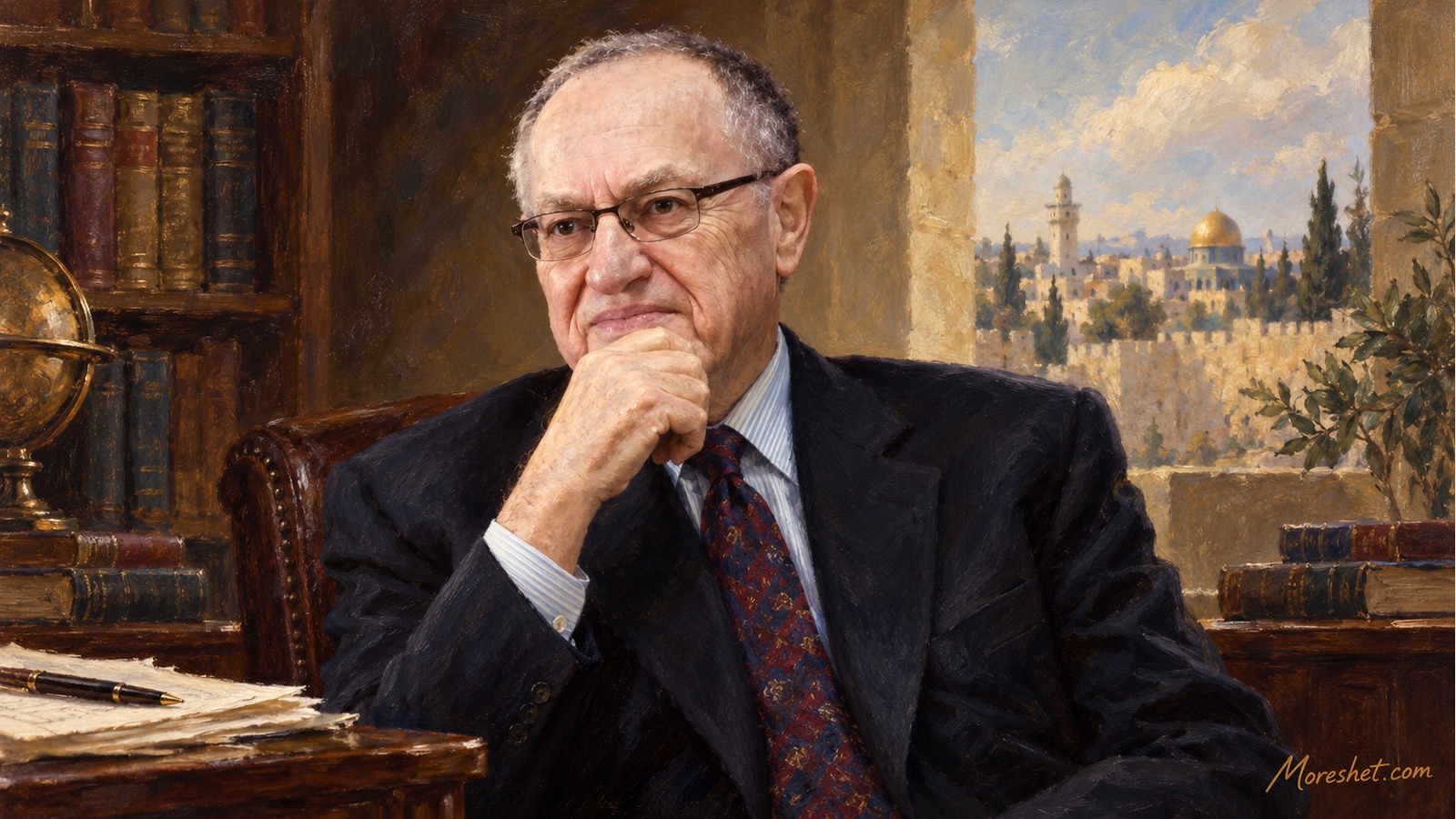
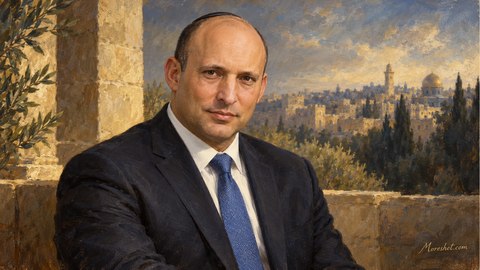
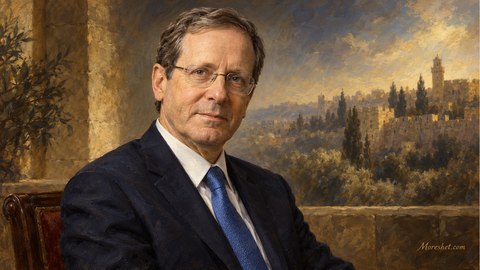
Alan Dershowitz — AI-generated artistic portrait · Moreshet.com
Jewish-American legal scholar, attorney, Harvard Law professor emeritus, author and public commentator, one of the best-known American voices on civil liberties, due process and the public defense of Israel
Alan Morton Dershowitz is a Jewish-American legal scholar, attorney, Harvard Law School professor emeritus, author, public commentator and constitutional advocate. For roughly five decades he was one of the most visible figures at Harvard Law School, where he began teaching at a young age and became a full professor at 28. Alongside his academic career, he became one of the best-known criminal and constitutional lawyers in the United States, represented clients in cases of enormous public attention, wrote extensively on law, civil liberties, Jewish identity and Israel, and became a frequent voice in American and international public debate.
Dershowitz is unusual because he has worked simultaneously in several arenas: university, courtroom, media, nonfiction writing, political commentary and Jewish advocacy. For many readers he represents the Jewish-American legal mind fighting for defendants’ rights, freedom of speech, due process and the rule of law; for others he is known above all as a forceful defender of Israel against international criticism. His importance for Jewish and Israeli heritage lies in that combination: an American lawyer of broad public stature who used his legal training, rhetorical skill and public platform to shape debates about American Jewry, antisemitism, Zionism, human rights, Israeli security and the relationship between law and public opinion.
Jewish childhood in Brooklyn and yeshiva education
Dershowitz was born on September 1, 1938, in Brooklyn, New York, into an Orthodox Jewish family. His parents, Harry and Claire Dershowitz, belonged to the urban Jewish world of New York, where synagogues, schools, community institutions, hard work and educational ambition formed a recognizable path of 20th-century American Jewish life. His father was connected to Young Israel of Boro Park and to Jewish communal institutions, and the home in which Alan grew up gave him intimate familiarity with traditional Jewish life even though, as an adult, he described himself as a secular Jew.
He studied in Jewish educational settings, including Brooklyn Talmudical Academy and the Yeshiva University High School branch in Brooklyn, before studying political science at Brooklyn College. From an early age he was described as sharp-tongued, self-confident, intellectually rebellious and unusually gifted in argument. His later joke about teachers telling him to choose a profession that required “a big mouth” became part of his personal mythology, but behind the humor was a biographical truth: Dershowitz turned argument, questioning and dissent into a life’s work.
In 1959 he graduated from Brooklyn College with honors and continued to Yale Law School. At Yale he became editor-in-chief of The Yale Law Journal, graduated first in his class, and received his law degree in 1962. This movement from Jewish Brooklyn to the top of American legal education was both a personal story and a generational story: the story of American Jews entering elite institutions while retaining a strong sense of Jewish memory, identity and public responsibility.
Judicial clerkships and rapid ascent at Harvard
After law school, Dershowitz clerked for Judge David Bazelon of the United States Court of Appeals for the District of Columbia Circuit, and then for Justice Arthur Goldberg of the United States Supreme Court. Goldberg, a prominent Jewish-American justice and liberal public figure, helped shape Dershowitz’s thinking about law, civil liberties, minority rights and the public role of the lawyer.
In 1964 Dershowitz joined the faculty of Harvard Law School. Three years later, in 1967, he became a full professor at an unusually young age. In 1993 he was appointed Felix Frankfurter Professor of Law, a chair named for the Jewish-American Supreme Court justice who helped shape modern American constitutional law. In 2013 he retired from active teaching at Harvard after a career of about fifty years, while continuing to write, comment, lecture and practice in selected legal matters.
At Harvard he taught generations of law students. He was not a quiet or merely formal lecturer; his classes, books and public appearances created the figure of a provocative, demanding and often uncomfortable teacher who pushed students to ask how law operates in a real world of power, media pressure, politics, fear and human error. His educational influence rests not only on the length of his service, but on the way he made legal issues intelligible to the broader public.
Criminal and constitutional lawyer in the public arena
Dershowitz became especially known for his work in criminal law, appeals and constitutional rights. He stood out as a lawyer willing to represent unpopular clients and to defend due process principles even when public opinion moved strongly against the accused. In his view, the quality of a legal system is tested precisely in cases in which the public is angry, the media is intense and the defendant is controversial.
Among his clients and legal involvements over the years have been Claus von Bülow, O. J. Simpson, Patty Hearst, Leona Helmsley, Mike Tyson, Jim Bakker, Julian Assange, Donald Trump and other widely known figures. One of his most famous legal successes was the appeal of Claus von Bülow, which led to the reversal of his conviction and a retrial in which von Bülow was acquitted. Dershowitz told the story in Reversal of Fortune, later adapted into a 1990 film.
The common thread in many of his cases was not personal sympathy for the client, but a conception of professional duty: a lawyer, especially in criminal and constitutional law, must defend the rules of the system even when society finds it hard to separate the person from his rights. This became one of Dershowitz’s central contributions to American legal debate: the repeated insistence that due process, the presumption of innocence, defendants’ rights and limits on state power are not luxuries, but foundations of liberty.
Books, public writing and law for a broad audience
Dershowitz has written dozens of books, including legal nonfiction, memoir, works on Israel and Jewish identity, legal novels and political commentary. Among his best-known books are The Best Defense, Reversal of Fortune, Chutzpah, Reasonable Doubts, The Genesis of Justice, Letters to a Young Lawyer, Why Terrorism Works, The Case for Israel, The Case for Peace, Taking the Stand and later works on free speech, censorship, Israel, terrorism, constitutional law and American politics.
The importance of these books lies not only in their number, but in the way they translate difficult legal questions into public language. Dershowitz has written about murder cases, free speech, political investigations, biblical justice, American Jewish identity, terrorism and security. He has sought to show that law does not live only inside courtrooms, but also in newspapers, universities, television, campuses and public consciousness.
Several of his books have been translated into Hebrew, including Chutzpah, The Case for Israel, Letters to a Young Lawyer, The Case for Peace and The Trials of Zion. These translations matter because they made Dershowitz familiar to Israeli readers not only as an American television commentator, but as an author who framed for Jewish and Israeli audiences questions of identity, self-defense, law, morality and politics.
Defending Israel in the international arena
One of the fields in which Dershowitz’s impact on Jewish and Israeli heritage is clearest is his legal and public advocacy for Israel. Over the years he has described himself as both pro-Israel and pro-Palestinian in the sense of supporting a political solution that would allow both peoples to live with national rights. In practice, however, he became especially known as a forceful defender of Israel against boycotts, international legal accusations, academic campaigns and media criticism.
His book The Case for Israel was written as a systematic response to claims against Israel. Dershowitz structured it around accusations, replies and evidence, trying to move the debate from slogans to history, law and proof. The Case for Peace presented his view of peace based on a Palestinian state alongside Israel, Israeli security, rejection of terrorism and rejection of a right of return that would effectively end Israel’s Jewish majority.
Dershowitz debated academics, politicians, boycott advocates and critics of Israel, including Noam Chomsky, Norman Finkelstein, Jimmy Carter and others. He attacked the Goldstone Report after Operation Cast Lead, criticized United Nations Security Council Resolution 2334, defended Israel’s right to fight Hamas and terrorism, and appeared repeatedly at universities, in the media and at Jewish public events. To his supporters, his strength was that he presented the defense of Israel not only as national loyalty, but as legal, moral and historical argument.
American Jewry, chutzpah and Jewish identity
Dershowitz is not only a defender of Israel; he is also a writer on American Jewry itself. In Chutzpah he addressed Jewish-American self-confidence, the right of Jews to stand up for themselves, and the obligation not to apologize for success, influence or Jewish identity. The book became one of the best-known expressions of assertive American Jewish identity in the late 20th century.
In The Vanishing American Jew he addressed assimilation and the future of American Jewish continuity. Rather than framing the issue only as a narrow religious question, Dershowitz presented Jewish identity as a matter of memory, family, education, culture, historical responsibility and continuity. He is a secular Jew, but not an indifferent one; much of his public writing grows out of the consciousness of an American Jew who feels responsibility toward the Jewish people.
In this sense, his contribution to Jewish heritage is not only legal or political. He belongs to a tradition of American Jewish public intellectuals who used public standing to ask what it means to be Jewish in a free, powerful, open and sometimes assimilating society. He called on Jews not to give up their public voice, not to fear confrontation, and not to accept a world in which support for Israel or Jewish pride is treated as a moral defect.
Civil liberties, free speech and due process
At the center of Dershowitz’s legal outlook is a commitment to civil liberties. He has written against capital punishment, defended freedom of speech, argued for the rights of defendants, opposed censorship, and criticized attempts to use the legal system to bypass constitutional protections. He has often taken positions that do not fit neatly into ordinary political categories, because he places the constitutional question at the center rather than the identity of the parties.
After the September 11 attacks, he wrote about interrogation, security and terrorism, raising proposals that he argued were meant to limit hidden and unregulated uses of state power even in emergencies. Some of these views drew strong opposition, but they also reflected his method: instead of assuming the state would not use force, he asked how law might regulate, document and constrain force when society demands security.
In debates over free speech, academia, cancel culture, social media and political polarization, Dershowitz has presented himself as a civil libertarian more than as a conventional party loyalist. He has criticized what he sees as liberal institutions moving away from their commitment to speech and due process, and in recent years has emphasized the danger of turning political disagreement into criminal accusation or social exclusion.
American politics, changing affiliation and independent voice
For decades, Dershowitz was identified with the Democratic Party and with American civil-libertarian liberalism. He supported Democratic candidates, including Hillary Clinton, Barack Obama and Joe Biden, and described himself as liberal on social and rights issues. Over time, however, his relationship with the Democratic Party changed, especially because of what he described as increasing hostility to Israel and Jewish interests among some figures and currents within the party.
In 2024 he said he had left the Democratic Party and become an Independent; in 2026 he published that he had registered as a Republican. In his account, the change did not mean simple agreement with every Republican position, but reflected his view that the American political system had shifted on Israel, antisemitism and constitutional liberties. The move made him an example of the upheaval in American Jewish politics in the current generation.
At the same time, he has continued to argue that his legal positions are not driven by party loyalty but by constitutional principle. That is how he explained joining Donald Trump’s defense team in the 2020 impeachment trial: not as an endorsement of Trump’s personality or policies as a whole, but as a defense of his interpretation of impeachment and its limits. Even where many disagreed with him, the episode illustrated a recurring tension in his public life: a lawyer trying to separate legal principle from political camp, while operating in a world where that separation has become increasingly difficult.
Israel, academia and Israeli society
Dershowitz has maintained many ties with Israel and Israeli academic institutions. He has lectured in Israel, taught in connection with the Radzyner Law School at Reichman University, received an honorary doctorate from the University of Haifa in 1993, and in 2010 received an honorary doctorate from Tel Aviv University and an honorary fellowship from the Interdisciplinary Center Herzliya. He has also been involved in Jewish and public causes, including activity connected to the remaining Ethiopian Jewish community.
His views on Israel have not always matched a single Israeli government line. He has supported Israel as the nation-state of the Jewish people, defended the Israel Defense Forces and Israel’s right of self-defense, while also expressing support over the years for a two-state solution and criticizing measures he believed could harm Israel’s democratic standing. He praised the Israeli Supreme Court in the past and opposed certain efforts to weaken its authority.
That combination — deep support for Israel together with willingness to argue internally about democracy, law and policy — made him an important figure in Israeli-Jewish discourse. He gave Israel an external advocate with sharp legal language, while also reminding audiences that support for Israel does not require silence about internal debates. In that respect, he is part of a broader Diaspora Jewish tradition that sees itself as partner, critic, defender and responsible stakeholder.
Recognition, influence and professional legacy
During his career, Dershowitz has received many honors, awards and honorary degrees. He was named a Guggenheim Fellow, received the William O. Douglas First Amendment Award from the Anti-Defamation League, the Soviet Jewry Freedom Award from the Russian Jewish Community Foundation, and the Menachem Begin Award of Honor from the Menachem Begin Heritage Center. He has received honorary doctorates from institutions including the University of Haifa, Bar-Ilan University, Yeshiva University, Syracuse University and Brooklyn College.
His influence, however, is not measured only by awards. It is visible in the students and readers who encountered through him questions of criminal law, civil liberties, defendants’ rights, Israel, antisemitism and Jewish identity. He helped turn the lawyer into a public educator: not only someone who appears in court, but someone who teaches the public how to think about evidence, argument, constitutional limits, moral responsibility and the power of public opinion.
Dershowitz is also a controversial figure, and his career includes clients, positions and public battles that drew sharp criticism. A contribution-focused profile should not erase that fact, but it also should not reduce his life to controversy alone. His historical significance lies in the fact that for decades he has been one of the world’s best-known Jewish-American lawyers, a voice that shaped how millions understood law, Israel, civil liberty and the right of a person to a defense.
Why this legacy belongs in Moreshet
Alan Morton Dershowitz merits inclusion in Moreshet because he embodies an important chapter in modern Jewish-American heritage: the son of an Orthodox Jewish family in Brooklyn who became one of the most prominent legal scholars, teachers and public voices in the United States. His contribution includes long service at Harvard Law School, shaping public debate on defendants’ rights and civil liberties, writing books that brought law and Jewish identity to wide audiences, and consistently defending Israel in academic, legal and media arenas.
Moreshet.com documents Dershowitz because Jewish and Israeli heritage includes the voices that worked outside Israel to defend the dignity, security and legitimacy of the Jewish state, as well as Jewish lawyers who influenced the values of the democratic world. Alan Morton Dershowitz’s place in Moreshet rests on the combination of law, teaching, writing, public commentary, Jewish identity, the fight against antisemitism and Israel advocacy — a combination that made him one of the Jewish-American figures most strongly associated with the public struggle over justice, liberty and Israel in recent generations.