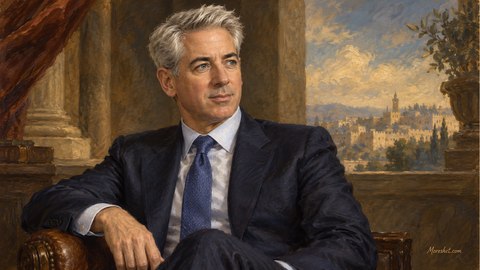
Amir Yaron
The financial economist who led the Bank of Israel through a pandemic, inflation and war
Professor Amir Yaron is an Israeli economist, an influential scholar of financial economics and the tenth Governor of the Bank of Israel. Since taking office on December 24, 2018, he has led Israel’s central bank, chaired its Monetary Committee and served, as the law provides, as economic adviser to the government. Decisions made by the Bank during his tenure reach into nearly every Israeli household: they affect the cost of mortgages and credit, returns on savings, the value of the shekel, financing for businesses and the resilience of the financial system in a crisis.
Yaron came to public office after a long academic career in the United States focused on the relationship among long-term economic risk, investor behavior and asset prices. That research background acquired unusual practical relevance as Israel faced, within a few years, the COVID-19 pandemic, a global inflation shock and the economic disruption of the war that began on October 7, 2023.
From Israel to American economic scholarship
Amir Yaron was born in Tel Aviv in February 1964 and grew up in Ramat Hasharon and Ramat Gan. His father, Yaakov Yaron, was an economist who worked at Bank Hapoalim, held management positions in Israeli industry and later specialized in emerging markets at the World Bank. His mother, Hadara, was a teacher and psychologist. The family moved to the United States because of his father’s work, but Yaron returned to Israel for military service.
He studied economics through the Israel Defense Forces’ academic reserve program and served from 1985 to 1989 as an officer in the unit of the financial adviser to the IDF chief of staff, leaving with the rank of captain. He earned bachelor’s and master’s degrees in economics from Tel Aviv University, completing the latter with distinction in 1989. At the University of Chicago, he received another master’s degree in 1992 and a doctorate in 1994. His doctoral adviser was Lars Peter Hansen, who later received the Nobel Memorial Prize in Economic Sciences.
Research that reshaped the study of long-term risk
After serving on the faculty of Carnegie Mellon University, Yaron joined the Wharton School of the University of Pennsylvania in 1997. He became a full professor and the Robert Morris Professor of Banking in 2009. His research covered asset pricing, macro-finance, investment and international markets. He was also affiliated with the National Bureau of Economic Research and served as a visiting scholar at the Federal Reserve Bank of Philadelphia.
The Bansal–Yaron model
Yaron’s best-known scholarly contribution was developed with economist Ravi Bansal. Their 2004 paper, Risks for the Long Run: A Potential Resolution of Asset Pricing Puzzles, proposed a framework in which small but persistent changes in expected economic growth and uncertainty can produce large effects on stock and bond prices. Known as the Bansal–Yaron model, or the long-run risks model, it offered an important way to address the equity premium puzzle: why stocks have historically delivered much higher returns than safer assets.
The paper’s importance extends beyond the explanation of a financial statistic. It connected household decisions about saving and consumption to fears of prolonged weakness, policy shifts and global disruption. It helped generate a broad research literature on how long-horizon risks are reflected in financial markets. In 2019, Bansal and Yaron received the Stephen A. Ross Prize in Financial Economics from the Foundation for the Advancement of Research in Financial Economics. The prize committee described their work as a fundamental contribution to asset pricing and to the intersection of finance and macroeconomics.
Yaron also studied models that account for differences among consumers and firms, as well as questions involving human capital, earnings, unemployment and social insurance. His academic career therefore revolved around a question with direct public consequences: how uncertainty and risk shape not only markets, but also people’s welfare and choices.
Tenth Governor of the Bank of Israel
Yaron was selected to become Governor of the Bank of Israel in October 2018 and took office that December, succeeding Karnit Flug. In November 2023, the government approved his appointment to a second five-year term. In his inaugural address, he emphasized responsible monetary policy, investment in infrastructure and human capital to raise productivity, and the use of financial innovation to foster competition.
The governor does not set interest rates alone; those decisions belong to the Monetary Committee. The governor nevertheless chairs the committee, represents the Bank before the government and the public, and helps set its institutional priorities. Under Yaron, the committee moved in a short span from exceptionally low rates to a forceful tightening cycle, and then had to balance price stability with support for an economy operating under wartime conditions.
Protecting financial activity during COVID-19
The COVID-19 outbreak in 2020 was the first severe test of Yaron’s governorship. Lockdowns and the abrupt contraction in activity threatened the cash flow of households and businesses and disrupted liquidity in financial markets. The Monetary Committee reduced the policy rate to 0.1 percent in April 2020, but the Bank’s principal response went far beyond conventional interest-rate policy.
Under Yaron’s leadership, the Bank deployed a range of measures to keep markets functioning and credit available. It purchased government and corporate bonds, conducted repo transactions to inject liquidity against collateral, used dollar–shekel swaps and offered targeted loans to the banking system to support lending to small and micro businesses. It also temporarily reduced bank capital requirements and helped establish arrangements allowing borrowers to defer loan payments.
At the same time, Yaron argued that an extraordinary shutdown required substantial fiscal assistance, even at the cost of a temporary rise in public debt and the deficit. In his advisory role, he supported a budgetary safety net, aid for damaged businesses and employment programs, while emphasizing that such measures should be organized through a proper state budget. The combination of monetary support, credit relief and fiscal intervention helped the Israeli economy absorb an exceptional health and economic shock.
Responding to the inflation surge
As the economy emerged from the pandemic, Israel joined much of the world in confronting inflation driven by supply-chain disruptions, rising energy and commodity prices, and strong demand. Between April 2022 and May 2023, the Monetary Committee raised the Bank of Israel rate from 0.1 percent to 4.75 percent. Its purpose was to bring inflation back toward the target range and prevent higher inflation from becoming embedded in expectations and wage-setting.
Rate increases impose real costs on mortgage holders and other borrowers, but their intended public benefit is to protect purchasing power and prevent the continuing erosion of savings. In January 2024, after inflation had moderated and while the economy was contending with war, the committee cut the rate by a quarter percentage point to 4.5 percent. The decision reflected the difficult balance among price stability, orderly markets and support for economic activity.
Competition, payments and practical consumer tools
Alongside monetary policy, the Bank of Israel pursued a modernization of financial infrastructure during Yaron’s tenure. The nationwide transition to the EMV payment standard expanded contactless payments and helped digital wallets such as Apple Pay enter the Israeli market. The Bank also advanced instant payments, open banking and research into a possible future digital shekel. These initiatives were designed to make transfers easier, allow customers to share their financial data with consent and enable new service providers to compete with established banks.
A mortgage-transparency reform introduced in 2022 required banks to present preliminary approvals and standardized mortgage baskets in a more uniform format. It made comparison easier for households facing one of the largest financial obligations of their lives. In 2023, the Bank launched its online comparison environment, known in Hebrew as Kav HaMashווה, bringing together comparative information about deposits, credit, fees and other banking products. Licenses were also granted to new digital banks during Yaron’s tenure as part of a wider effort to reduce entry barriers and increase competition.
Productivity, human capital and fiscal responsibility
One of Yaron’s recurring concerns has been Israel’s productivity gap relative to other developed economies. In 2019, the Bank published a broad program calling for investment in education, vocational training, transportation and infrastructure. Its central idea was consequential: durable growth cannot depend only on a highly productive technology sector. It requires wider access to skills and employment, including in Haredi and Arab communities.
In 2021, the Bank presented the incoming government with a strategic economic plan organized around four pillars: human capital; infrastructure and physical investment; development of financial markets; and improved digitization and regulation in the public sector. Throughout his tenure, Yaron also stressed fiscal discipline, the debt-to-GDP ratio and the importance of maintaining the credibility of Israel’s institutions among investors and rating agencies.
An economic response to the October 7 war
After the October 7, 2023 attack, Israel faced an acute security, humanitarian and economic shock. Before the principal foreign-exchange markets opened on October 9, the Bank of Israel announced a program allowing the sale of up to $30 billion in foreign currency and additional swap transactions. Establishing such a large backstop was intended to moderate extreme movements in the shekel, provide liquidity and demonstrate that the Bank had both the resources and the willingness to act.
The Bank and the commercial banking system also developed programs for deferring mortgage and loan payments and granting relief from some interest and fees. The main benefits were directed toward residents of affected or evacuated communities, relatives of hostages, missing people and those killed, military reservists and other groups directly harmed by the war. Complementary measures supported credit for small and micro businesses. These programs illustrated how a central bank can connect system-wide stability with targeted relief for people whose homes, livelihoods and income were suddenly disrupted.
Yaron also represented Israel before central banks, international financial institutions and global economic forums, explaining the condition of the Israeli economy to policymakers and investors. At home, he called for prioritizing war-related expenditure, conducting a professional examination of the defense budget and making fiscal adjustments capable of preserving Israel’s long-term ability to finance security and reconstruction.
Why Amir Yaron’s legacy belongs in Moreshet
Amir Yaron merits inclusion in Moreshet because his work connects an internationally significant research contribution with public service that directly affects Israeli society. The long-run risks framework he developed with Ravi Bansal deepened understanding of the relationship among uncertainty, growth and asset prices. As Governor of the Bank of Israel, he has had to apply economic knowledge under the real pressures of a pandemic, inflation and war.
His significance to Israeli heritage lies not simply in the office he holds, but in the institutional responsibility behind it: protecting price and banking stability, sustaining confidence in the shekel, expanding consumer tools, and modernizing payments and financial competition. Such decisions affect families, savers, business owners and reservists, as well as the State of Israel’s ability to function during periods of extreme uncertainty. By documenting his work, Moreshet.com preserves an important dimension of contemporary Jewish and Israeli experience: a durable state depends not only on political and military leadership, but also on professional institutions, economic knowledge and long-term responsibility to the public.