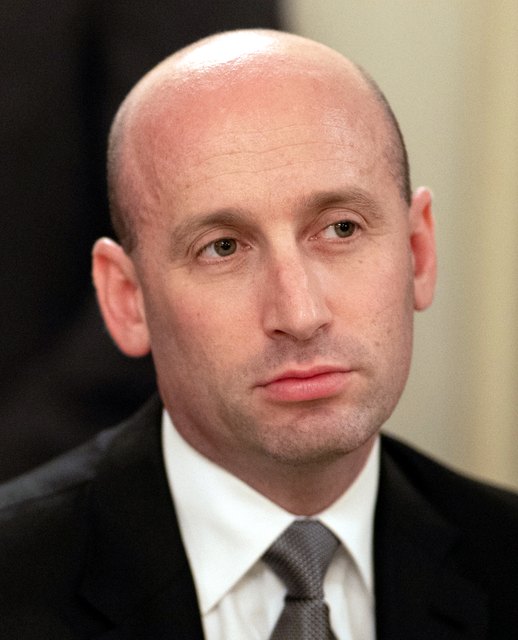
Yuli Yoel Edelstein
From underground Hebrew teacher and Prisoner of Zion to Speaker of the Knesset and Israeli cabinet minister
Yuli Yoel Edelstein is an Israeli politician, public servant and former Prisoner of Zion whose life connects the struggle for Soviet Jewish freedom with decades of service in Israel's national institutions. He taught Hebrew when doing so exposed him to surveillance and arrest, endured imprisonment and forced labor after being denied permission to immigrate to Israel, and became an advocate for the Soviet Jews who followed him in making aliyah. He later served as minister of immigrant absorption, minister of public diplomacy and diaspora affairs, minister of health, and Speaker of the Knesset.
His journey from refusenik to the presiding officer of Israel's parliament carries significance beyond personal achievement. It reflects a defining chapter of modern Jewish history: a campaign for language, identity and freedom that helped reconnect Soviet Jews with Jewish culture and Israel, mobilized Jewish communities around the world, and eventually brought former dissidents and new immigrants into the leadership of the Jewish state.
Jewish roots and a Zionist awakening in the Soviet Union
Edelstein was born Yulian Yuryevich Edelstein on August 5, 1958, in Chernivtsi, then part of the Ukrainian Soviet Socialist Republic and now in Ukraine. He grew up in a society that severely restricted independent Jewish communal life, yet his family preserved points of connection with Jewish identity and Israel. His maternal grandfather taught himself Hebrew late in life and listened to the Voice of Israel on shortwave radio. For the young Edelstein, Hebrew and books about Israel opened a path toward a heritage the Soviet system had pushed out of public life.
In the late 1970s, Edelstein applied for an exit visa in the hope of immigrating to Israel. Soviet authorities refused his request, making him a refusenik. He joined small circles of Jews who studied Hebrew in private apartments and soon became a teacher himself. These classes did more than impart grammar and vocabulary. Hebrew gave students access to Jewish history, prayer, literature and contemporary Israeli life, while preparing them for the aliyah they hoped one day to make.
Taking Hebrew beyond Moscow
In 1979, Edelstein and fellow activists helped establish an underground initiative known as the City Project. It trained Hebrew teachers and distributed learning materials beyond the largest centers of Soviet Jewish activism. By expanding the reach of instruction, the organizers helped scattered Jewish communities build their own circles of learning. The teachers and students formed a human network that preserved Jewish consciousness at a time when autonomous Jewish institutions were rarely permitted to function.
The KGB and local police subjected Edelstein to surveillance and harassment. He was expelled from his studies and forced to support himself through temporary work, including jobs as a street cleaner, security guard and model for art classes. He nevertheless continued teaching Hebrew and participating in Zionist activity. His persistence made him part of the informal educational infrastructure through which Soviet Jews sustained their relationship with the Jewish people and Israel.
Arrest, forced labor and an international campaign
Soviet authorities arrested Edelstein in September 1984. He was charged with possessing drugs in a case widely described by refuseniks and human-rights advocates as a fabrication intended to halt his Zionist work. Convicted that December, he was sentenced to three years in prison and forced-labor camps. After detention in Moscow's Butyrka Prison, he was sent to penal colonies in Siberia, including camps in Buryatia and the Novosibirsk region.
Edelstein continued to defend his Jewish identity while incarcerated. When prison authorities confiscated a pair of tefillin he had kept secretly, he began a hunger strike that lasted 15 days. At a labor camp he suffered severe injuries after falling from a construction tower and breaking several bones. His wife, Tatiana, who shared his Zionist commitment, campaigned persistently for his safety and threatened a hunger strike if he were returned to a camp where his health would be endangered.
His imprisonment prompted action far beyond the Soviet Union. Jewish organizations, aliyah activists and political leaders in Israel and the United States joined calls for his release. Their campaign formed part of the larger international movement for Soviet Jewry, which united communities across borders and placed freedom of emigration and Jewish identity on the diplomatic agenda. Edelstein was released on May 13, 1987, on the eve of Israel's Independence Day, and was among the last prominent refuseniks freed in that period. He and his family made aliyah in July 1987.
Building a life in Israel and representing new immigrants
After arriving in Israel, Edelstein settled in Alon Shvut in Gush Etzion. He completed national service in the Israel Defense Forces, worked in education and held management positions in schools. His experience as a Hebrew teacher and new immigrant gave him a direct understanding of the practical challenges facing immigrants: language, housing, employment, education and navigating unfamiliar state institutions.
From 1988 to 1996, he served as vice president of the Zionist Forum, an organization representing former refuseniks and Zionist activists who had immigrated from the Soviet Union. He also worked in immigrant education and absorption. This service coincided with the large wave of immigration from the former Soviet republics, which transformed Israeli society. Organizations such as the Zionist Forum helped newcomers speak collectively, communicate their needs to the government and become active participants in civic life.
Co-founding Yisrael BaAliyah
Edelstein joined Natan Sharansky and other activists in founding Yisrael BaAliyah, a political party created to represent immigrants and advance their integration into Israeli society. He was elected to the Knesset in 1996 and appointed minister of immigrant absorption. The appointment had both symbolic and practical weight: a former Prisoner of Zion was now responsible for the government ministry assisting people through the process he had fought to undertake.
As minister from 1996 to 1999, and later as deputy minister from 2001 to 2003, Edelstein worked on policies involving housing, services and integration. His ministry pursued subsidized housing solutions for elderly immigrants, among other programs. More broadly, the entry of former Soviet Jewish activists into government helped transform immigrants from recipients of state assistance into participants in national decision-making.
Legislation and parliamentary service
Edelstein served in the Knesset from 1996 to 2006 and returned in February 2007. His legislative interests extended beyond immigration. He initiated an amendment, enacted in 2001, that allowed a person who did not regularly work as a legal representative to assist a litigant without payment in small-claims court, subject to the law's conditions. He also advanced animal-welfare legislation aimed at discouraging abandonment and enabling organizations, municipalities and veterinarians that cared for abandoned animals to recover expenses from those responsible.
After Yisrael BaAliyah merged with Likud in 2003, Edelstein continued his parliamentary career in Likud and served as a deputy speaker of the Knesset. From 2009 to 2013, he was minister of public diplomacy and diaspora affairs. The role involved Israel's relationship with Jewish communities abroad as well as the presentation of Israel's positions internationally. For someone whose own freedom had been championed by diaspora Jews, responsibility for ties between Israel and world Jewry carried a clear biographical resonance.
Seven years as Speaker of the Knesset
In March 2013, Edelstein was elected the 16th Speaker of the Knesset with the support of 96 members and no opposing votes. He was chosen for additional terms in 2015 and 2019 and remained Speaker until March 2020. His seven years in the position made him one of the longer-serving speakers in the history of Israel's parliament.
The Speaker presides over the plenary, oversees parliamentary procedure and represents the Knesset at home and abroad. In speeches to newly elected members, Edelstein described parliamentary office as public service rather than personal power and urged lawmakers to remain accountable to all citizens, including those who had not voted for them. He also worked to strengthen the Knesset's ability to supervise the executive branch. In 2017, he initiated a parliamentary unit for coordinating oversight, intended to help committees and legislators monitor government commitments, decisions and implementation.
Speaking Hebrew in the Russian parliament
One of the most resonant moments of his speakership came during an official visit to Russia in June 2017. Edelstein returned to the home searched before his arrest and to the cell where he had been detained. He then addressed the upper chamber of the Russian parliament in Hebrew. He recalled that 33 years earlier he had been arrested in Moscow for teaching the language in which he now spoke as Speaker of Israel's Knesset. The occasion marked a personal homecoming, but it also embodied a historic reversal for Soviet Jewry: the language once taught clandestinely was now being used openly by a representative of the State of Israel inside a central institution of Russian government.
Health minister during the COVID-19 crisis
Edelstein became minister of health in May 2020, during the COVID-19 pandemic, and served until June 2021. It was a period of medical uncertainty, heavy pressure on hospitals and public services, and an urgent need to expand testing, treatment and vaccination capacity. During his tenure, he appointed Professor Hezi Levy as director-general of the Health Ministry and Professor Ronni Gamzu as the national coronavirus coordinator.
The Health Ministry under Edelstein helped administer Israel's large vaccination campaign, which began in December 2020, and developed the Green Pass framework. The pass enabled vaccinated and recovered residents to return gradually to workplaces, cultural events and sports under public-health rules. At the end of 2020, Edelstein and the finance minister agreed on an additional NIS 50 million for Israel's publicly funded basket of medicines. His decisions were made amid rapidly changing conditions, but his tenure encompassed the period in which vaccination became Israel's central instrument for emerging from broad pandemic restrictions.
Chairing the Foreign Affairs and Defense Committee
In January 2023, Edelstein became chair of the Knesset Foreign Affairs and Defense Committee, serving until August 2025. The committee is one of parliament's most sensitive bodies, responsible for oversight of foreign policy, the Israel Defense Forces, the security services and national preparedness. During his chairmanship, it held discussions on military readiness, threats on Israel's northern border and aspects of the war that followed the October 7, 2023 attack, including the plight of the hostages.
He also advanced an amendment to the Disengagement Plan Implementation Law that removed the prohibition on Israelis entering parts of the northern West Bank evacuated in 2005. His chairmanship ended in 2025 amid a dispute over military-service legislation and his insistence that the proposed framework include effective penalties for those who failed to meet service obligations. Whatever the varying political assessments of particular policies, his work in the committee and cabinet illustrates his long transition from campaigning for Jewish rights in the Soviet Union to participating in the central responsibilities of Israeli statehood.
A legacy of language, aliyah and public responsibility
Hebrew provides a thread through Edelstein's life. In the Soviet Union, he taught it in secret so that Jews could recover knowledge of their people and prepare for aliyah. In Israel, he worked in education and immigrant absorption, helped new immigrants gain political representation, and ultimately presided in Hebrew over the national legislature of the country he had once been forbidden to enter.
His story also demonstrates the reach of international Jewish solidarity. The effort to free him was part of a worldwide movement involving Jewish communities, human-rights advocates and political leaders. After his release, Edelstein brought the experience of the refusenik movement into Israeli public life. In doing so, he helped turn the memory of Soviet persecution into a source of civic participation, immigrant leadership and influence within the state.
Editorial note on inclusion
Yuli Edelstein is included on the site even though this person and their public record are controversial among broad sections of the public. Inclusion does not determine whether the influence is positive or negative; it reflects the significant place this figure holds in shaping the lived experience, culture and way of life of the public. Naturally, some regard this activity as positive and even heroic, while others see it as contrary to their worldview. The very existence of opposing assessments is part of the historical record that justifies including this significant and influential figure in the heritage of the Jewish people.
Why Yuli Yoel Edelstein's legacy belongs in Moreshet
Yuli Yoel Edelstein merits inclusion in Moreshet because his biography brings together several major developments in modern Jewish and Israeli history: the preservation of Jewish identity under Soviet rule, Hebrew instruction as an act of cultural resistance, the international campaign for Soviet Jewry, the absorption of a transformative wave of aliyah, and the emergence of immigrants as leaders of the State of Israel. These are not merely positions on a résumé. They represent work that affected clandestine Hebrew students, immigrants seeking representation and assistance, and the institutions through which Israelis govern their shared civic life.
By documenting his story, Moreshet.com preserves an important Jewish historical arc: a man imprisoned for seeking to live openly as a Jew in Israel later became the presiding officer of its elected parliament. His public record continues to invite differing assessments, but his role in carrying the experience of Soviet Jewry into Israeli national leadership gives his life enduring Jewish, historical and civic significance.