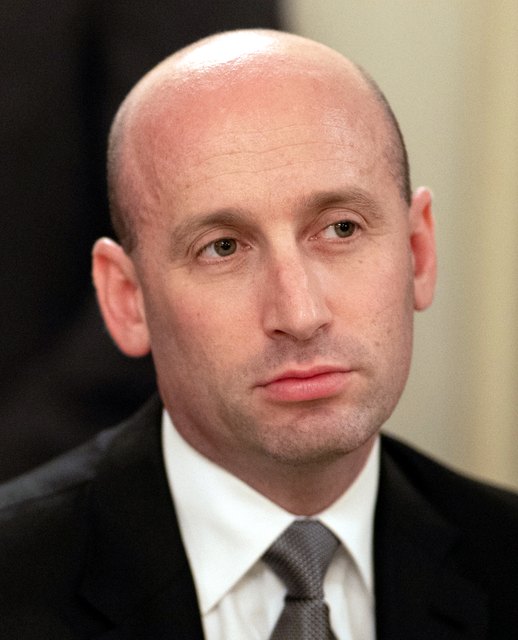
Ron Dermer
The diplomat and strategist at the center of pivotal moments in U.S.–Israel relations and regional statecraft
Ron Dermer is an American-born Israeli diplomat, policy strategist and former cabinet minister who has played a consequential role in Israel's relationship with the United States. He served as Israel's ambassador in Washington from 2013 to 2021 and as minister of strategic affairs from 2023 to 2025. Across those assignments, he worked on some of Israel's most sensitive priorities: American security assistance, Iran's nuclear program, the Abraham Accords, relations with Arab states and negotiations for the return of hostages from Gaza.
Dermer's distinctive value has been his command of both American political culture and Israeli strategic thinking. He has spent much of his career interpreting Israel's security concerns for policymakers in Washington while helping decision-makers in Jerusalem understand Congress, the White House, American public opinion and the country's decentralized political system. His influence has therefore often been exercised away from ceremonial diplomacy, through sustained negotiation, political analysis and relationships developed over many years.
American Jewish roots and a life chosen in Israel
Dermer was born in Miami Beach, Florida, on April 16, 1971. His mother, Yaffa Rosenthal Dermer, was born in Mandatory Palestine to parents who had left Poland and Germany amid rising European antisemitism. His father, Jay Dermer, was a New York-born lawyer who served as mayor of Miami Beach; Ron's brother David later held the same office. Public service, Jewish identity and a close connection to Israel were therefore present throughout his upbringing.
He attended a Jewish day school in Miami Beach and graduated magna cum laude from the University of Pennsylvania's Wharton School, concentrating in finance and management. He then studied philosophy, politics and economics at Oxford University. At Oxford he served as president of the L'Chaim Society, a student organization devoted to Jewish culture and intellectual life on campus.
In the mid-1990s Dermer began working with former Soviet dissident Natan Sharansky and Yisrael BaAliyah, the party established to represent immigrants from the former Soviet Union. He helped conduct polling and formulate strategy for its successful 1996 Knesset campaign and worked with Sharansky again in 1999. The experience brought him into Israeli political life through questions of immigration, integration, Jewish identity and freedom. Dermer moved to Israel, became an Israeli citizen and relinquished his American citizenship in 2005 when he entered Israel's diplomatic service.
Political writing and the case for democratic freedom
From 2001 to 2004, Dermer wrote a column called The Numbers Game for The Jerusalem Post. Drawing on his background in polling and strategy, he examined elections, public opinion and the way political institutions shape national choices.
In 2004 he and Sharansky published The Case for Democracy: The Power of Freedom to Overcome Tyranny and Terror. The book argued that durable peace depends not only on agreements between leaders but also on accountable institutions, free societies and the ability of citizens to challenge their rulers without fear. Whether or not readers accepted every element of its thesis, the book gave international prominence to an argument connecting domestic freedom with security and peaceful relations between states. Its ideas received attention from senior American officials, including President George W. Bush and Secretary of State Condoleezza Rice.
Economic envoy and the foundations of his Washington career
Dermer served as Israel's economic minister in Washington from 2005 to 2008. His portfolio included security assistance, trade and Israeli economic and technological interests. He contributed to work on the ten-year U.S.–Israel security assistance memorandum signed in 2007. He also met state legislators and other officials to encourage public pension funds to divest from companies doing business with Iran. In 2007, his native Florida became the first state to enact such legislation.
This assignment gave Dermer practical experience with the many centers of American power—not only the federal administration and Congress, but also state governments and public institutions. After returning to Israel, he worked on Benjamin Netanyahu's election campaign and became a senior adviser in the Prime Minister's Office in 2009. He helped shape diplomatic messages and speeches and managed sensitive contacts with Washington, emerging as one of Netanyahu's most trusted advisers on foreign affairs.
Ambassador to the United States
Dermer became Israel's ambassador to the United States in 2013 and remained in the post for more than seven years, serving during the presidencies of Barack Obama and Donald Trump. His unusually long tenure required him to work with administrations whose priorities and approaches differed substantially, while maintaining relationships with Congress, American Jewish communities, civic organizations, the media and leaders across the country.
A long-term security commitment
One of the most important institutional achievements of his ambassadorship was the ten-year memorandum of understanding signed in September 2016, under which the United States committed $38 billion in security assistance to Israel. At the time, it was the largest agreement of its kind. The package resulted from negotiations between two governments and the work of many professional and political officials. As ambassador and a central channel between Jerusalem and Washington, Dermer helped move the process forward despite serious policy disagreements between the governments.
Making Israel's case on Iran
Dermer was a leading figure in Israel's campaign to explain its objections to the 2015 nuclear agreement with Iran. He helped present Israel's position to Congress and the American public, including in connection with Netanyahu's address to a joint meeting of Congress. The central Israeli concern was that the agreement preserved substantial Iranian nuclear infrastructure and allowed important restrictions to expire after a defined period, regardless of Iran's regional conduct. The United States withdrew from the agreement in 2018 and restored sanctions on Iran. That change cannot be credited to any one individual, but Dermer's sustained advocacy made Israel's security analysis a prominent part of the American debate.
Jerusalem, the Golan Heights and the Abraham Accords
During Dermer's ambassadorship, the United States recognized Jerusalem as Israel's capital and moved its embassy there in May 2018. In March 2019, it recognized Israeli sovereignty over the Golan Heights. Dermer operated at the intersection of the Israeli government, the White House and Washington's foreign-policy community as these decisions were advanced.
His most far-reaching regional contribution was his part in bringing the Abraham Accords to fruition in 2020. The accords established formal relations between Israel and the United Arab Emirates and Bahrain, followed by normalization understandings with Morocco and Sudan. Their significance extended beyond diplomatic ceremonies: they opened new routes for travel, trade, tourism, investment, technology and direct contact among societies. Dermer took part in the discreet diplomacy and strategic work that helped turn shared interests into public relationships.
Near the end of his ambassadorship, his diplomatic network also intersected with urgent human needs. Pfizer chief executive Albert Bourla credited Dermer with helping Israel obtain millions of doses of the Pfizer–BioNTech COVID-19 vaccine. Jonathan Pollard identified him as one of the people who assisted efforts leading to Pollard's release and eventual arrival in Israel. Neither outcome was the work of one person, but both illustrate how high-level diplomacy can affect public health and the lives of individuals and families.
From diplomacy to strategic affairs
After leaving the embassy in January 2021, Dermer became a distinguished fellow at the Jewish Institute for National Security of America, where he contributed to discussion of Israeli security and the U.S.–Israel alliance. He later joined the Jerusalem-based investment firm Exigent Capital and worked on strategic investment in the Persian Gulf. That work connected the diplomatic opening created by the Abraham Accords with the new economic relationships developing across the region.
Dermer was selected to lead the restored Ministry of Strategic Affairs in late 2022 and served as minister from 2023 until November 2025. His responsibilities included countering Iran's nuclear program, strengthening the American alliance, consolidating the Abraham Accords and pursuing wider relations with Arab states. Following the October 7, 2023 attack and the outbreak of war, he became an observer in Israel's smaller war cabinet and participated in highly sensitive security and diplomatic deliberations.
Negotiations for the hostages
In February 2025, Prime Minister Netanyahu placed Dermer in charge of negotiations for the release of Israeli hostages held by Hamas in Gaza. The assignment required him to coordinate with U.S. envoy Steve Witkoff and regional intermediaries, bringing together diplomacy, security policy, American relations and responsibility for the fate of Israeli captives and their families. In October 2025, the Israeli delegation he headed signed an agreement in Egypt addressing the release or return of the 48 living and deceased hostages who remained in captivity at that time.
Dermer resigned as minister of strategic affairs in November 2025. Reports after his departure indicated that he continued to advise Netanyahu on strategic questions and relations with the United States, extending his influence beyond the boundaries of formal office.
Diplomacy built on knowledge and relationships
Dermer's impact cannot be measured only by the offices he has held. His professional strength has rested on the ability to work over long periods with presidents, prime ministers, advisers, legislators and communities; to understand the political language spoken by each side; and to preserve continuity as administrations and balances of power changed. His career demonstrates that the U.S.–Israel alliance is sustained not only by public declarations, but also by institutional knowledge, careful preparation, trust and durable personal relationships.
Outside government, Dermer also played American football in Israel. He competed as a quarterback, represented Israel internationally and entered the inaugural class of the Israeli Football Hall of Fame in 2014. As ambassador, he helped organize visits to Israel by celebrated members of the Pro Football Hall of Fame, using sport as an informal bridge between American society and Israel.
Why Ron Dermer's legacy belongs in Moreshet
Ron Dermer belongs in Moreshet because his work has touched several practical foundations of life in the Jewish state: Israel's security, its relationship with its principal ally, Jerusalem's diplomatic standing, its integration into the Middle East and the effort to bring Israeli captives home. His contribution was not confined to the ceremonial side of diplomacy. He participated in negotiations and built relationships that affected security funding, regional commerce, public health and the lives of Israeli families.
His biography also illuminates a wider Jewish story: an American Jew with deep family ties to Israel who made aliyah, relinquished the citizenship of his birthplace and represented Israel at the highest levels of diplomacy and government. By preserving this account, Moreshet and Moreshet.com show how Diaspora Jewish identity, immigration to Israel, political thought and public service can converge in one life of national influence. Dermer's part in the Abraham Accords, long-term security arrangements and the continuing U.S.–Israel dialogue gives that story significance beyond a single career, reaching Israel's place in the Middle East and the wider world.