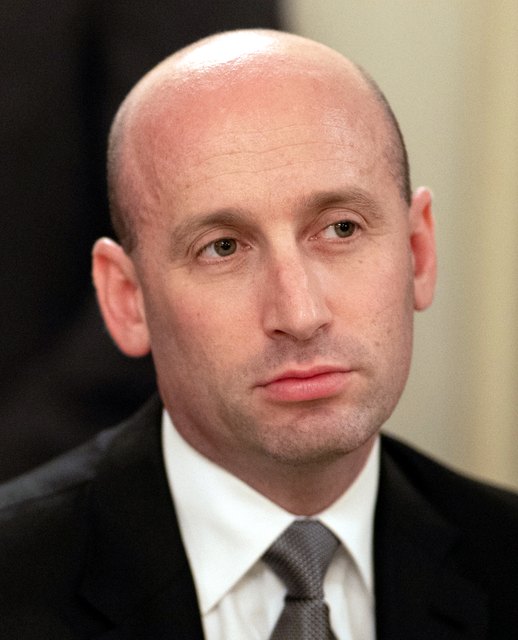
Naftali Bennett
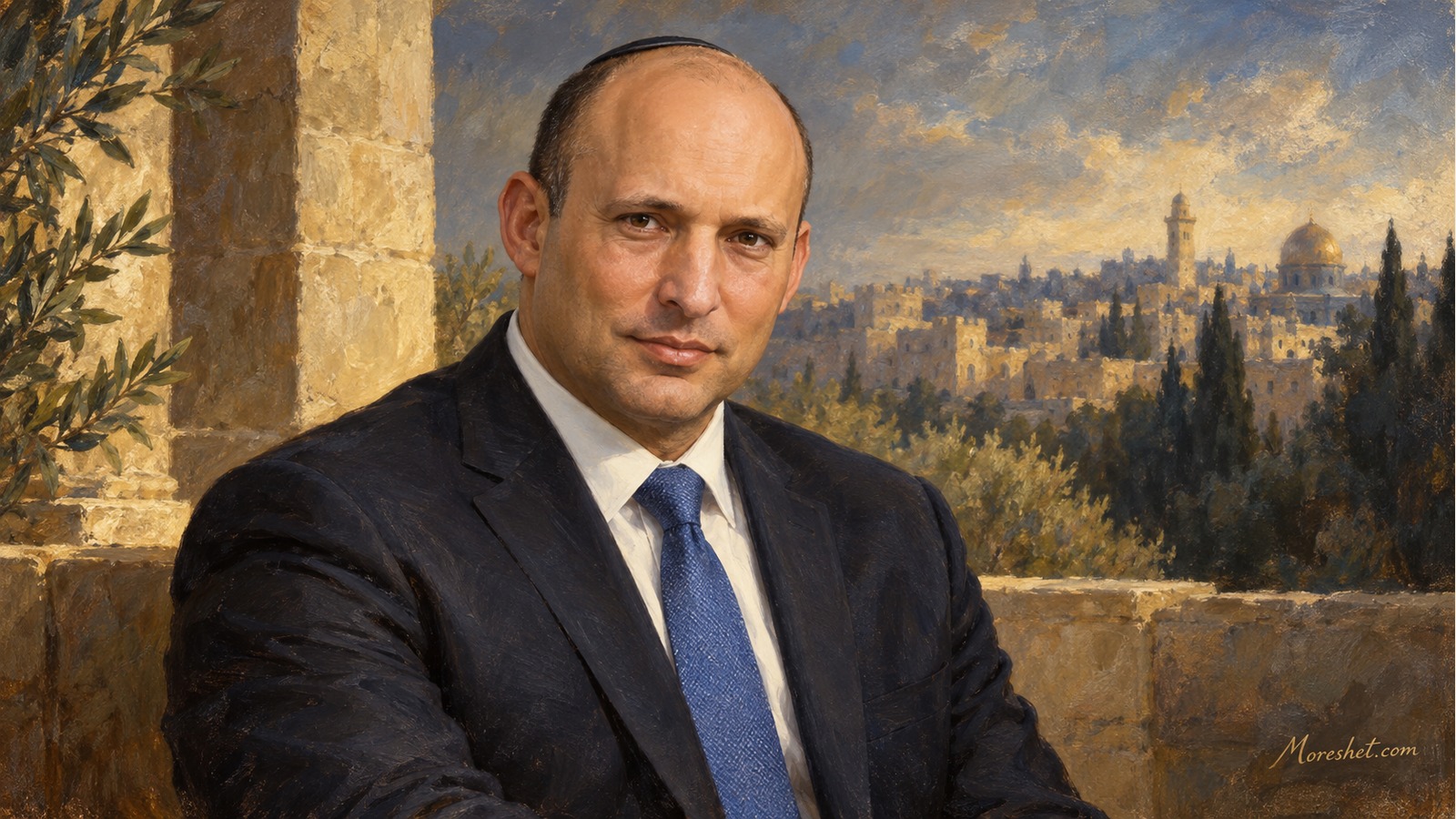
Naftali Bennett — AI-generated artistic portrait · Moreshet.com
Israel’s 13th prime minister, high-tech entrepreneur, special-forces officer and political leader who linked combat service, start-up culture, religious Zionism and an unusual coalition experiment
Naftali Bennett is an Israeli high-tech entrepreneur, reserve officer, politician and statesman who served as Israel’s 13th prime minister from 2021 to 2022. His public path connects several of the major forces that have shaped Israel in recent decades: Jewish immigration from North America, Modern Orthodox religious Zionism, service in elite military units, technological entrepreneurship, national-religious politics, government management and an unusual attempt to form a broad unity government during a period of deep political crisis.
Bennett is not only a former prime minister. His career runs from Sayeret Matkal and Maglan, through the founding and sale of Cyota, the leadership of the Jewish Home and Yamina parties, service as minister of economy, education and defense, and finally leadership of Israel’s 36th government alongside Yair Lapid. As of September 2026, he leads a new political framework called Together, a joint list of Bennett 2026 and Yesh Atid, which seeks to reshape Israel’s political center around the idea of a Zionist unity government.
Childhood in Haifa, an American-Israeli family and religious identity
Naftali Bennett was born in Haifa on March 25, 1972, the youngest of three sons of Jim and Myrna Bennett, American Jews who immigrated to Israel from San Francisco shortly after the Six-Day War. His family embodies a distinctly Jewish-Israeli story: Jews from North America who chose to bind their lives to the State of Israel, moved between Israel and the United States during their children’s early years, and ultimately settled in Israel as part of the Zionist project.
Bennett’s father, Jim, returned to Israel at the outbreak of the Yom Kippur War to serve as a reservist on the Golan Heights front. That experience became part of the family’s story and underscored for Bennett the connection among diaspora Jewry, aliyah, military service and responsibility for the state. His mother, Myrna, was active in the community of American and Canadian immigrants in Israel. Several members of his mother’s family who remained in Poland were murdered in the Holocaust, adding to his story a dimension of Jewish memory, renewal and the choice of sovereign life in Israel.
Bennett grew up in Haifa, studied at Carmel elementary school and Yavne Yeshiva High School, and was a counselor in Bnei Akiva. His family moved toward Modern Orthodox Judaism, and Bennett himself is identified with religious Zionism. That identity is not merely biographical; it is part of the way he understood military service, public responsibility and the aspiration to connect religious and secular Israelis within a broader national framework.
Military service: Sayeret Matkal, Maglan and the reserves
In 1990 Bennett enlisted in the Israel Defense Forces and served in Sayeret Matkal. After officers’ training, he moved to the Maglan unit, where he served as a team commander, deputy commander and company commander. His service included operational activity in southern Lebanon, combat during the security-zone years, participation in complex missions, and later significant reserve service during the Second Intifada and the Second Lebanon War.
For Bennett, military service was formative. It shaped a view of practical leadership, initiative, commanders’ responsibility in the field and the importance of security decision-making. Even after entering high-tech and civilian life, he returned to Israel for reserve duty in times of emergency. In 2023, after the outbreak of the Swords of Iron War, he again reported for reserve service, another expression of the fact that the connection among public life, security and service remained central to his identity.
Service in Maglan and Sayeret Matkal also gave him a human and moral network that influenced his life. His eldest son, Yoni, is named after Yonatan Netanyahu, while his younger son David Emmanuel carries the name of Emmanuel Moreno, Bennett’s comrade from the special forces. In this way, the memory of soldiers, service and commitment to the state became part of his family life.
High-tech entrepreneur: from Cyota to Soluto
After his military service, Bennett studied law and business administration at the Hebrew University of Jerusalem. At the same time, he entered the software and technology-sales world. In 1999, he co-founded Cyota, which developed online security and anti-fraud solutions. The company operated in both the American and Israeli markets, and Bennett moved to New York to lead its business development.
In 2005 Cyota was sold to RSA Security for 145 million dollars. The deal became part of Israel’s wider start-up-nation story: military units, technological capability, young entrepreneurship, venture capital and global markets. For Bennett, the business success provided financial independence, management experience, familiarity with international markets and an image of a leader who did not enter politics out of dependence on public office.
He was later involved with Soluto, a company in cloud-based remote support for computers and mobile devices, which was subsequently sold to Asurion. He also invested in the fintech company Payoneer. This path placed him at the intersection of security, technology and economics — three areas that have become central to modern Israeli identity.
Entering politics: from Netanyahu to the Yesha Council and Jewish Home
Bennett entered politics in 2006, serving as chief of staff to Benjamin Netanyahu when Netanyahu was leader of the opposition. In that role he dealt with campaigns, policy, political management and reforms, gaining close experience with the top of Israeli politics. He later left Netanyahu’s office together with Ayelet Shaked, a central political partner who would accompany him for years.
From 2010 to 2012 he served as director general of the Yesha Council and was involved in public campaigns around settlements, construction freezes and the status of Judea and Samaria. Together with Shaked he also founded My Israel, a movement active in public diplomacy, Zionism and online mobilization. These actions strengthened his standing as a young, technologically fluent, media-savvy and right-wing leader inside the national-religious camp.
In 2012 he was elected leader of the Jewish Home party. Under his leadership, the party became a more prominent force in Israeli politics, with a message that tried to connect religious and secular Israelis, ideological right-wing politics with modern language, and religious Zionism with the aspiration for national leadership. In the 2013 election, Jewish Home won 12 Knesset seats, and Bennett entered the government as minister of economy, minister of religious services and minister for Jerusalem and diaspora affairs.
Minister of economy and diaspora affairs: competition, cost of living and world Jewry
As minister of economy, Bennett dealt with reforms intended to reduce bureaucracy, increase competition and ease the burden on businesses. He advanced measures in standards, import liberalization, food-price transparency and strengthening the Antitrust Authority. His economic view emphasized the private sector as an engine of growth, while also stressing the need to provide opportunity for weaker populations through education, vocational training and employment.
Bennett also worked to promote investment and industry. During his term as economy minister, Intel announced a major expansion of its Kiryat Gat facility, presented as an important move for employment, technology and exports. His policy emphasized the link among high-tech, advanced industry, jobs in the periphery and Israel’s competitiveness in the world.
As minister for Jerusalem and diaspora affairs, he also dealt with Israel’s relationship with world Jewry. One symbolic move during his term was the opening of a mixed prayer area near Robinson’s Arch at the Western Wall, intended to provide a response for liberal Jewish streams and Women of the Wall. The move expressed a practical attempt to handle tensions among the religious establishment, diaspora Jewry, pluralistic Jewish identity and Jerusalem’s central symbols.
Minister of education: mathematics, values and higher education
In 2015 Bennett was appointed minister of education. He presented advanced mathematics study as a strategic goal for the State of Israel and led a national program to increase the number of students taking the five-unit mathematics matriculation examination. For him, mathematics was not only a school subject but an infrastructure for security, high-tech, science, social mobility and international competitiveness.
At the Education Ministry he also promoted a second assistant in kindergartens, reduced classroom crowding, increased budgets for integrating students with disabilities, supported values education and developed technological and cyber programs for pupils. He sought to connect the education system with the high-tech world and encourage students to see science, coding and presentation as tools for civic and economic life.
Bennett also dealt with the cultural identity of the education system. He appointed the Erez Biton Committee to enrich curricula with content relating to Mizrahi Jewish heritage, literature, history and a sense of unity among the people. At the same time, he promoted decisions concerning the place of political and military-related organizations in schools and took a firm public line around the IDF, Zionism and national identity.
In higher education he worked to change the Council for Higher Education, promote new institutions and broaden academic possibilities, including moves concerning the Interdisciplinary Center Herzliya and Ariel University. These actions were part of a wider debate over centralization, quality, academic independence, periphery and the influence of politics on institutions of knowledge.
Defense minister and the coronavirus crisis in opposition
In 2019 Bennett was appointed defense minister in a transitional government. His term was short but included dealing with the Gaza Strip, Judea and Samaria, Syria and the campaign against Iran. He entered the post during a tense period, close to Operation Black Belt, and emphasized a firm policy toward terrorist organizations alongside the need for new operational thinking.
When the coronavirus pandemic broke out in Israel in 2020, while he was still defense minister and later as an opposition member, Bennett proposed a management approach based on broad testing, focused isolation, hotels for infected patients, the integration of IDF and intelligence capabilities, and preserving economic activity as much as possible. He published the book How to Beat a Pandemic, presenting an approach of more precise pandemic management and less economic damage.
The coronavirus period strengthened his image as a fast and execution-oriented manager who used the language of start-ups, data, experiments and lessons learned. This approach later influenced his conduct as prime minister during the Delta and Omicron waves.
Prime minister of Israel: the change government
After the 2021 election and a long period of political deadlock, Bennett formed Israel’s 36th government together with Yair Lapid. The government was sworn in on June 13, 2021, with Bennett serving first as prime minister under a rotation agreement. It included parties from the right, center and left, and also relied on Ra’am, an Arab party that was part of the coalition. This composition was unusual in Israel’s political history and drew deep criticism, but it also marked an attempt to break the political impasse.
Bennett justified the formation of the government by pointing to the need to avoid further elections, stabilize the state, pass a budget and restore function to the political system. During the government’s term, a state budget was indeed passed after an extended period without an approved budget. The government had to manage a complex reality: the coronavirus pandemic, security threats, internal political crisis, cost of living, religion-and-state questions, violence in Arab society and challenges in the international arena.
The very existence of the government was a test of state-mindedness in Israel. It included parties with very different, and sometimes opposing, worldviews, but tried to focus on areas of agreement and day-to-day management. The experiment lasted only about a year, but it remains an important chapter in the Israeli debate over cooperation across lines of tribe, religion, ideology and national identity.
Managing the coronavirus as prime minister
When Bennett entered office, Israel was emerging from a difficult coronavirus period, but soon faced the Delta wave and later the Omicron wave. Bennett adopted an approach he called soft suppression: an attempt to avoid broad lockdowns, protect vulnerable populations, accelerate vaccinations, restrict foreign entry when necessary and keep the economy open as much as possible.
His government promoted the third vaccine dose and later the fourth dose for older and vulnerable populations. Israel was among the first countries in the world to move broadly in this direction. The policy was accompanied by public debate, but it reflected Bennett’s tendency to prefer rapid action, controlled experimentation and dynamic response over waiting for full international consensus.
The management of coronavirus under Bennett illustrates the connection among management experience, technological thinking and political decision-making. For some Israelis it was a balanced approach that preserved the economy; for others it raised questions about consistency and the scope of restrictions. As a matter of administrative legacy, it remains an important chapter in how a small, advanced and densely populated democracy confronted a global pandemic.
Foreign policy: the United States, the Abraham Accords and Ukraine
As prime minister, Bennett worked to strengthen Israel’s relationship with the United States under the Biden administration while maintaining a firm line on Iran’s nuclear program. In his August 2021 meeting with President Joe Biden, he presented a concept of a sustained, multidimensional campaign against Iran, based not only on a single military move but on a series of actions, diplomatic pressure, intelligence and cooperation.
Bennett was the first Israeli prime minister to make an official visit to the United Arab Emirates and to Bahrain, a symbolic and diplomatic step following the Abraham Accords. During his term, the Negev Summit also took place, bringing together foreign ministers from Arab states and the American secretary of state to strengthen regional cooperation against common threats, above all Iran. In this way, his government helped turn the Abraham Accords from normalization documents into a reality of meetings, trade, security and diplomacy.
After Russia’s invasion of Ukraine in 2022, Bennett attempted to mediate between Russia and Ukraine in coordination with Western leaders. He met Russian President Vladimir Putin in Moscow and spoke with Ukrainian President Volodymyr Zelenskyy and other leaders. The mediation effort did not end the war, but for a brief moment it placed Israel as a country trying to use its relationships with the parties to open a diplomatic channel.
Security: Iran, Gaza, Judea and Samaria, and the Golan Heights
During Bennett’s term as prime minister, Israel’s campaign against Iran and its proxies continued. Bennett emphasized the need to act not only against regional proxies but also against Iranian power centers themselves. He opposed the United States returning to a nuclear agreement under terms Israel considered dangerous and presented intelligence material intended to strengthen the case against Iran’s conduct before the International Atomic Energy Agency.
In the Gaza Strip, his term saw a relatively long period of quiet after Operation Guardian of the Walls, alongside a response policy to rocket fire, incendiary balloons and security violations. In Judea and Samaria, his government launched Operation Breakwater after a severe wave of terrorist attacks in 2022. The operation combined activity by the IDF, Shin Bet and police, and was intended to disrupt terrorist infrastructure and arrest wanted suspects.
On the civilian and settlement side, his government promoted a plan to strengthen the Golan Heights, including budgets for developing Katzrin, establishing new communities and building infrastructure. It also approved new communities in the Negev. These moves reflect Bennett’s understanding of practical Zionism: security, settlement, periphery and long-term planning.
The end of the government and possible return to leadership
The Bennett-Lapid government faced a narrow parliamentary majority and internal tensions. After losing its Knesset majority and struggling to pass legislation, Bennett and Lapid announced in June 2022 that the Knesset would be dissolved. Under the rotation agreement, Yair Lapid replaced Bennett as prime minister, and Bennett served briefly as alternate prime minister. He then announced that he would not run in the 2022 election and left the Knesset.
After leaving office, Bennett joined the board of Quantum Source and returned to business and public activity. Later, after the Swords of Iron War and Israel’s deep political crisis, he began rebuilding a political framework. In 2025 the Bennett 2026 party was registered, and in April 2026 he and Yair Lapid announced a joint list named Together, under Bennett’s leadership.
His return to the political arena marks an attempt to revive the model of a broad unity government, this time from a more organized political center and with lessons learned from the collapse of the previous government. In speeches and statements he has emphasized the need for an inquiry into the events of October 7, restoration of security, rebuilding public trust, strengthening state-mindedness, and creating a constitutional framework and term limits for prime ministers.
Personal life
Bennett is married to Gilat Bennett, formerly a pastry chef and now a parent-group facilitator. They live in Ra’anana and have four children. Their way of life is associated with Modern Orthodox Judaism, and the family has been part of Bennett’s public image as someone seeking to represent a modern, integrated and very Israeli form of religious Zionism.
In 2025 it was reported that Bennett had a cardiac event and underwent catheterization after feeling unwell during physical activity. The episode did not stop his return to public activity, but it recalled that even public figures perceived as energetic and practical live within ordinary human limits and private vulnerability.
Why this legacy belongs in Moreshet
Naftali Bennett merits inclusion in Moreshet because his story brings together several central paths of modern Israel: Jewish immigration from North America, service in elite units, high-tech entrepreneurship, religious-Zionist leadership, reforms in education and the economy, management of a pandemic crisis, security policy toward Iran and terrorism, and an attempt to form a political unity government during a period of public fracture.
Moreshet.com documents Bennett because contemporary Israeli and Jewish heritage is built not only by figures who led for decades, but also by those who tried to connect worlds that often seem opposed: religion and state, right and center, army and high-tech, settlement and state-mindedness, Jewish identity and broad civic partnership. Naftali Bennett’s place in Moreshet rests on the way his personal path as soldier, entrepreneur and political leader became a wider case study in Israeli society’s capacity to renew itself, argue, cooperate and seek stability within a complex reality.