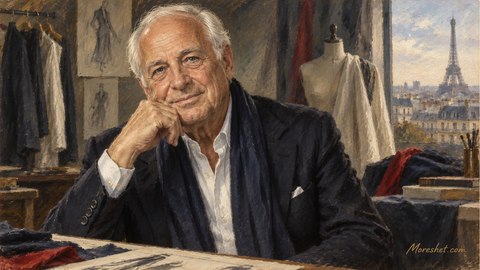
Levi Strauss
The entrepreneur who helped turn reinforced workwear into one of the world’s most recognizable garments
Levi Strauss (February 26, 1829 – September 26, 1902) helped develop durable work pants reinforced with metal rivets, later known as blue jeans. In 1873, he secured a patent for the invention together with tailor Jacob Davis. By combining a practical need, a straightforward technical solution, and commercial production, Strauss helped create a garment whose influence extended far beyond workwear.
The patent that transformed work clothing
The work pants developed by Strauss and Davis were designed to withstand demanding use. Reinforcing key points of strain with metal rivets made the garment stronger and more suitable for hard labor. The 1873 patent was a decisive step in turning the idea into a product that could be manufactured and distributed on a broad scale.
The achievement was not only technical. It addressed a clear need among working people for reliable, practical clothing. Over time, pants originally created for work became familiar around the world. Strauss therefore helped transform functional clothing into a product with lasting cultural and economic significance.
From enterprise to global cultural legacy
The invention led to the creation of a fashion empire and to the growth of the company associated with Strauss’s name. The company continues to operate today, demonstrating how a solution to an everyday problem can develop into a lasting commercial institution.
Blue jeans eventually became part of ordinary dress across societies and in a wide range of social and cultural settings. Strauss’s story illustrates the power of entrepreneurship that brings invention, manufacturing, and distribution together: he was involved not merely in creating a new product, but in establishing a pattern of everyday dress that influenced the fashion industry and the lives of consumers.
Why Levi Strauss merits inclusion in Moreshet
Levi Strauss merits inclusion in Moreshet because of his clear contribution to industry and fashion. Together with Jacob Davis, he helped provide a practical answer to the need for durable work clothing, while their 1873 patent laid the foundation for one of the most influential and widely worn garments in the world.
His legacy can be seen not only in the continuing operation of the company associated with his name, but also in the long-term effect of the product on workers, consumers, designers, and international clothing culture. For that reason, Strauss’s story belongs on Moreshet.com: it shows how a focused technological and commercial initiative can become a living legacy that continues to shape everyday life generations after its creation.