Ralph Lauren
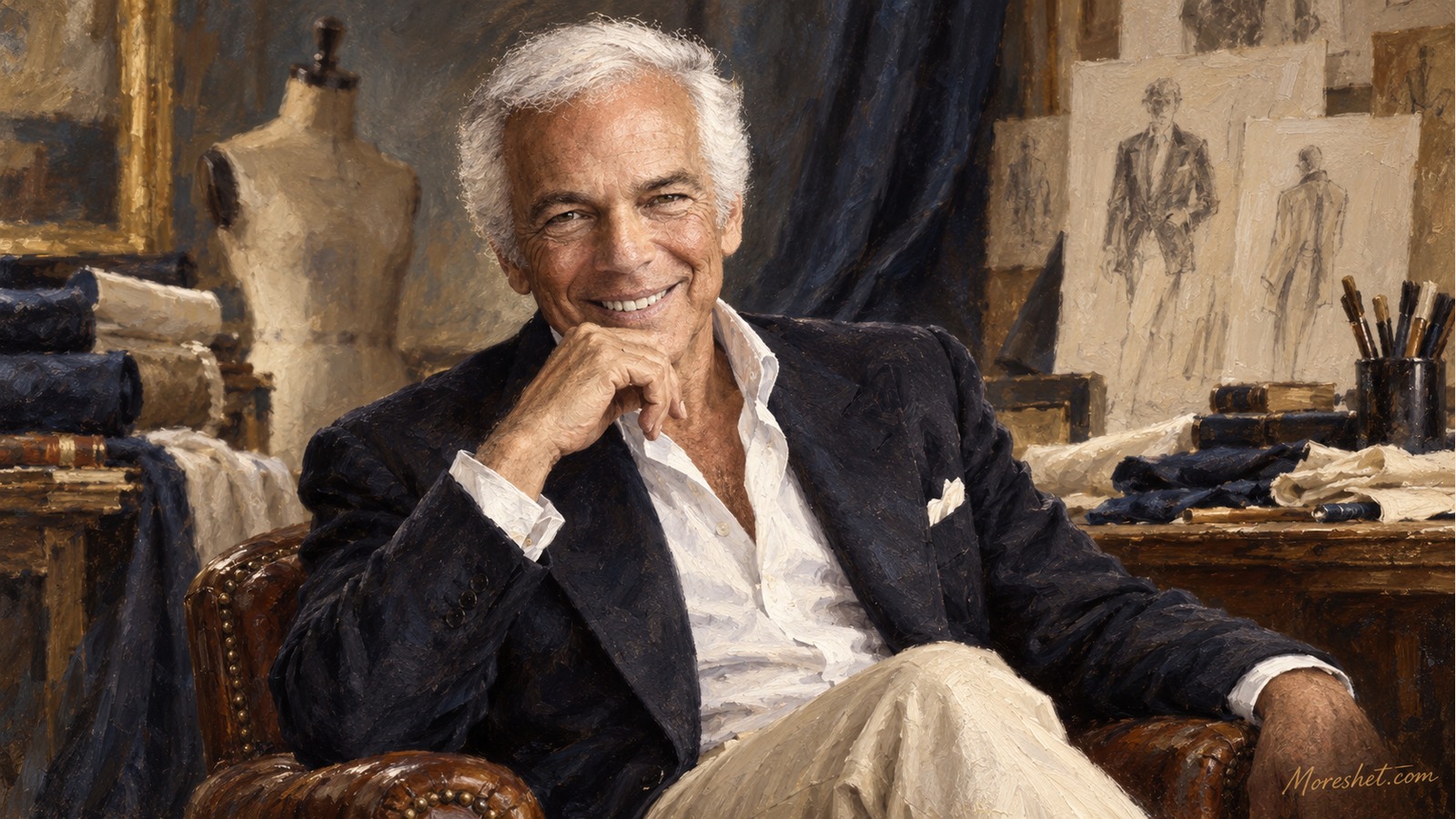
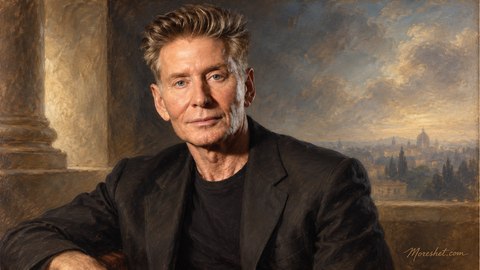
Ralph Lauren — AI-generated artistic portrait · Moreshet.com
The Jewish-American designer who built a global brand and turned an American style of life into cultural heritage
Ralph Lauren, born Ralph Lifshitz on October 14, 1939, in the Bronx, New York, is a Jewish-American fashion designer, entrepreneur, and philanthropist. He founded the Ralph Lauren fashion house and transformed the polo-player emblem into one of the world’s most recognizable symbols of American dress. His achievement extends beyond clothing: Lauren created an entire language of fashion, interiors, restaurants, and cultural imagery that influenced how America presents itself to the world and how millions of people express taste, status, and identity.
From the Bronx to Fashion
Lauren was born to Frieda and Frank Lifshitz, Jewish immigrants from Eastern Europe. His father was a painter and house painter, and the family raised its children within the Jewish community of the Bronx. As a teenager, Lauren worked after school to buy clothing and suits, and at sixteen the family name was changed to Lauren. He attended a high school connected with Yeshiva University and later studied business for two years at Baruch College, but did not complete the degree. From 1962 to 1964, he served in the United States Army.
After his military service, Lauren worked in sales at Brooks Brothers and then entered the necktie business. Although he had no formal training in fashion design, he understood that a tie could be more than an accessory: it could convey elegance, personality, and belonging. In 1967, with financial backing from Norman Hilton, he began selling his own neckties under the name Polo. He later acquired the rights to the name and began building an independent brand around it.
Building a Global Brand
In 1968, Lauren introduced his first complete menswear line. At the beginning, he worked from a small space in the Empire State Building and delivered merchandise to stores himself. In 1969, Bloomingdale’s created a dedicated Polo shop-in-shop, marking the transition from a designer of distinctive ties to the head of a fashion house with a clear identity.
Lauren combined influences from British aesthetics, country life, equestrian sport, polo, and traditional craftsmanship, reshaping them into an accessible American vocabulary. Rather than chase every passing trend, he built an image of clothing meant to be kept, to age well, and to pass from one generation to the next. In this way, garments once associated with a particular social class became products available to a broad public around the world.
In 1971, Lauren introduced a line of tailored women’s shirts, and the polo-player emblem appeared on women’s clothing for the first time. The following year he launched the iconic short-sleeved cotton mesh Polo shirt in a range of colors. The shirt became a global emblem of the preppy American style. In 1971, Lauren also opened a freestanding store on Rodeo Drive in Beverly Hills—the first freestanding store there by an American designer—and later established a flagship in the Rhinelander mansion on Madison Avenue in New York.
The company expanded into additional clothing lines, home goods, fragrances, restaurants, and digital commerce. It entered the European market in 1981 with a store on New Bond Street in London, introduced Polo Sport in 1992, opened restaurants in Chicago, Paris, and New York, and launched its online shopping site in 2000. In 1997, Ralph Lauren Corporation became publicly traded on the New York Stock Exchange. Lauren stepped down as chief executive officer in 2015 but remained executive chairman and chief creative officer.
Fashion, Film, and Popular Culture
Lauren’s influence extended far beyond the runway. In 1974, he designed the menswear for The Great Gatsby, and Diane Keaton and Woody Allen wore his clothing throughout Annie Hall. These collaborations helped make his work part of the period’s cultural imagination: not simply a product, but a visual shorthand for elegance, freedom, tradition, and American identity.
The brand also became part of television culture, with the company’s clothing and offices appearing in the television series Friends. Lauren himself made a guest appearance during the sixth season. Alongside fashion, he became known as a collector of classic automobiles. His collection, which includes exceptionally rare models, was displayed at Boston’s Museum of Fine Arts and at the Musée des Arts Décoratifs in Paris. Two cars from the collection won Best of Show at the Pebble Beach Concours d’Elegance. The collection reflects the same values that shaped his design work: respect for craftsmanship, history, form, and objects that gain meaning with age.
Philanthropy: From Fashion to Health and Community
One of the most important dimensions of Lauren’s influence is his philanthropy, particularly in the fight against cancer. In 1989, he helped establish the Nina Hyde Center for Breast Cancer Research at Georgetown University Hospital in memory of fashion journalist Nina Hyde. In 1994, he helped create Fashion Targets Breast Cancer, an initiative that mobilized the fashion industry to raise awareness and funds for research and prevention.
In 2003, Lauren supported the establishment of the Ralph Lauren Center for Cancer Care and Prevention in Harlem, in partnership with Memorial Sloan Kettering and North General Hospital. The center was designed to expand access to prevention and treatment in a community affected by significant health disparities. In partnership with the Royal Marsden in London, the Royal Marsden Ralph Lauren Center for Breast Cancer Research was also created and opened in 2016. In 2023, another center bearing his name opened at Georgetown’s Lombardi Comprehensive Cancer Center to focus on cancer prevention.
His work also includes the Pink Pony Campaign, which seeks to reduce disparities in cancer care through awareness, screening, prevention, and treatment in underserved communities. The company launched an employee volunteer program in 2000, and in 2006 created the Polo Jeans G.I.V.E. initiative to encourage volunteer service. After the September 11 attacks, the Polo Ralph Lauren Foundation established the American Heroes Fund, giving employees and customers an opportunity to participate in relief efforts.
Lauren has also supported education, cultural preservation, and the arts. In 2004, the Polo Fashion School was established, enabling company executives to introduce inner-city youth to the fashion business. In 1998, Polo Ralph Lauren contributed $10 million toward the preservation of the original 1813 American flag that inspired the writing of the national anthem. The company also committed support to the restoration of the École des Beaux-Arts in Paris, one of the world’s most influential art schools.
Jewish Identity, Achievement, and Public Recognition
Lauren’s story is also that of a child of Jewish immigrants who entered American public life and built international influence from that experience. Together with his wife, Ricky Ann Loew-Beer, he has been associated with Park Avenue Synagogue in Manhattan, and the couple led the synagogue’s capital campaign, completed in 2019. This activity connects business success with support for communal institutions and contemporary Jewish life.
In 2018, Lauren received an honorary knighthood as a KBE from the Order of the British Empire, recognizing his contributions to fashion and business. He has also received broad recognition as one of the designers who reshaped American menswear and womenswear. In 1987, he underwent surgery to remove a benign brain tumor and made a full recovery.
Why Ralph Lauren’s legacy belongs in Moreshet
Ralph Lauren merits inclusion in the archive because his work operates across several spheres whose significance extends far beyond fashion. He created a company and a brand that made American style a global cultural product, influenced film and television, preserved and presented historically important objects, and built initiatives and institutions in health, education, the arts, and community life.
For Jewish and Israeli heritage, his story demonstrates how the child of a Jewish immigrant family can bring together ambition, creativity, communal responsibility, and long-term institution building in the public sphere. His support for cancer research and prevention, his connection to Jewish communal life and education, and his transformation of craftsmanship and design into a global language all justify his place in Moreshet. A profile on Moreshet.com can therefore present him not only as a familiar commercial name, but as a figure whose actions shaped culture, business, and the lives of people in many communities.