Gideon Oberson

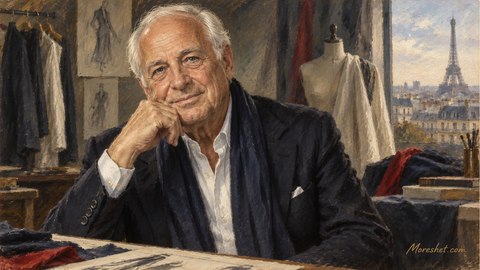
Gideon Oberson — AI-generated artistic portrait · Moreshet.com
The Israeli designer who brought a modern fashion language to Israel and helped make swimwear a defining field of local design
Gideon Oberson is an Israeli fashion designer whose work helped shape the country’s modern fashion culture. Across several decades, he worked at the intersection of design, commerce, advertising and popular culture, giving Israeli fashion a more confident and internationally aware visual language. He is especially associated with the development of swimwear as a serious design field and with a body of work that changed how fashion, the body and public image were discussed in Israel.
From Europe to Israeli fashion
Oberson was born in Italy. Toward the end of the Second World War, his family moved to Yugoslavia, and when he was six they immigrated to Israel. He grew up in Tel Aviv and developed an interest in fashion at an early age. He studied ballet and traveled to Paris with the intention of pursuing it, but there he turned to fashion design at the school of the Federation of Haute Couture.
Paris gave him direct exposure to European design traditions and to the possibilities of cut, fabric, color and image-making. When he returned to Israel, he did more than join the local industry: he helped broaden its ambitions and vocabulary.
“The Round House” and a modern Israeli style
In 1968, Oberson opened his fashion studio, known as “The Round House” (HaBayit HaAgol). At the time, Israeli fashion was still strongly associated with modest, practical clothing and with the biblical and pioneering imagery of the young state. Oberson introduced a different sensibility—modern, sophisticated, urban and connected to international fashion.
This shift mattered because it gave Israeli fashion a new cultural confidence. Rather than treating Israel merely as a consumer of imported styles, Oberson developed local design that could engage with Paris and other international fashion centers while remaining rooted in Israeli life. After the wife of the president of Côte d’Ivoire visited his studio, he received substantial press attention. That same year, he designed the costumes for the film Iris, demonstrating the breadth of his work and his ability to move between fashion, cinema, publicity and public image.
Swimwear, advertising and public culture
Swimwear became one of Oberson’s most important areas of activity. He helped transform it from a purely functional seasonal product into a field of design associated with femininity, style, confidence and lifestyle. Through his cuts, images and campaigns, he helped establish swimwear as a central part of Israeli fashion and as a product capable of carrying a distinct designer and brand identity.
In 1987, a large advertising campaign featuring model Pazit Cohen in a daring swimsuit pose attracted wide attention in Israel. The campaign became a cultural event beyond the advertising industry, prompting public discussion about the display of the body in public spaces and the boundaries between commerce, modesty, art and freedom of expression. Following the campaign, religious members of the Knesset worked to promote legislation prohibiting the display of a person’s body in swimwear on billboards. Oberson refused to abandon the campaign and consequently lost his position as a designer at the Carmel Carpets factory, owned by Knesset member Avraham Shapira.
The episode illustrates the reach of Oberson’s work. Fashion in Israel was not confined to runways and shops; it could also touch social norms, public values and the way a society imagined its shared spaces.
Gottex, beauty contests and a wider audience
From 2002 to 2009, Oberson served as chief designer of Gottex, one of Israel’s leading swimwear brands. He continued to develop the relationship between local design and a broad commercial market, creating swimwear, dresses and other garments. Among his work were dresses for contestants in the Miss Israel competition, bringing his designs to a large audience and placing them within one of the most visible forms of Israeli popular culture.
His work at Gottex reinforced his reputation for combining quality, glamour and commercial understanding. It also allowed him to influence generations of women, models and consumers, making Israeli design part of everyday public life rather than the concern of a small circle of fashion enthusiasts.
Family collaboration and professional continuity
Oberson’s work was closely connected with his family. His daughter Karen became his partner in the fashion world, while his daughter Dana became an architect. His collaboration with Karen represented more than a family relationship: it created professional continuity and carried forward the experience, design language and practical knowledge required to sustain a fashion house through changing industry conditions.
In December 2018, Oberson closed the fashion house that bore his name and its Tel Aviv store. The decision marked the end of a major period in his career, but not the end of his influence. The brand he built, the images he created and the public conversations connected with his work remain part of the story of Israeli fashion.
Why this legacy belongs in Moreshet
Gideon Oberson merits a place in the archive because he represents an important stage in Israel’s transition from a modest, functional clothing culture to a professional, commercial and internationally engaged fashion industry. Through “The Round House,” his cinema work, his leadership at Gottex and his highly visible campaigns, he influenced designers, models, manufacturers and a broad Israeli public.
His lasting contribution also lies in making swimwear a field of genuine creative and economic importance, and in demonstrating how a designer can shape public conversation as well as clothing. Preserving his story through Moreshet and Moreshet.com gives readers a wider understanding of how fashion design became part of Israeli social history, culture and daily life.