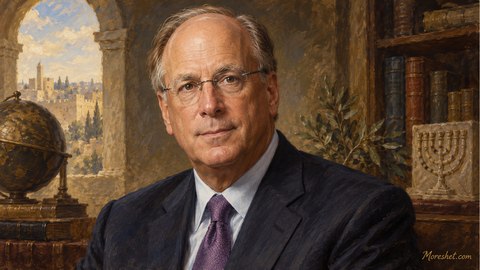
Herbert Alexander Simon
The Nobel and Turing laureate who transformed decision science and helped pioneer artificial intelligence
Herbert Alexander Simon (June 15, 1916–February 9, 2001) was an American scholar of Jewish family background whose ideas transformed the study of decision-making, organizations, human cognition, and artificial intelligence. He worked across economics, political science, public administration, psychology, computer science, and the philosophy of science, yet his central question remained remarkably consistent: How do people and institutions make decisions when information, time, and mental capacity are limited?
His answer challenged the abstract image of an all-knowing decision-maker who can always calculate the optimal choice. Simon developed the theory of bounded rationality, showing that people and organizations generally seek workable, satisfactory solutions rather than unattainable perfection. At the same time, working with Allen Newell and other collaborators, he created some of the earliest computer programs designed to model reasoning and problem-solving. This rare union of social theory, experimental psychology, and computation earned him two of the highest honors in modern scholarship: the ACM Turing Award in 1975 and the Nobel Memorial Prize in Economic Sciences in 1978.
From municipal administration to a science of human behavior
Simon was born in Milwaukee, Wisconsin. His father, Arthur Simon, was a Jewish electrical engineer who had emigrated from Germany to the United States in 1903. Arthur also worked as a patent attorney and was an inventor. Simon's mother, Edna Marguerite Merkel, was an accomplished pianist whose European family included Jewish, Lutheran, and Catholic ancestry. Simon himself became an atheist while young, but his Jewish-European family background formed part of his American story.
His family encouraged the idea that human conduct could be studied scientifically. An uncle who had studied economics introduced him to books in economics and psychology, while school debate sharpened his interest in public questions. Simon entered the University of Chicago in 1933 and studied in an environment where political science, economics, logic, and mathematics met. He received his bachelor's degree in 1936 and his doctorate in political science in 1943. His teachers and intellectual influences included mathematical economist Henry Schultz, political scientist Harold Lasswell, and philosopher Rudolf Carnap.
His first research concerned the performance of municipal governments. With Clarence Ridley, he published Measuring Municipal Activities in 1938, examining practical criteria for evaluating public administration. That work led to an insight that guided the rest of his career: institutions cannot be understood solely through their formal structures. A researcher must study the decisions made within them, the information available to decision-makers, and the constraints under which those people act.
Bounded rationality: a realistic account of choice
Simon's foundational book, Administrative Behavior, appeared in 1947 and grew out of his doctoral research. It placed decision-making at the center of administrative theory. Traditional models often assumed that a manager knew every alternative, could foresee every consequence, and could compare all possible outcomes without cost. Simon began with the world as it is: information is incomplete, the future is uncertain, attention is scarce, gathering evidence consumes resources, and organizational structures determine what people are able to notice.
From this analysis came bounded rationality. Simon did not argue that human beings are incapable of reason. He argued that reason operates inside real boundaries of knowledge, attention, and computational ability. He also developed the concept of satisficing, a term combining satisfying and sufficing. Rather than continue an unlimited search for the best of all imaginable options, a decision-maker commonly stops after finding an alternative that meets an acceptable threshold in light of available goals, resources, and time.
The implications extended well beyond management. Simon offered economists, psychologists, political scientists, and organizational researchers a more realistic foundation for studying how individuals, companies, and governments behave. He distinguished between a result that looks rational after the fact and procedural rationality—the quality of the actual process by which a person searches for information, represents a problem, and chooses. His 1978 Nobel Memorial Prize recognized his pioneering research into decision-making processes within economic organizations, work that also helped prepare the intellectual ground for behavioral economics.
Organizations as systems of authority, communication, and identification
Simon examined the ways authority, communication, incentives, divided responsibilities, and organizational loyalty shape choice. A decision made by someone acting as a member of an institution is not necessarily the same as a private decision: employees and managers also evaluate consequences in relation to the goals of their unit or organization. In Organizations, published in 1958 with James G. March and the collaboration of Harold Guetzkow, this approach became part of a broad theory of organizational behavior.
Simon also identified attention as an increasingly scarce resource. A wealth of information, he observed, creates a poverty of whatever that information consumes—the attention of its recipients. This insight became a cornerstone of later thinking about the attention economy and has gained new importance in an age of search engines, social media feeds, and constant digital alerts.
Turning theories of thought into computer programs
By the mid-1950s, Simon had concluded that theories of thinking could be tested by writing programs that performed explicit sequences of problem-solving operations. With Allen Newell and Cliff Shaw, he developed the Logic Theorist, demonstrated in 1956 and widely regarded as one of the first artificial intelligence programs. It proved theorems from Alfred North Whitehead and Bertrand Russell's Principia Mathematica. Its significance lay not only in the proofs it produced, but in its use of heuristics—selective rules of thumb that guided a search through a vast field of possibilities instead of examining every option indiscriminately.
Newell and Simon next developed the General Problem Solver, an attempt to create a more general system that separated a problem-solving strategy from knowledge specific to a particular task. Their programs relied on the Information Processing Language, developed by Newell, Shaw, and Simon. IPL's facilities for symbolic list processing contributed to the data structures and programming methods used in early AI research.
For Simon, the computer was more than an engineering instrument. A program could also serve as a scientific model of thought. If researchers could write software that performed a task through steps resembling those taken by people, they could compare the program's behavior with human evidence and revise the theory accordingly. This approach helped connect computer science with cognitive psychology and supported the emerging view of human beings as information-processing systems.
Simon and Newell received the 1975 ACM Turing Award for fundamental contributions to artificial intelligence, the psychology of human cognition, and list processing. The award honored a long collaboration that produced not merely individual programs but a new scientific vocabulary in which algorithms could function as explanations of mental processes.
Learning, expertise, and the close study of problem-solving
Simon wanted to understand how people learn to recognize patterns and become experts. With Edward Feigenbaum, he developed EPAM, an early computational model of perception and memory that accounted for a range of findings in verbal learning. Later versions of this research addressed concept formation and the acquisition of expertise. The underlying idea was that elaborate structures of knowledge develop gradually from organized units of information. An expert does not simply think faster than a novice; the expert recognizes meaningful patterns that the novice cannot yet see.
Research on chess provided a vivid example. Experienced players possess a large store of familiar configurations, enabling them to focus on relevant features rather than calculate every legal move. With psychologist K. Anders Ericsson, Simon also advanced verbal protocol analysis. Participants were asked to think aloud while completing a task, and their reports were treated as data about the sequence of problem-solving. The method became influential in cognitive research, expertise studies, and human-computer interaction.
Simon did not confine cognition to detached logic. In the 1960s he wrote about the ways motivation and emotion direct attention and control thought. This work initially attracted less notice in the AI community than his research on reasoning, but it later became relevant to the study of emotional cognition and to efforts to design computer systems that respond to more complex dimensions of human behavior.
Complexity and the sciences of the artificial
In The Sciences of the Artificial, first published in 1969, Simon examined systems made to accomplish purposes: organizations, computers, engineered structures, and processes of design. He argued that design and engineering have scientific principles of their own and should not be viewed merely as applications of natural science. The book became influential in design science, systems engineering, organizational studies, and computing.
Another major idea was near-decomposability. Complex systems are often composed of subsystems whose internal interactions are stronger than the interactions among them. Such a structure helps explain how organizations, economies, and computational systems can evolve, operate, and remain intelligible even when no one can analyze all their parts at once. With David Hawkins, Simon also proved the Hawkins–Simon theorem concerning the conditions for positive solutions in economic input-output systems.
In Human Problem Solving, published with Newell in 1972, the two researchers brought together their theory and evidence on search, problem representation, and heuristics. Other books—including Models of Man, Models of Thought, Models of Bounded Rationality, and Reason in Human Affairs—carried his ideas to audiences in several disciplines. His autobiography, Models of My Life, traced the people, problems, and institutions that shaped his unusually wide-ranging career.
Carnegie Mellon, public service, and intellectual mentorship
After appointments at the University of California, Berkeley, and the Illinois Institute of Technology, Simon joined the Carnegie Institute of Technology in Pittsburgh in 1949. The institution later became Carnegie Mellon University, where he remained until his death in 2001. He taught administration, psychology, and computer science and helped make Carnegie Mellon an early center of international importance in artificial intelligence and cognitive science.
Among the researchers he taught, advised, or strongly influenced were major figures such as Allen Newell, Edward Feigenbaum, John Muth, and Oliver Williamson, who later received the Nobel Memorial Prize in Economic Sciences. Simon's mentorship multiplied his influence: his students and collaborators carried computational and behavioral approaches into AI, economics, operations research, management, and psychology.
His understanding of institutions also entered public service. Simon participated in work connected with the creation of the Economic Cooperation Administration, which administered American assistance under the Marshall Plan, and he served on President Lyndon Johnson's Science Advisory Committee. These roles gave practical expression to his lifelong concern with how complex organizations gather information and make consequential choices.
Simon wrote dozens of books and hundreds of papers. In addition to the Turing and Nobel awards, he received the United States National Medal of Science in 1986, major honors from the American Psychological Association, and the IJCAI Award for Research Excellence. He was elected to the National Academy of Sciences, the American Academy of Arts and Sciences, and the American Philosophical Society. The range of recognition reflects the unusual structure of his achievement: different disciplines drew different tools from his work, but each encountered the same basic human problem—how to think and act intelligently under constraint.
Why Herbert Alexander Simon's legacy belongs in Moreshet
Herbert Alexander Simon merits a prominent place in Moreshet because his life represents a consequential Jewish-American contribution to twentieth-century scientific and intellectual culture. Born into a family with Jewish roots in Europe, he did not make Jewish identity the subject of his scholarship. His legacy to Jewish communities, Israel, and the wider world instead lies in a set of durable tools for understanding decisions in government, business, technology, education, and daily life.
His importance cannot be reduced to the two great prizes he received. Simon changed the question itself. Rather than ask how an imaginary, perfectly informed person ought to choose, he asked how real people can choose reasonably within limits of time, knowledge, and attention. He was also among the first researchers to turn a computer program into a model intended to explain human thought. For Israel, a major center of technological research, entrepreneurship, and AI, his insistence on connecting computational systems with human judgment and organizational realities remains especially relevant.
Preserving his story on Moreshet.com honors more than a distinguished career. It records a legacy of disciplined curiosity across boundaries and of theories designed to meet the complexity of actual human life. Simon's ideas about bounded rationality, attention, expertise, and complex systems continue to shape how people build institutions and technologies—and how they understand their own minds.