Deborah Bertanov
A pioneering Israeli dancer, choreographer, teacher, and researcher who carried dance from international stages into Israel’s cultural life
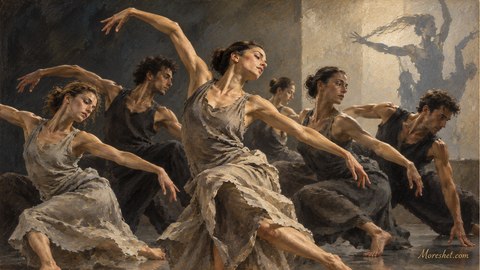
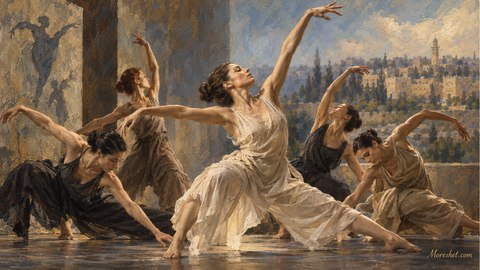
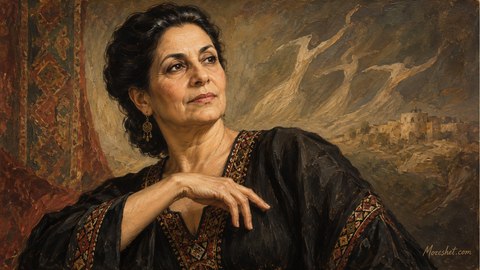
Deborah Bertanov (March 12, 1915–April 19, 2010) was an Israeli dancer, choreographer, teacher, and dance researcher, and the recipient of the 1991 Israel Prize for Dance. For more than eight decades, dance was not simply her profession but her way of life. She performed on major stages around the world, created original works, established a studio, taught generations of students, and examined the character of Israeli and international dance.
From Ballet and Theater to Eretz Israel
Bertanov was born in Tbilisi, Georgia, to Miriam and the actor Joshua Bertanov, one of the founders of Habima Theater. She was the sister of actor Shlomo Bertanov and the aunt of Ayelet Bertanov. She grew up in Moscow, where she studied ballet as a child at the school of the Bolshoi Theater and performed there.
In 1928, she immigrated to Eretz Israel with her family. She gave a solo performance while still a teenager, and in 1929 traveled to Berlin for further ballet training. At the age of 16, she performed in the salon of Albert Einstein in Germany. She later studied modern dance and classical ballet in Berlin and England and toured the United States. This early international experience gave her a broad artistic foundation, enabling her to combine the discipline of ballet with a search for an individual language of movement.
International Stages and Jewish Theatrical Expression
In New York, Bertanov appeared in the play The Dybbuk, where she became particularly known for her solo performance of the “Beggar Dance.” The connection between dance, theater, and Jewish tradition was an early expression of her ability to make movement dramatic and to convey cultural and emotional meaning through the body.
For more than two decades, she performed as a dancer on important stages around the world while also writing and creating dance works. In 1937, she married Emanuel Ben-Gurion, the son of the writer Micha Josef Berdyczewski. Their son, Ido Ben-Gurion, became a writer, theater director, and playwright. The family brought together several central strands of Hebrew culture: theater, literature, and dance.
Performer, Teacher, and Researcher
In 1966, the couple moved to Holon, near the home of her father, Joshua Bertanov. There, Bertanov established a dance studio in her own home, creating a base for her work as a teacher and mentor. In 1970, she retired from the stage and devoted herself to teaching at the studio, giving classes and lectures throughout Israel, writing, and conducting research.
Her research explored the characteristics of Israeli and international dance, as well as dances in Africa. In this way, she helped expand the place of dance in Israel beyond performance itself. She approached movement as an artistic, cultural, and human phenomenon, preserving knowledge and experience that contributed to the developing discussion of dance in Israel.
In the mid-1980s, at approximately 70 years of age, she returned to the stage in a solo performance. Her return demonstrated that artistic creation did not end with formal retirement and that even in advanced age the body could remain a source of inquiry and expression. She continued to practice regularly and expressed her philosophy in memorable words: “If you can’t do large movements, then you do small movements, but you have to keep moving.”
A Personal and Cultural Record
Bertanov’s life, marked by artistic achievement as well as sorrow and loss, is portrayed in the documentary film Shelakht, directed by Noa and Dan Geva, and in her 2005 autobiography, Behind the Scenes of the Soul. Together, the film and book preserve more than a personal story. They document a chapter in Israeli cultural history: the life of an artist who moved between Russia, Europe, the United States, and Eretz Israel, transforming those encounters into a distinctly local and international artistic identity.
Deborah Bertanov died in Tel Aviv in 2010 at the age of 95 and was buried in the Southern Cemetery in Holon. A street in Holon bears her name.
Why Deborah Bertanov’s Legacy Belongs in Moreshet
Deborah Bertanov merits inclusion in the archive because she brought together performance, creation, teaching, and research in a single influential career. She belonged to the generation that helped build the cultural life of Eretz Israel and the State of Israel, yet she also worked on an international stage and brought to Israeli audiences an artistic experience shaped by training and performance in Europe and the United States.
Her influence extended well beyond the stage. Through her studio, teaching, lectures, writing, and study of Israeli dance, she helped develop the conditions in which dance could be taught, discussed, and remembered as part of Israeli culture. Her life connects Jewish and theatrical heritage, international dance traditions, and the cultural history of the Yishuv and the state. For these reasons, Moreshet and Moreshet.com present Bertanov not only as an Israel Prize laureate, but as an artist who devoted her life to preserving, developing, and transmitting the art of dance in Israel.