David Barnea
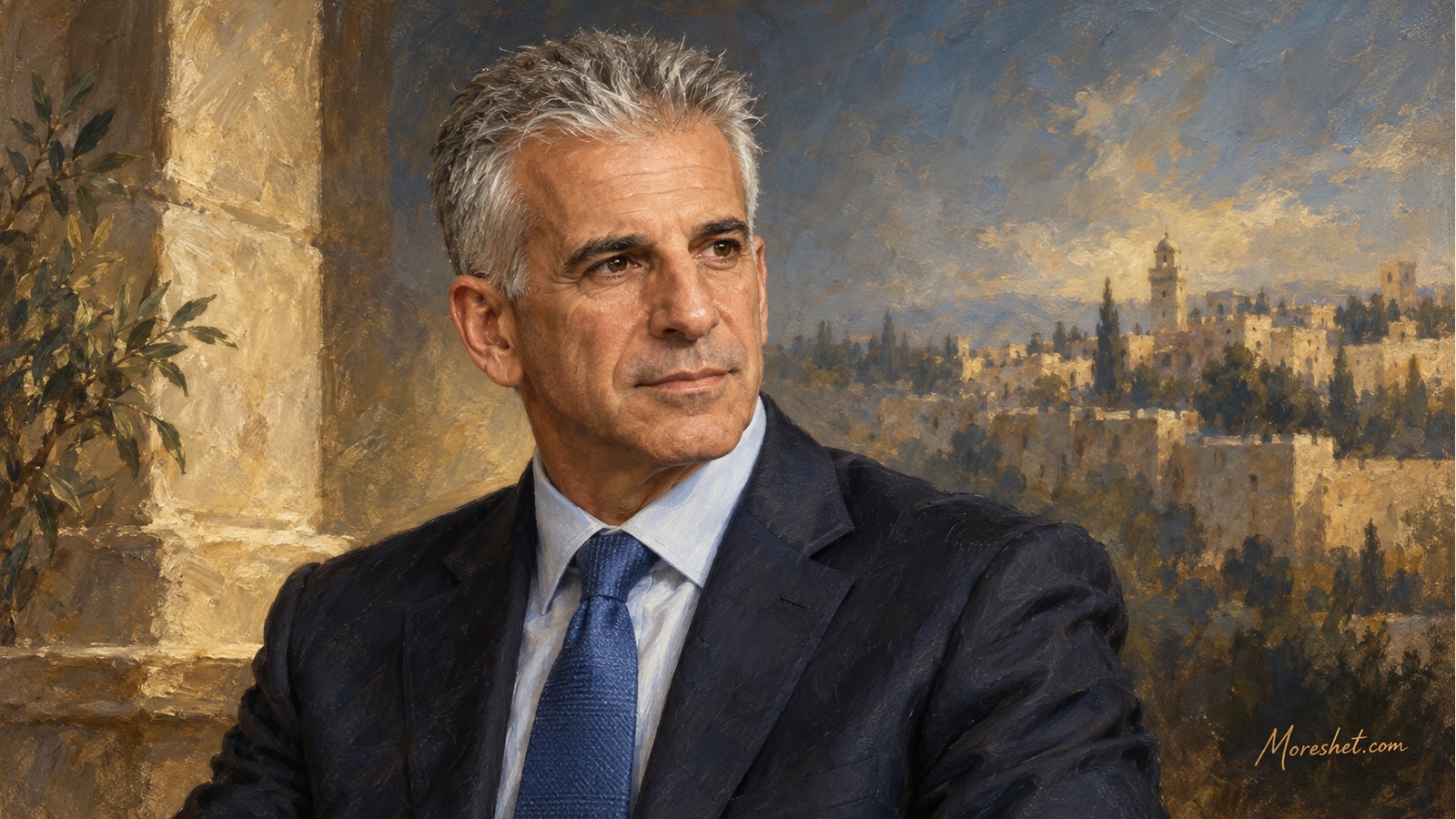
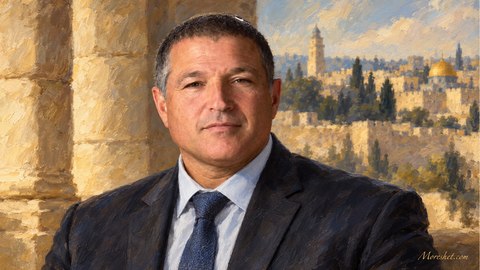
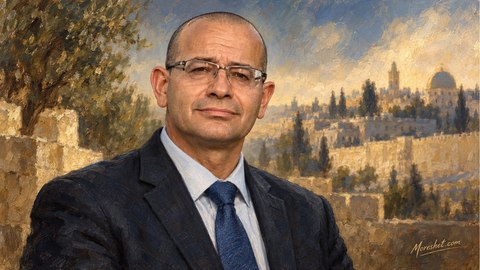
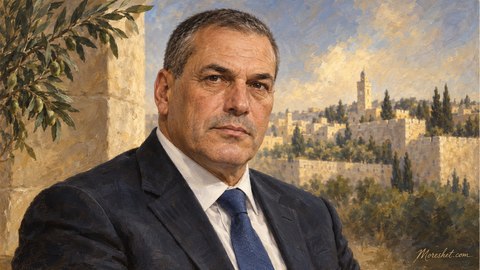
David Barnea — AI-generated artistic portrait · Moreshet.com
Former Mossad director, intelligence officer and operational commander who led the agency through regional threats, war and advanced technology
David Barnea, also known as Dadi, is an Israeli intelligence officer and former director of the Mossad, Israel’s Institute for Intelligence and Special Operations. He led the Mossad from 2021 to 2026 after decades of service in collection, command, operations and management roles. His tenure took place during one of the most complex periods in Israel’s security history: the Iranian threat, the struggle against Hezbollah and Hamas, expanding arenas of action overseas, the October 7 attack, the Swords of Iron War and negotiations to bring hostages back from Gaza.
Barnea is one of those public figures whose story must be written carefully, because much of his work remains classified by the nature of Mossad activity. Even from the open record, however, a clear profile emerges: an intelligence commander who developed from field work, collection and covert action into the leadership of one of Israel’s most important national-security institutions. His historical significance lies in the combination of long operational experience, understanding of human intelligence, adoption of advanced technologies, management of a covert organization during wartime and influence on security diplomacy with major international partners.
Family, childhood and Israeli roots
David Barnea was born in Ashkelon on March 29, 1965, and grew up in Rishon LeZion. His family story connects European Jewish memory, immigration to the Land of Israel, the struggle for independence and the building of the state. His father, Joseph Brunner-Barnea, fled Nazi Germany with his family in 1933 and immigrated to Mandatory Palestine as a child. He later studied in a religious-Zionist framework in Bnei Brak, joined the Palmach at a young age, fought in Israel’s War of Independence, later served as an officer in the Israeli Air Force with the rank of lieutenant colonel, and worked in Israeli industry.
Barnea’s mother, Naomi, was born aboard the immigrant ship Patria, a painful symbol in the history of illegal Jewish immigration and the struggle to reach the Land of Israel under the British Mandate. She became an educator, teacher and school principal. This family background helps explain part of the context in which Barnea grew up: a family shaped by flight from Europe, immigration, security service, education and the building of Israeli society. It gives his Mossad career a meaning wider than a personal professional path.
Military service, studies and business experience
Barnea studied at the Military Boarding School for Command in Tel Aviv, an institution that trained generations of IDF officers and commanders. In 1983 he enlisted in the IDF and served as a combat soldier in Sayeret Matkal. Service in an elite unit gave him early familiarity with operational thinking, secrecy, personal responsibility, teamwork and action under uncertainty.
After his military service, he studied in the United States. He earned a bachelor’s degree from the New York Institute of Technology and an MBA from Pace University, and later worked in finance in Israel, including at an investment bank and at Clal Manpikim. His business experience and financial education gave him tools of management, risk analysis, understanding of economic systems and work in an international environment — tools that can also be valuable in modern intelligence, where technology, money, companies, states and global networks increasingly intersect.
Joining the Mossad and operational rise
In 1996 Barnea joined the Mossad. He completed the collection-officers course and served in the Tzomet Division, the branch associated with recruiting and running human sources. This field lies at the heart of traditional intelligence work: building relationships, understanding people, assessing motives, managing risk and extracting information of national value from secret relationships.
Over the years, Barnea commanded operational units in Israel and abroad, served in overseas stations and held senior staff positions. He later served as deputy head of Tzomet, deputy head of Keshet, head of Tzomet, head of the Operations Directorate and deputy director of the Mossad. According to the supplied material, during his period as head of Tzomet, the division received Israel Defense Prizes, Prime Minister’s Prizes and commendations for operational and intelligence activity. Because much of the work remains classified, these achievements must be documented carefully: not beyond what is permitted, but with recognition of what such senior roles mean inside Israel’s security system.
Barnea’s advancement inside the Mossad reflects sustained professional trust. Moving from collection roles to command, and from there to operational management and deputy leadership of the organization, requires the ability to understand both the human contact at the center of covert intelligence and the broader campaign picture: hostile states, foreign intelligence communities, technology, cyber, foreign policy, law, strategic risk and responsibility to elected leaders.
Appointment as director of the Mossad
In December 2020, Prime Minister Benjamin Netanyahu announced Barnea as his choice to lead the Mossad, following the recommendation of outgoing director Yossi Cohen. After the legal approvals required during Israel’s political crisis, Barnea entered office on June 1, 2021. He became the 13th director of the Mossad and led the agency under three prime ministers: Benjamin Netanyahu, Naftali Bennett and Yair Lapid, and then Netanyahu again.
The appointment placed at the head of the Mossad a man who had grown inside the organization and knew its core branches closely, especially the worlds of human intelligence and operations. At a time when the Iranian nuclear threat, international terrorism, cyber arenas, threats to Israelis abroad and security diplomacy were becoming more complex, such an appointment signaled professional continuity together with the need for organizational change.
Organizational and technological reform
After taking office, Barnea led, according to the supplied material and open reporting, an organizational reform intended to adapt the Mossad to new technological and geopolitical challenges. The reform emphasized the combination of traditional operational capabilities with technology, digital systems, cyber, artificial intelligence and influence capabilities. In a world where intelligence no longer depends only on agents and documents, but also on data, networks, sensors, communications systems, defense industries and advanced analysis, such adaptation is essential for the relevance of an intelligence service.
The challenge for a modern Mossad director is to preserve the core of the profession — secrecy, courage, precision, source recruitment and operational capability — while building an organization prepared for an era in which adversaries use advanced technologies, global financial systems, propaganda, cyber and regional proxies. Barnea’s tenure is described as a period in which the Mossad strengthened the integration of human intelligence with advanced technological systems and deepened cooperation with security agencies and defense industries.
The struggle against Iran and regional threats
One of the central axes of Barnea’s tenure was the Iranian threat. Iran, its nuclear program, its ballistic-missile capabilities and its regional proxies stood at the center of Israel’s security agenda. The Mossad, according to open sources and official or semi-official reporting, engaged during this period in a broad effort to foil threats, gather intelligence, cooperate with foreign intelligence communities and protect Israelis and Jews beyond Israel’s borders.
Barnea also operated in arenas where Iran and its proxies sought to harm Israeli and Jewish targets around the world. Open reports attributed to the Mossad under his leadership operations to disrupt terrorist infrastructure and attempted attacks outside Israel. Naturally, many of these activities cannot be fully described, but responsibility for counterterrorism abroad is a vital part of the Mossad’s role and of its security contribution to Israelis and Jews around the world.
During this period, the Mossad was also mentioned in connection with operations against Hezbollah, the campaign against Iranian infrastructure and activity within the wider regional struggle. In a public profile, it is important to distinguish official facts from operations attributed to the organization in the media, while also recognizing that intelligence leadership exerts influence not only when it appears in official documents, but also when it creates deterrence, disrupts enemy capabilities and enables diplomatic and military freedom of action.
The Swords of Iron War and the hostage effort
After the October 7, 2023 attack, the fate of the hostages became one of the most painful and urgent missions of the State of Israel. Barnea served as a central figure in negotiation teams seeking the return of hostages held in Gaza, mediated by Qatar, Egypt and the United States. He participated in high-level contacts alongside figures such as CIA Director William Burns, Qatari Prime Minister Mohammed bin Abdulrahman Al Thani and senior Egyptian officials.
The effort to return hostages is a clear example of the special character of Mossad work: the combination of intelligence, international relationships, understanding of terrorist organizations, quiet diplomacy, public pressure and heavy moral considerations. In such cases, the director of the Mossad is not only an operations commander, but also a security-diplomatic envoy working in the space between war and negotiation.
According to the supplied material, Barnea played a central role in shaping the November 2023 hostage-release deal and later contacts toward additional agreements. Here too, exclusive credit should be avoided: such agreements are the product of government, the security establishment, mediators and hostage families. Yet the role of the Mossad director in such contacts shows the weight given to the agency at the intersection of security, diplomacy and national responsibility.
Recovering the missing and national memory
During his tenure, achievements were recorded in the field of prisoners, missing soldiers and national memory. The supplied material mentions the return of the body of IDF soldier Tzvi Feldman for burial in Israel, decades after he fell in the Battle of Sultan Yacoub, and the bringing to Israel of the official Syrian archive of Eli Cohen. These issues go beyond intelligence in the technical sense; they touch the deep commitment of the State of Israel to its soldiers, their families and its historical memory.
In Israeli tradition, the return of fallen soldiers and missing persons is a central part of the covenant between the state and its citizens and soldiers. When a covert service works on such an issue, it is not dealing only with an operation, but with moral and symbolic repair. For families, communities and Israeli society as a whole, such acts give tangible meaning to the promise that the state does not forget those who fell in its service.
End of term and transition to defense technology
On June 2, 2026, Barnea completed his term as director of the Mossad, and Roman Gofman replaced him. The end of his tenure closed five years of intelligence leadership during war, regional crises, the strengthening of Iran and its proxies, technological change and covert struggles. After leaving office, Barnea moved into the world of defense technology, and in August 2026 Ondas announced that he had joined Ondas Defense Ltd. as Global President and Chairman.
This transition from a state intelligence service to a company focused on defense and autonomous technologies highlights a feature of the new security era: the boundary between intelligence, defense industry, autonomous systems, artificial intelligence and international partnerships has become thinner. Barnea’s experience in operations, technology and interagency relationships continues, in a civilian and defense-industrial form, the same concern with advanced security.
Personal life
Barnea is married and is the father of four. He lives in a community in the Sharon region. As with many members of the intelligence community, many details of his public and professional life are not open, and that requires writing that respects both his contribution and the limits of security and privacy.
His public profile is built mainly from roles, official milestones and outcomes cleared for publication. Precisely for that reason, it is important to avoid exaggeration or invented detail. Barnea’s public legacy rests on what can be stated clearly: long service in the Mossad, leadership of the agency in decisive years, involvement in the struggle against Iran and terrorism, management of contacts to bring hostages home, and leadership of an Israeli intelligence service at a time when intelligence and technology became more vital than ever.
Why this legacy belongs in Moreshet
David Barnea merits inclusion in Moreshet because his path represents an essential layer of Israel’s security heritage: covert intelligence, national responsibility, prevention of overseas threats, integration of technology and operations, and commitment to the return of hostages and missing persons. He led the Mossad at a time when Israel’s security was shaped not only at the country’s borders, but also through quiet contacts, intelligence partnerships, the struggle against Iran and the management of regional crises.
Moreshet.com documents Barnea because Israeli and Jewish heritage is not built only by visible leaders, but also by intelligence professionals whose actions often remain in the shadows while their influence is felt in security, diplomacy and the ability of the State of Israel to protect its citizens and Jews worldwide. David Barnea’s place in Moreshet rests on the connection between long covert service, operational leadership, security innovation and national responsibility in one of the most dramatic periods in modern Israeli history.