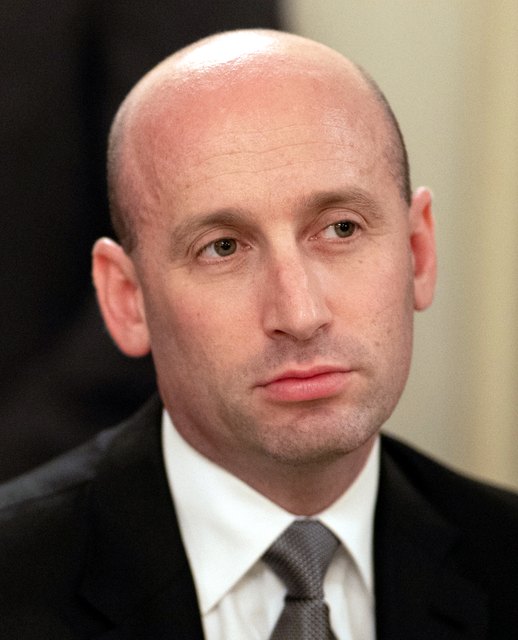
Avigdor Liberman
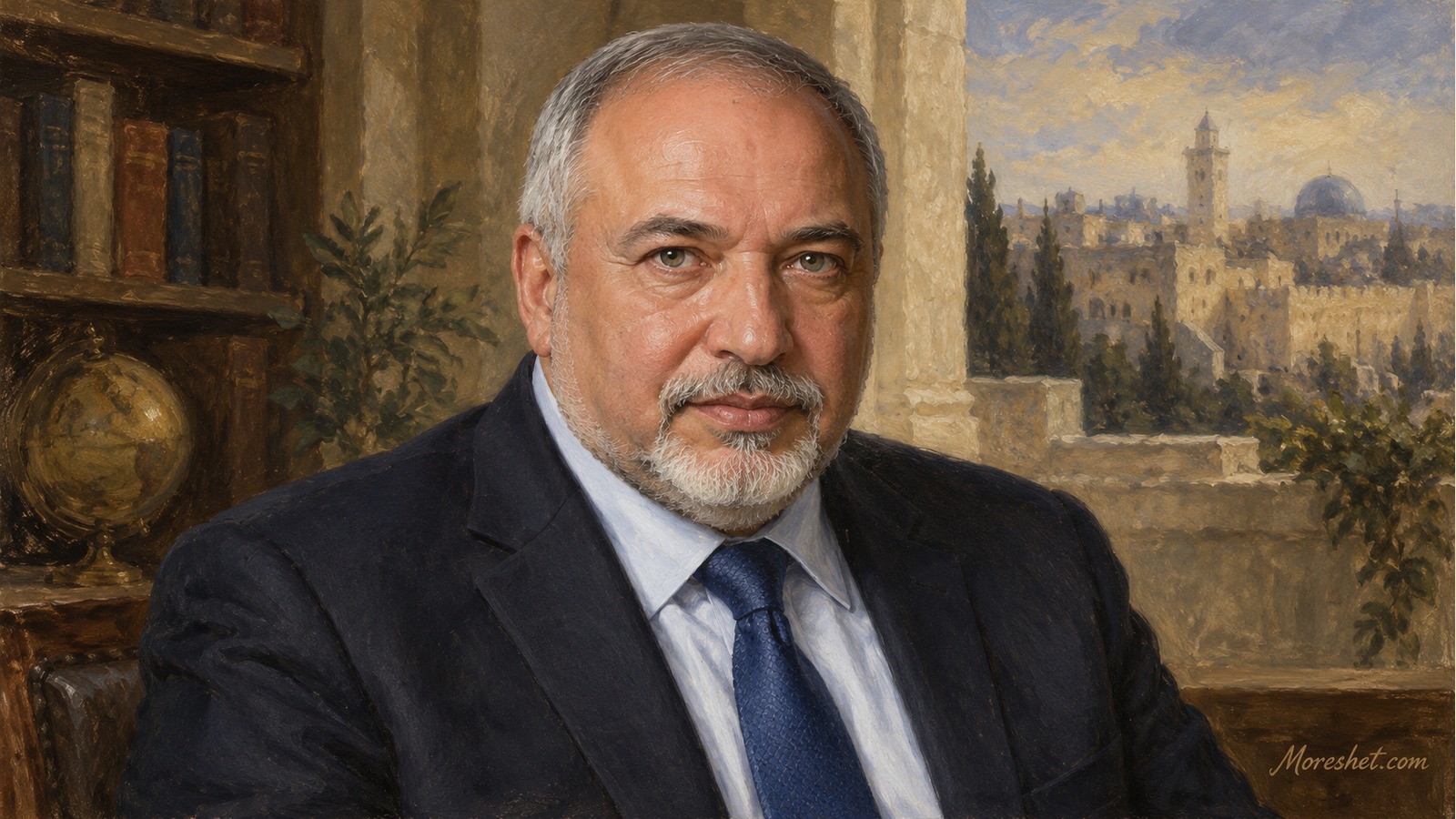
Avigdor Liberman — AI-generated artistic portrait · Moreshet.com 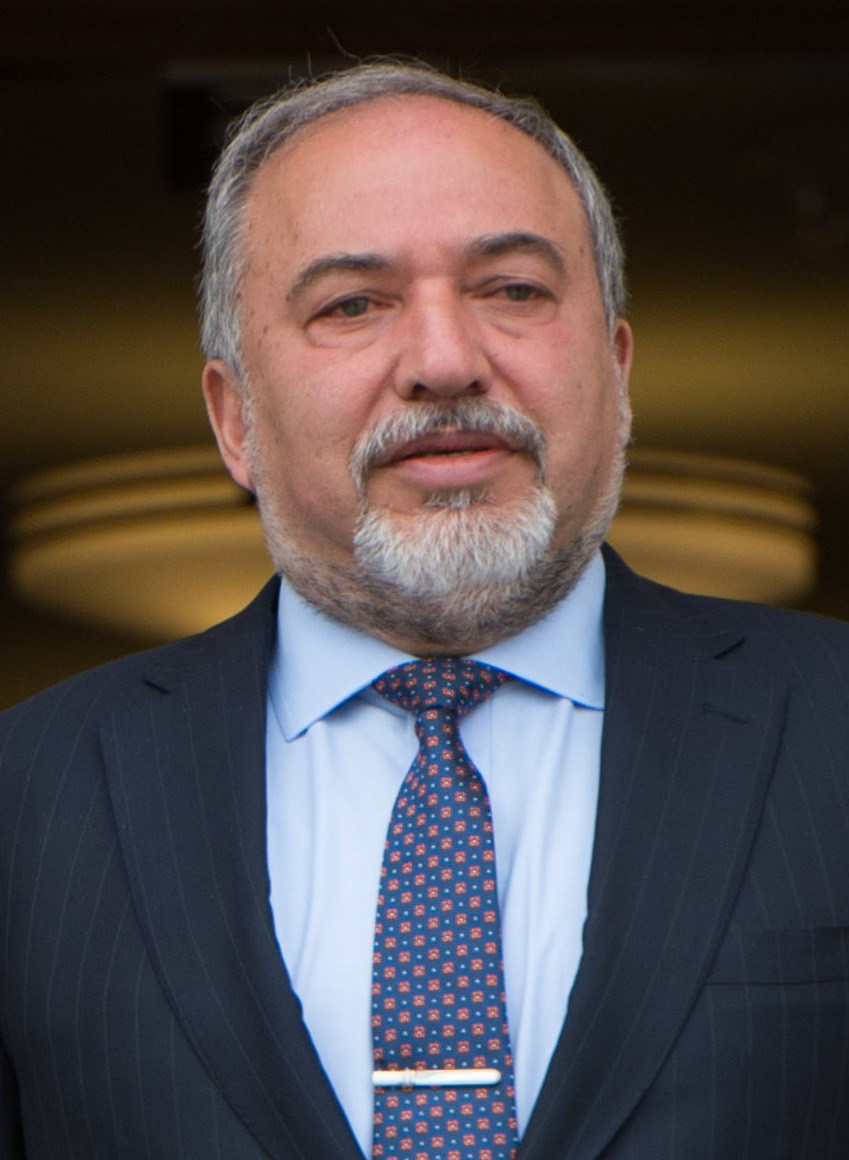
Avigdor Liberman. Photograph by Jim Mattis, via Wikimedia Commons (Public domain).
Moldova-born Israeli politician, founder and chairman of Yisrael Beiteinu, former foreign, defense and finance minister, and a central figure in Russian-speaking aliyah and Israeli coalition politics
Avigdor Liberman, born Evet Lvovich Liberman, is a Moldova-born Israeli politician, founder and chairman of the Yisrael Beiteinu party, member of Knesset and former senior cabinet minister. Over his career he has served as Minister of National Infrastructure, Minister of Transportation, Minister of Strategic Affairs, Minister of Foreign Affairs, Minister of Defense, Minister of Finance and Deputy Prime Minister. His public life is identified with the political rise of Israel’s Russian-speaking community, a hard-line security outlook, a secularist position on religion and state, and a repeated ability to use coalition leverage to influence the formation of governments, the dissolution of Knessets and the national agenda.
Liberman’s importance in Israel’s political heritage is not confined to any single office or party. He created a political home for hundreds of thousands of immigrants from the former Soviet Union and their children, a public that brought to Israel its own political culture, language, historical experience and secular Jewish identity. Yisrael Beiteinu, under his leadership, grew from an immigrant party into a broader secular-national party dealing with security, economics, religion and state, military service, governance, foreign policy and the status of citizens loyal to the state. In that sense, Liberman is one of the figures through whom one can understand how the great post-Soviet aliyah became an independent Israeli political force.
Jewish childhood in Chișinău and Soviet memory
Liberman was born on July 5, 1958, in Chișinău, the capital of Moldova, then part of the Soviet Union. His parents, Lev and Esther Liberman, belonged to a Russian- and Yiddish-speaking Jewish community. His father, Lev, served in the Red Army, spent years in Siberian exile under Stalin and had a deep connection to Russian literature and culture. The home in which Liberman grew up carried several layers of Jewish memory: Yiddish, secular Jewish identity, the Soviet experience, awareness of state power and fear of a regime that could persecute minorities.
His childhood in Chișinău is important to understanding him. It was a city with a significant Jewish community, but within a state where Jews lived under limitations, suspicion and a complicated relationship to their national and religious identity. Liberman absorbed from that background a language of toughness, independence and lack of sentimentality. He later described Moldovan Jews as practical, direct people of action rather than idle philosophers.
As a young man, he studied at the Chișinău Agriculture Institute and was also interested in literature and writing. He was drawn to Russian classics and dreamed of a literary career, but his life took a different direction with aliyah to Israel. Like many immigrants from the Soviet Union, he arrived in the Jewish state from a world in which Jewishness was often a family, historical and national identity more than a fully religious framework.
Aliyah to Israel, the IDF and the Hebrew University
In 1978 Liberman immigrated to Israel with his family, studied Hebrew in an ulpan and changed his first name from Evet to Avigdor. The move to Israel required him to learn a new language, a new political culture and a social system in which immigrants from the Soviet Union were still a relatively small public compared with the much larger wave that would arrive in the 1990s.
Liberman served in the Israel Defense Forces in a shortened service track in the military government in Hebron, and later served in the reserves in the Artillery Corps. After his service, he studied at the Hebrew University of Jerusalem and earned a bachelor’s degree in international relations and political science. During his student years he was active in the nationalist student group Kastel, associated with the Israeli right, and also worked at the Shablul student club.
In those years, three elements came together that would accompany him throughout his career: the secular Jewish identity of a Soviet immigrant, a national-security worldview and a practical understanding of political organization. He did not enter politics through the classic Israeli party route, but through a combination of aliyah, campus activism, right-wing politics, Jerusalem connections and the attempt to build power for a new public.
Entry into Likud and the relationship with Benjamin Netanyahu
In the 1980s Liberman began political activity in Jerusalem. He was involved in the Zionist Forum for Soviet Jewry, served in positions connected with the National Workers’ Union and Jerusalem municipal politics, and came close to right-wing leaders including Ariel Sharon and Benjamin Netanyahu. In 1988 he began working with Netanyahu, who had returned to Israel after serving as ambassador to the United Nations.
The relationship with Netanyahu was one of the important political connections of his early career. Liberman accompanied Netanyahu in his internal Likud struggles, and from 1993 to 1996 served as director-general of the Likud movement. After Netanyahu won the 1996 election, Liberman was appointed director-general of the Prime Minister’s Office. This was a highly significant position for a relatively recent immigrant, exposing him to government management, Knesset-government relations, media, appointments, political crises and security policy.
Liberman left the position in 1997 and later turned to private business. But that chapter left a deep mark: he learned how a ruling party works from inside, how political loyalty is built and how a leader can use organization to build a coalition. Later, when he founded his own party, that knowledge became a central asset.
The founding of Yisrael Beiteinu and the transformation of immigrants into political power
In 1999 Liberman founded the Yisrael Beiteinu party. In its early years the party was identified mainly with Russian-speaking immigrants from the former Soviet Union, but from the beginning it did not seek to be only a cultural immigrant list. It combined a firm national line, emphasis on security, criticism of diplomatic concessions, civic secularism, opposition to religious coercion and a desire to give immigrants a sense of power and independent representation.
Yisrael Beiteinu entered the Knesset in the 1999 election and later ran at times in joint lists with the National Union and at times independently. Liberman’s strength came from his ability to speak to a public that felt the older Israeli political culture did not fully understand it. Many immigrants from the former Soviet Union saw themselves as Zionist, Jewish, educated, secular, security-minded, anti-communist and often suspicious of religious parties or overly soft political language. Liberman gave all these impulses a clear party framework.
Over time Yisrael Beiteinu became an important coalition player. It was not Israel’s largest party, but at times it held the balance between blocs or became a central condition for forming a government. Liberman thus became a striking example of how, in Israel’s electoral system, a medium-sized party with a clear identity and internal discipline can influence the whole system.
First government roles: infrastructure, transportation and strategy
In 2001 Liberman was appointed Minister of National Infrastructure in Ariel Sharon’s government. In 2003 he became Minister of Transportation. These offices connected him to practical issues of infrastructure, roads, energy, transportation, government services and budgets. Although his public image is mostly associated with security and foreign affairs, his early ministerial work already included civilian and economic fields with daily impact.
In 2006 he joined Ehud Olmert’s government as Deputy Prime Minister and Minister of Strategic Affairs, a new position focused largely on regional threats, especially Iran. The creation of that role for him reflected the way he was seen: not only as the head of a sectoral party, but as a figure seeking to influence broad national policy.
His resignation from the government in 2008 over opposition to diplomatic talks with the Palestinians marked a pattern that would recur throughout his career: willingness to enter government when it provided influence, but also willingness to leave when he believed the diplomatic or security line had crossed a boundary. In doing so, he built an image of a politician who did not merely seek office, but used office as a tool in the struggle over policy.
Foreign minister and unconventional diplomacy
In 2009, after Yisrael Beiteinu’s electoral success, Liberman was appointed Foreign Minister and Deputy Prime Minister in Benjamin Netanyahu’s government. He served in that office in two periods, from 2009 to 2012 and again from 2013 to 2015. His tenure at the Foreign Ministry was one of the most significant chapters of his career and placed him at the front of Israel’s relations with the world.
Liberman sought to broaden Israeli diplomacy beyond an almost exclusive focus on the Israeli-Palestinian conflict. He emphasized relations with Eastern Europe, the former Soviet republics, Africa, Latin America and Asia, based on the view that Israel had to build a wider diplomatic space for itself. As someone born in the Soviet sphere and fluent in Russian, he had natural access to diplomatic and cultural worlds that many other Israeli foreign ministers knew less intimately.
His diplomatic style was direct, sometimes sharp, and at times controversial in Israel and abroad. Yet even critics recognized that he brought a different perspective to the Foreign Ministry: less ceremonial, less apologetic, and more focused on national dignity, interests and strengthening relations with countries outside the traditional center of Israeli foreign policy.
The populated-area exchange plan and the debate over citizenship
One of the ideas most closely identified with Liberman is the plan for exchanges of territory and population, intended, in his view, to preserve Israel as a Jewish state with a clear Jewish majority while advancing a particular type of political settlement. Contrary to a one-dimensional image of a right-wing figure opposed to any partition, Liberman at times expressed principled readiness for a Palestinian state, but under conditions including populated land swaps and the transfer of certain Arab-Israeli areas to future Palestinian sovereignty.
The plan drew fierce opposition from many, especially because of its implications for Arab citizens of Israel and the concept of citizenship. For Liberman, loyalty to a Jewish and democratic state is a basic condition of full political belonging. For his critics, that demand risks harming civic equality and deepening alienation between Jews and Arabs in Israel.
In any case, raising the plan made Liberman one of the figures who forced Israeli politics to confront a difficult question: is the Israeli-Palestinian conflict only a border conflict, or also a conflict over identity, citizenship and loyalty? The debate around him reveals the depth of the tensions in a Jewish and democratic state that also includes large national minorities.
Defense minister and the warning about a Hamas attack
In 2016 Liberman was appointed Minister of Defense in Netanyahu’s government. The appointment drew major attention because Liberman was identified with forceful security rhetoric but did not come from the senior ranks of the IDF. In that office he was responsible for the defense establishment, the IDF, budgets, senior appointments and policy toward Gaza, Iran, Syria, Lebanon and the West Bank.
As defense minister he approved equal recognition for the bereaved families of LGBT soldiers, appointed Aviv Kochavi as the next IDF chief of staff, promoted ideas regarding surface-to-surface missiles and northern protection, and dealt with repeated escalations along the Gaza border. In 2018 he resigned in protest over a ceasefire with Hamas, which he described as surrender to terrorism. His resignation contributed to the acceleration of the political crisis that eventually led to Israel’s repeated elections.
After the October 7, 2023 attack, his tenure as defense minister received renewed significance because of a 2016 document in which, according to reports, he warned of the possibility that Hamas would carry the next conflict into Israeli territory, try to take over a community near the Gaza border and take hostages. Even if not every element of the document unfolded exactly as written, the existence of such a warning became an important part of Israel’s public debate over intelligence, security failure and the pre-October 7 conception.
The 2019 political crisis and the secularist stance
One of the moments in which Liberman directly affected Israeli political history was 2019. After the election for the twenty-first Knesset, he refused to join a Netanyahu-led coalition because of a dispute over the military-draft law for yeshiva students. His refusal prevented the formation of a right-Haredi government and led to the dissolution of the Knesset and a new election.
At this stage Liberman increasingly centered Yisrael Beiteinu around a secular-national line: opposition to what he called religious coercion, demand for military or national service, support for transportation and commerce on Shabbat in certain areas, criticism of the power of the Haredi parties, and presentation of his party as a home for secular, traditional and right-leaning Israelis unwilling to give up civic freedom.
This move broadened Yisrael Beiteinu’s identity beyond that of an immigrant party. It became a party representing a clear social-political constituency: national, secular or traditional Israelis, many of them Russian-speaking, who see security and service to the state as central values while opposing the growing power of the Haredi parties. In this respect, Liberman influenced the religion-and-state debate in Israel no less than the right-left divide.
Finance minister in the Bennett-Lapid government
In 2021, with the formation of Israel’s thirty-sixth government under Naftali Bennett and Yair Lapid, Liberman was appointed Minister of Finance. In that role he moved from the image of a security and foreign-policy politician into the government’s most senior economic office. His tenure included managing the exit from the coronavirus economic crisis, passing a state budget after a long period without an approved budget, and advancing broad reforms through the Arrangements Law.
During his term the 2021–2022 state budget was approved, along with an unusually broad Arrangements Law that included reforms in imports, agriculture, regulation, business licensing, open banking, transportation, the Tel Aviv metropolitan rail project, pensions, health care and women’s retirement age. Liberman presented himself as a finance minister seeking to reduce dependence on allowances, encourage labor-market participation, open markets to competition and change long-standing mechanisms of the Israeli economy.
Some measures drew strong opposition, especially from the Haredi public and from groups that were harmed by the reforms or viewed them as ideologically directed against them. But as a matter of governance, passing the state budget after years of political paralysis was a central event. During his period, the deficit also fell sharply, in part because of Israel’s rapid post-COVID economic recovery and high tax revenues.
Opposition, the Swords of Iron War and criticism of Netanyahu
After the 2022 election, Yisrael Beiteinu moved into opposition. Liberman strongly opposed the judicial reform advanced by the Netanyahu government, took part in the public struggle against it, and presented it as a threat to Israeli democracy and state stability. After the October 7 attack he supported the war aims against Hamas, while continuing to criticize the government’s conduct and responsibility for the failures.
In 2025 Liberman sparked public controversy when he claimed that Israel had transferred weapons to clans or armed groups in Gaza to counter Hamas. Shortly afterward, Netanyahu generally confirmed that Israel had activated local elements opposing Hamas, but the public debate around the issue again showed Liberman’s place as a security-minded opposition figure who challenges the government not only through slogans, but through claims touching sensitive wartime policy.
As of September 2026, Liberman continues to serve as a member of Knesset and chairman of Yisrael Beiteinu. He is not a minister in the government, but remains one of Israel’s most experienced politicians, a prominent opposition figure and a person able to shape security, economic and coalition discourse even from outside the cabinet.
Family, language and public identity
Liberman is married to Ella Tzipkin, also an immigrant from Moldova and the former Soviet space, and they have three children. The family lives in Nokdim in the Judean Desert. His residence in a settlement became part of his public image, yet Liberman has said in the past that he would be willing to leave his home as part of a genuine political agreement if that served the national interest.
He speaks Russian, Hebrew, Yiddish, Romanian and English at varying levels. This multilingualism is not merely biographical detail; it is part of the bridge he built between Israel and immigrants from the former Soviet Union, and between Israel and Eastern Europe, Russia, Moldova and the former Soviet republics. For Israel’s Russian-speaking public, his presence at the head of a party and in government demonstrated that aliyah could turn from demographic weight into governing power.
His public identity is built from contrasts: a new immigrant who became one of the most powerful people in the system; a secular Jew fluent in the language of Jewish identity; a right-wing politician who sometimes proposes territorial partition; a figure seen as forceful but also pragmatic in coalition politics; a man who stood at the center of investigations and trials but was acquitted in the central Foreign Ministry case; and a leader who draws both admiration for firmness and consistency and sharp criticism for style and policy.
Editorial note on inclusion
Avigdor Liberman is included on the site even though this person and their public record are controversial among broad sections of the public. Inclusion does not determine whether the influence is positive or negative; it reflects the significant place this figure holds in shaping the lived experience, culture and way of life of the public. Naturally, some regard this activity as positive and even heroic, while others see it as contrary to their worldview. The very existence of opposing assessments is part of the historical record that justifies including this significant and influential figure in the heritage of the Jewish people.
Why this legacy belongs in Moreshet
Avigdor Liberman merits inclusion in Moreshet because his story connects Soviet Jewry, aliyah to Israel, absorption, secular Jewish identity, party-building, representation of the Russian-speaking public, security, foreign affairs, economics and religion and state. He is one of the figures through whom it is possible to understand how the great aliyah from the post-Soviet sphere moved from social integration to independent and influential political power.
Moreshet.com documents Liberman because Jewish and Israeli heritage also includes controversial leaders who actually shaped institutions, communities, priorities and national decisions. Avigdor Liberman’s place in Moreshet rests on the way he turned Yisrael Beiteinu into a political home for immigrants and secular-national Israelis, on his influence as foreign, defense and finance minister, and on the fact that his career reflects one of the central chapters of modern Israel: the integration of Jews from the former Soviet Union into Israeli society not only as new citizens, but as a force redefining politics, security, economics and the debate over the Jewish and democratic identity of the state.