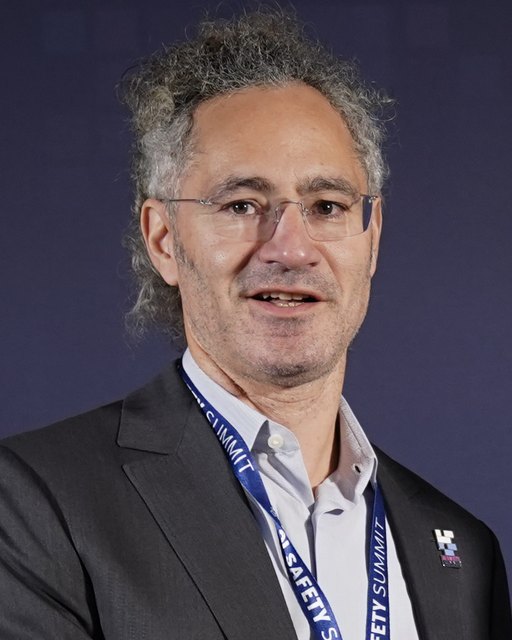
Andi Gutmans
PHP co-creator, Zend Technologies co-founder, and Israeli technology leader who helped shape the infrastructure of the modern web
Andi (Andrei) Gutmans is an Israeli programmer, entrepreneur, and technology executive whose work helped transform PHP from an early web language into one of the influential development foundations of the internet. With Zeev Suraski, he created PHP 3, wrote the Zend Engine at the core of PHP 4, and established Zend Technologies. He later held senior leadership roles at Amazon Web Services and Google, overseeing database, analytics, and cloud data technologies operating at substantial scale.
Gutmans's significance lies in the way he connected open-source engineering, Israeli entrepreneurship, professional developer tools, and global technology management. His contribution was not limited to a single piece of code. He helped provide PHP with an execution engine, a commercial support structure, development tools, and an institutional base that allowed the technology and its community to mature over many years.
From the Technion to the foundations of web development
Born in Basel, Switzerland, Gutmans earned a bachelor's degree in computer science from the Technion – Israel Institute of Technology in Haifa. There he met fellow student Zeev Suraski, beginning a partnership that became an important chapter in the history of Israeli software development.
In 1997, Gutmans and Suraski extensively reworked PHP and created PHP 3. Their version marked a turning point, giving the language a broader and more systematic foundation for building dynamic web applications and helping it attract a rapidly expanding developer community. PHP existed before their involvement, but the two became central architects of its modern form and of the technical foundation on which later releases were built.
The Zend Engine and Zend Technologies
A new core for PHP 4
In 1999, Gutmans and Suraski wrote the Zend Engine, the execution engine that became the core of PHP 4. The name Zend combined their first names, Zeev and Andi. More importantly, it represented an engineering partnership that gave PHP a new foundation for executing code and continuing to evolve.
A successful programming language needs more than approachable syntax. It also requires a dependable runtime that can be maintained, extended, and improved. The Zend Engine supplied that foundation and helped PHP support websites and web applications across a wide range of uses and scales. Its impact carried into subsequent generations of the language and enabled the open-source community to keep advancing the platform.
Building a company around open-source software
The two developers also founded Zend Technologies in 1999. The company worked at the intersection of an open-source community and the practical needs of businesses and professional developers. It developed tools, support services, software frameworks, and products intended to make PHP applications easier to build and operate in organizational environments. Zend thereby helped PHP become not only an accessible language for individual programmers but also a technology that companies could deploy, manage, and maintain.
Gutmans led Zend's research and development for years. His responsibilities encompassed the company's products and its contributions to open-source projects, including Zend Framework and PHP Development Tools. He also participated in corporate financing and led alliances with major technology vendors such as Adobe, IBM, Microsoft, and Oracle. These relationships helped connect PHP with a wider computing ecosystem and brought its developer community into closer contact with large software and infrastructure providers.
From engineering leader to chief executive
Gutmans became chief executive officer of Zend Technologies in February 2009 after already serving as one of its principal technical leaders. The appointment reflected the breadth of his work: alongside programming and software architecture, he took responsibility for business strategy, partnerships, and the expansion of the company's technologies.
Rogue Wave Software acquired Zend in October 2015, and Gutmans departed following the acquisition before beginning the next stage of his career in 2016. Zend's path—from work initiated by two Technion students to an internationally active software company—demonstrated how Israeli open-source innovation could grow into both widely used infrastructure and a sustainable technology business.
Leading cloud data infrastructure
Amazon Web Services
Gutmans joined Amazon Web Services in March 2016 in a senior leadership role. His work there broadened his focus from programming-language infrastructure to managed data systems in the cloud. He oversaw services including Amazon Elasticsearch Service, Amazon Redshift, Amazon EMR, Amazon Glue, Amazon ElastiCache, and Amazon Neptune.
Together, these products represented several layers of the modern data environment: search and analytics, data warehousing, large-scale processing, data integration, caching, and graph databases. Managing such a portfolio placed Gutmans at the center of the shift from locally operated infrastructure to managed cloud services—a change that reshaped how organizations store information, derive insight from it, and build applications.
Google and Data Cloud
In May 2020, Gutmans joined Google as vice president and general manager for databases. His role was subsequently described as vice president and general manager of Data Cloud, encompassing operational databases, analytical data platforms, open lakehouse technologies, and business intelligence.
These responsibilities continued a practical engineering theme that runs throughout his career: enabling developers and organizations to use complex technology without having to construct every underlying layer themselves. With PHP, Gutmans helped make dynamic web development more accessible. In cloud computing, he turned to making sophisticated data engines and services more readily usable. Both fields seek to shorten the distance between a developer's idea and a functioning, reliable system.
Professional writing and open-source service
In 2004, Gutmans co-authored PHP 5 Power Programming with Stig Bakken and Derick Rethans. The book explained the capabilities and working methods of PHP 5 to developers and formed part of a broader effort to transfer structured technical knowledge to the community. Such writing is particularly valuable in an open-source ecosystem because it turns improvements within the software core into practices that working programmers can understand and apply.
Gutmans served on the board of the Eclipse Foundation from October 2005 until October 2008 and is an emeritus member of the Apache Software Foundation. Both organizations have played major roles in open-source development and in creating collaborative structures among programmers, companies, and institutions. In 1999, he was also nominated for the Free Software Foundation's Award for the Advancement of Free Software.
In July 2007, Computerworld included Gutmans in its “40 Under 40” selection of innovative information technology professionals to watch. The recognition reflected his combination of direct technical contribution and his ability to build an organization and professional ecosystem around open software.
An Israeli contribution to the global web
Gutmans's career is a notable part of Israel's technology history. A Technion graduate began an engineering project with a fellow student, helped shape the core of a global programming language, built a company that gave the technology professional support, and later led data products within major cloud platforms. For Israel's technology community, this path illustrated how academic knowledge, open-source collaboration, and entrepreneurship could combine to produce enduring international impact.
PHP enabled generations of developers, businesses, media outlets, institutions, and communities to establish a presence and provide services online. Gutmans's work on the language's infrastructure and the tools surrounding it therefore reached far beyond any one product. It helped lower barriers to web development and sustain a professional community, connecting Israeli innovation with everyday digital life around the world.
Why Andi Gutmans's legacy belongs in Moreshet
Andi Gutmans merits inclusion in Moreshet because his work constitutes a concrete Israeli contribution to the technological infrastructure of the digital era. His development of PHP 3 and the Zend Engine, his co-founding and leadership of Zend Technologies, and his work on tools and services for developers influenced how web applications were built and operated. He later carried that experience into cloud data platforms that help organizations process, analyze, and store information at scale.
Moreshet and Moreshet.com document Gutmans not simply as a founder of a successful Israeli technology company, but as a representative of an important form of modern Israeli and Jewish legacy: creating open knowledge and tools that crossed borders, empowered developer communities, and became part of the working infrastructure of the online world. His combination of engineering, entrepreneurship, open-source stewardship, and technology leadership gives him a meaningful place in the record of Israeli and Jewish contributions to global computing.