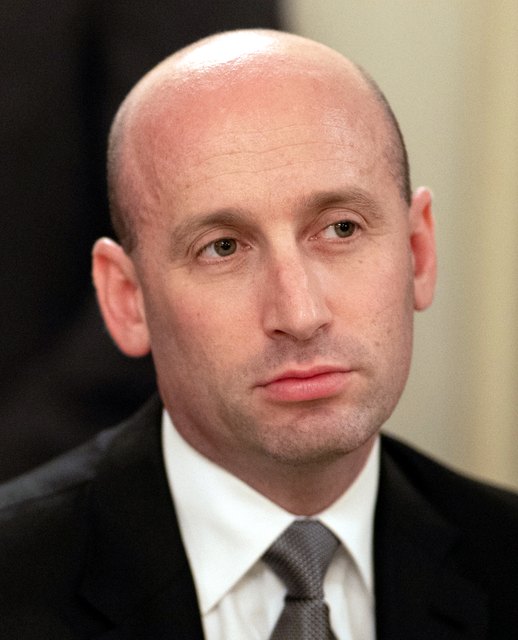
Shimon Sheves
A founder of Kibbutz Afik, a leader in the Golan’s development, and director-general of the Prime Minister’s Office under Yitzhak Rabin
Shimon Sheves (born March 16, 1952) is an Israeli public administrator, businessman, and strategic adviser whose career has extended from community building in the Golan Heights to the senior ranks of national government. He was among the founders of Kibbutz Afik, led the Golan Heights Settlements Committee and the region’s economic development company, served as Yitzhak Rabin’s aide for settlement affairs, and was director-general of the Prime Minister’s Office from 1992 to 1995.
His long working relationship with Rabin placed him close to one of the formative periods in Israel’s modern history. Sheves managed the Labor Party’s successful 1992 election campaign and then moved from political strategy to the government’s senior administrative apparatus. After Rabin’s assassination, he left Israeli politics, took part in efforts to preserve Rabin’s memory, and built a later career in international consulting, business development, and cybersecurity.
Family roots and a Labor Zionist upbringing
Sheves was born in Petah Tikva and raised in Givatayim, the younger of two sons. His father, Faivel-Shraga, served in a Jewish unit of the British Army, belonged to the Haganah, and was sent to assist the Zionist movement in Baghdad. His mother, Rena, née Niskar, was a Holocaust survivor. His family history therefore brought together the organized Jewish defense effort, Zionist activity abroad, and the experience of Holocaust survival.
As a young man, Sheves was a member and instructor in HaNoar HaOved VeHaLomed, the Labor Zionist youth movement, and was active in Hapoel. The work introduced him to group leadership, organization, and communal responsibility—skills that soon became central to his life in the Golan.
Building Kibbutz Afik and developing the Golan
From a Nahal group to a civilian community
In the spring of 1971, Sheves went to the southern Golan Heights as a member of the Atgar group of Nahal Golan. The group settled near the abandoned Syrian village of Fiq, close to the ceasefire line between Israel and Syria. On May 8, 1972, the outpost became the civilian community of Afik. Sheves, one of its founders, was elected kibbutz secretary and also coordinated training for five HaNoar HaOved VeHaLomed settlement groups.
This was not simply the establishment of another residential site. Building Afik required the creation of a functioning community, an economy, local institutions, and a framework capable of absorbing additional young settlers in a sensitive border region. Sheves belonged to a generation that moved directly from youth-movement education and Nahal service into practical responsibility for new Israeli communities.
Service in the Yom Kippur War
During his Israel Defense Forces service, Sheves volunteered for the airborne Nahal battalion and completed an infantry squad commanders’ course. In the Yom Kippur War, he fought near Quneitra in the defensive battles against the Syrian offensive in the Golan Heights. He later served on the southern front, in Sinai and west of the Suez Canal. His military experience and his civilian life near the border gave him firsthand familiarity with both the security demands and the everyday needs of the Golan’s communities.
Regional leadership and economic infrastructure
At the Histadrut’s twelfth convention in 1974, Sheves called for a substantial increase in the Golan’s population and for continued institutional support for settlement. In 1978, he was elected chairman of the Golan Heights Settlements Committee. In that position, he led a public campaign to end military government in the area and later advocated the application of the Golan Heights Law.
Alongside these political efforts, Sheves concentrated on the practical conditions needed for communities to endure. He promoted plans for expanding settlement and helped establish the Golan Heights Economic Development Company, which worked on infrastructure, tourism, and employment. This activity contributed to the region’s transition from an initial settlement phase to a more durable network of communities supported by economic institutions and public services. He also served as deputy head of the Golan Regional Council.
Working with Yitzhak Rabin
Settlement, development regions, and national infrastructure
In 1984, Defense Minister Yitzhak Rabin appointed Sheves as his aide for settlement affairs. Sheves held the position for approximately six years while also serving as a personal and political aide. Rabin entrusted him with work involving settlement areas, development regions, and national infrastructure—fields requiring coordination among government ministries, local authorities, planning bodies, and public companies.
During these years, Sheves served on government and national bodies, including the Israel Land Administration Council and the boards of Israel Aerospace Industries and Israel Military Industries. He also chaired a committee intended to advance the integration of Arab, Bedouin, and Druze citizens into Israeli society. These responsibilities broadened his work from regional settlement to the state’s systems of land administration, industry, security, and social development.
The 1992 election and the Prime Minister’s Office
Ahead of the 1992 Knesset election, Sheves was appointed to manage the Labor Party campaign led by Rabin. Labor won the largest number of seats, and Rabin was asked to form a government. Once the government was established, Rabin appointed Sheves director-general of the Prime Minister’s Office.
The director-general is the office’s most senior administrative official, responsible for helping advance the prime minister’s priorities and coordinating staff work across the government. Sheves held the post from 1992 until 1995, a period of major diplomatic initiatives, economic decisions, and national development programs. His documented contribution was principally managerial and operational: translating directives into government work processes and following their implementation across a complex public system.
Rabin’s assassination, commemoration, and personal testimony
The assassination of Yitzhak Rabin on November 4, 1995, ended the long professional partnership between the two men. Sheves was among those who delivered eulogies at Rabin’s state funeral, alongside Israeli and international leaders. After the assassination, he decided to leave Israeli politics.
Sheves subsequently served on the board of the association established to create the Yitzhak Rabin Center for Israel Studies. Through this work, he participated in the effort to turn Rabin’s memory into an educational and public resource concerned with Israeli history, democracy, leadership, and the period in which Rabin governed the country.
In 2020, Yedioth Books published Sheves’s book Chaver—Hebrew for “Friend”—edited by Yoav Keren. The book presents his perspective on Rabin and their years of work together, adding the personal testimony of someone who operated in the prime minister’s immediate professional circle.
The legal case and the obligations of public office
A complete account of Sheves’s public career must also record the outcome of the criminal proceedings concerning his conduct in office. Following a District Court conviction in 2000 and an acquittal on appeal in 2003, the Supreme Court conducted a further hearing before a nine-justice panel. On November 30, 2004, by a majority of eight to one, Sheves was convicted of fraud and breach of trust in two matters involving the advancement of friends’ interests while he held public office. In February 2005, the Tel Aviv District Court imposed a fine of NIS 50,000 and no prison sentence. The Supreme Court ruling also became part of Israel’s broader legal discussion about the scope of the breach-of-trust offense for public officials.
International business, strategic consulting, and cybersecurity
After leaving politics, Sheves developed a business career outside Israel. He served as chairman of RSLB, a Washington-based American company that helped Israeli entrepreneurs and business owners enter the United States market and engage with international institutions. He also participated in ventures in Europe and the United States involving investment, real estate, and hospitality.
Beginning in 2002, he worked as a political, economic, and strategic adviser to leaders, governmental bodies, and international corporations. His work was reported in countries including Romania, Bulgaria, Hungary, Austria, Serbia, and the United States. It drew on the experience he had accumulated in election management, government coordination, infrastructure, and economic development.
In 2016, Sheves was among the founders of HolistiCyber and served as its chairman. The company provides cybersecurity services to private and public organizations. The venture expanded his activity into a field in which Israeli professional expertise has acquired significant international demand.
Public engagement and Jewish communities
Sheves has addressed students and Jewish communities in Europe on Israeli society, the social protest movement that emerged in the summer of 2011, and the Israeli-Palestinian conflict. In these appearances, he has drawn on personal experience spanning settlement, war, regional development, political campaigns, and government administration.
His engagement with Jewish audiences outside Israel has also served a wider purpose: helping communities understand Israeli social debates and decision-making through the testimony of someone who worked within the country’s political and administrative system during consequential years.
Why Shimon Sheves belongs in Moreshet
Shimon Sheves merits inclusion in Moreshet because his career connects local community building with the operation of Israel’s national institutions. At Afik and in the Golan’s regional bodies, he worked on the foundations that allow communities to survive: organization, employment, tourism, and infrastructure. Alongside Yitzhak Rabin, he participated in the management of national systems and the coordination of government work. After Rabin’s assassination, he contributed to commemoration and to the preservation of a firsthand record of that era.
The profile on Moreshet.com also preserves a broader Israeli story: the path from a Labor Zionist youth movement and a Nahal settlement group to regional leadership, senior public service, and international business and technology. Accurate remembrance includes the Supreme Court judgment as well as the achievements, because a significant public legacy is best understood through the full set of relevant facts. Sheves’s enduring place in Israeli and Jewish heritage rests on the practical traces of his work in the Golan, the institutions of the state, the memory of Yitzhak Rabin, and the continuing conversation between Israel and Jewish communities abroad.