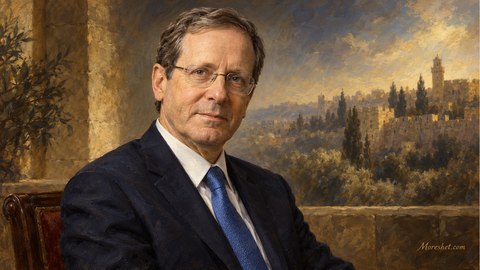
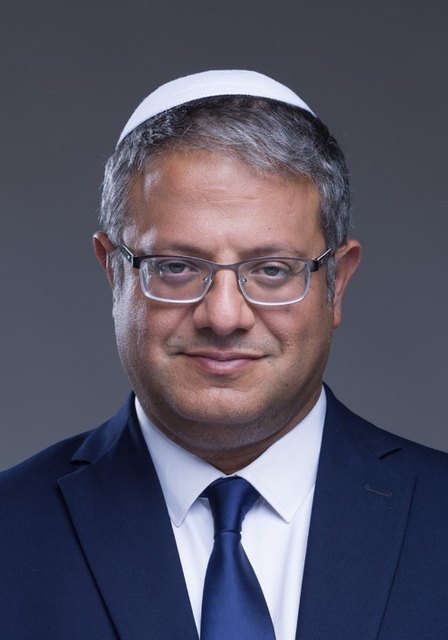
Yaron Zelekha
The economist, accountant and educator who made government contracts, public revenue and financial accountability matters of public consequence
Professor Yaron Zelekha is an Israeli economist, certified public accountant, academic and public figure who served as Accountant General of the Ministry of Finance from 2003 to 2007. In that office, he became closely identified with stricter enforcement of government contracts, timely payment of state obligations, protection of contract workers and the defense of public revenue derived from state assets and natural resources. He later extended his influence through teaching, books, public committees, economic consulting, media appearances and electoral politics.
Zelekha's significance lies not simply in the senior positions he has held, but in the practical understanding of government that informed his work. Procurement rules determine whether bidders compete fairly. Payment schedules can decide whether a small supplier remains solvent. Oversight of contractors can affect the wages and pensions of vulnerable workers. Royalty agreements determine whether the public receives an appropriate return from national resources. His career has repeatedly placed such questions at the center of Israeli public debate.
Family background, military service and education
Yaron Zelekha was born in Ramat Gan on July 20, 1970, to parents from the Iraqi Jewish community. His father, Shlomo Zelekha, managed a Bank Leumi branch in Rehovot, and early exposure to banking helped awaken his interest in economics. After attending Ohel Shem High School in Ramat Gan, he served in the Research Department of the Israel Defense Forces' Military Intelligence Directorate.
Following his discharge in 1991, Zelekha studied economics and accounting at Bar-Ilan University, completing his bachelor's degree in 1994. He earned a doctorate in economics there in 2001 through a direct doctoral track. His dissertation examined how uncertainty surrounding expected inflation influences patterns of consumption and saving—a subject that connects macroeconomic policy to the everyday decisions of households. He later broadened his education into psychology, completing a degree in the field in 2017 and a master's degree in social psychology in 2021.
Early work in accounting, government and business
From 1994 to 1996, Zelekha trained as an accountant in Shlomo Ness's firm while teaching accounting and finance. He lectured at the College of Management Academic Studies between 1995 and 1997 and was appointed head of the Accounting Department at Ono Academic College in 1998. The combination of professional practice and classroom teaching became a continuing feature of his career.
Zelekha entered government service in 1996 as head of the economic field in the Prime Minister's Office. His work encompassed fiscal and monetary questions, structural changes in the economy, privatization policy and the encouragement of foreign investment. In 1998 he moved to the private sector, joining the newly established Partner Communications as head of business planning and strategy. He was part of the team involved in the company's October 1999 offering in the United States.
He subsequently served as vice president for finance and business development at Tevel Telecom and as senior vice president for finance and business development at Derech Eretz Highways, the concessionaire responsible for Highway 6. From 2002 to 2003, he also represented the state on the board of Oil Refineries Ltd. These posts gave him experience in infrastructure finance, capital markets, regulation and the management of large commercial systems before his return to government.
Accountant General of Israel
Finance Minister Benjamin Netanyahu appointed Zelekha Accountant General in 2003. The office bears responsibility for major parts of the state's financial machinery, including budget execution, government accounting, procurement, state assets, guarantees, financing and large infrastructure projects. Zelekha used the office to insist that public bodies and private concessionaires alike comply with binding financial and contractual rules.
Turning contracts into enforceable commitments
A defining feature of his tenure was the effort to prevent winning bids from becoming merely the opening stage of prolonged renegotiation. Under this approach, the state called a NIS 35 million guarantee posted by the Carmel Desalination consortium after the group failed to meet requirements involving permits and financing. A settlement with the Yuvalim desalination group resulted in the forfeiture of NIS 10 million from a NIS 35 million guarantee. In the Ramat Hovav power-station project, a $1 million guarantee was called after a dispute over reopening the agreement and increasing the recognized cost.
The institutional importance went beyond the money recovered in individual cases. Firm enforcement protects bidders that submit realistic proposals, reduces incentives to win public tenders on terms that will not be honored and strengthens the state's ability to obtain value for taxpayers.
Paying suppliers and protecting contract workers
Zelekha's office also worked to reduce late government payments and to shorten payment schedules in certain construction contracts. Prompt payment is a basic matter of fairness, but it also has wider economic effects: a small business waiting for the state to meet an obligation may struggle to pay wages, suppliers or credit costs.
A 2006 in-depth review of the security company Modi'in Ezrachi found that employees working in government offices had not received required wage components and social benefits. Following the examination, the company paid the workers approximately NIS 5 million, with further action continuing under Zelekha's successor. The case demonstrated that government responsibility does not end when work is outsourced. By using contractual guarantees and financial oversight, the state could help ensure that people laboring in its facilities received the rights due to them.
Securing the public's share of Dead Sea resources
In 2006 and 2007, following examinations that began in the accounting unit of the Ministry of Industry and Trade and a further investigation commissioned by the Accountant General's division, Zelekha demanded additional royalties from Israel Chemicals for downstream products derived from Dead Sea resources. He helped move the dispute toward legal determination.
The arbitration formally began after he left office, continued under several accountants general and concluded in 2019. The state's principal legal positions were accepted, and the proceedings resulted in approximately NIS 1.2 billion in additional payments for the years 2000–2017. The principles established in the arbitration were intended to apply through the end of the concession in 2030. This outcome illustrates the long reach of professional groundwork in public service: the underlying issue was whether the citizens of Israel would receive the proper return from the commercial use of a national natural resource.
Privatization and stewardship of state holdings
Zelekha participated in the sale of the controlling interest in Israel Discount Bank. He temporarily recused himself when his brother's law firm represented one of the bidding groups and returned to the process after that group withdrew. In 2005, a group led by Matthew Bronfman and Rubin Schron purchased 26 percent of the bank for approximately NIS 1.3 billion, together with an option for an additional stake.
While the state still retained shareholder rights, Zelekha opposed a request for NIS 17 million in additional bonuses for bank chairman Arie Mientkavich. The dispute continued after Zelekha's tenure and was eventually resolved by an arbitrator who awarded a lower amount. The episode reflected his broader view that officials managing state assets must scrutinize executive compensation and other uses of value belonging to the public.
Integrity, disclosure and public responsibility
During his tenure, Zelekha gave the State Comptroller information concerning suspected defects and conflicts of interest in the proposed sale of the state's Bank Leumi shares. He became a central witness in the resulting police investigation into the conduct of then finance minister Ehud Olmert. The case was ultimately closed because the evidence was considered insufficient for an indictment. In a later petition, Israel's Supreme Court criticized aspects of the conduct disclosed by the evidence but did not overturn the decision to close the case.
Amid a dispute over the end of his term, State Comptroller Micha Lindenstrauss issued Zelekha a temporary protection order after finding a preliminary basis to examine whether alleged harm to him was connected to his disclosures. The comptroller emphasized that the order was not a final ruling on the competing claims. Zelekha ultimately announced his departure and completed his service in December 2007. In 2009, the Movement for Quality Government in Israel named him a Knight of Quality Government in the executive-branch category, recognizing his public-service record.
Teaching, scholarship and public economic education
After leaving the Finance Ministry, Zelekha returned to Ono Academic College, where he has held senior teaching and academic-administration posts, including leadership of its accounting program and presidency of its Supreme Academic Council. He received appointments as an associate professor in accounting on an expert professional track and in economics on a research track. His teaching has brought practical questions of government finance, accounting and regulation into the education of future accountants and economic professionals.
He also wrote columns on the Israeli economy and appeared in the second episode of the 2015 documentary series Magash Hakesef (The Silver Platter). The program introduced a wide audience to arguments about concentration, wages, the cost of living and the structure of the Israeli economy, bringing policy questions normally confined to reports and professional forums into homes across the country.
His books range from macroeconomics and public administration to ethics and cinema:
- The Black Guard (2008), on public funds, financial management and failures of governance.
- Uncertainty, Expectations and Macroeconomic Policy in Israel (2009), developing themes central to his economic research.
- Changing Consumption Habits (2011), presenting his approach to economic efficiency and social justice in Israel.
- The 400 Blows and Other Films (2015), an exploration of leadership, values, ethics and aesthetics in twentieth-century cinema.
- Macroeconomics of Corruption (2014), examining links between corruption and macroeconomic performance.
- The Role of Economic Advisors in Israel's Economic Policy: Crises, Reform and Stabilization (2018), co-written with Daniel Schiffman and Warren Young.
Public committees, social engagement and economic advice
In 2008, Zelekha volunteered with the Arab-Israeli Center for Technology and High-Tech and became its first president. The initiative sought to broaden access to Israel's technology sector and connect more citizens to one of the country's most important sources of skilled employment and economic growth.
In 2011 he was appointed to chair a committee examining competition in Israel's private-vehicle market. Its 2012 recommendations proposed structural changes intended to address barriers and concentrations of market power affecting prices and consumer service. In May 2012 he was appointed to lead a public committee examining the management structure of Israeli football.
Zelekha became economic adviser to Histadrut chairman Avi Nissenkorn in 2015. During 2015 and 2016, he also advised the employee committee of the Mega retail chain, represented the workers on the board and served as deputy chairman during a precarious period for the company and its workforce. These roles extended his work from national fiscal systems to the economic security of organized employees.
Entering electoral politics
On December 30, 2020, Zelekha announced the formation of the New Economic Party, seeking to place the cost of living, competition, public services and economic growth at the center of electoral politics. He led the party in Israel's 2021 and 2022 Knesset elections. It received approximately 0.8 percent of the vote in 2021 and 0.29 percent in 2022, falling below the electoral threshold on both occasions. Although the party won no Knesset seats, its establishment represented Zelekha's attempt to carry his economic program from scholarship, commentary and professional advice into electoral decision-making.
Why Yaron Zelekha's legacy belongs in Moreshet
Yaron Zelekha merits inclusion in Moreshet because his work shows how financial administration can shape the character of Israeli public life. Calling guarantees when infrastructure commitments were not met, reducing delayed government payments, pursuing royalties from Dead Sea resources and enforcing the rights of outsourced workers were not abstract accounting exercises. They affected public property, working people, businesses and the credibility of state institutions.
Moreshet.com documents not only political leaders and cultural creators, but also the professionals who helped establish the operating standards of the Jewish state. Zelekha's contribution lies in connecting economics and accounting with administrative law and public ethics, educating generations of students, and making questions of budgets, competition and integrity accessible to a broad Israeli audience. His record therefore belongs to the continuing story of Israel's public institutions and its effort to build a state that manages common resources responsibly.