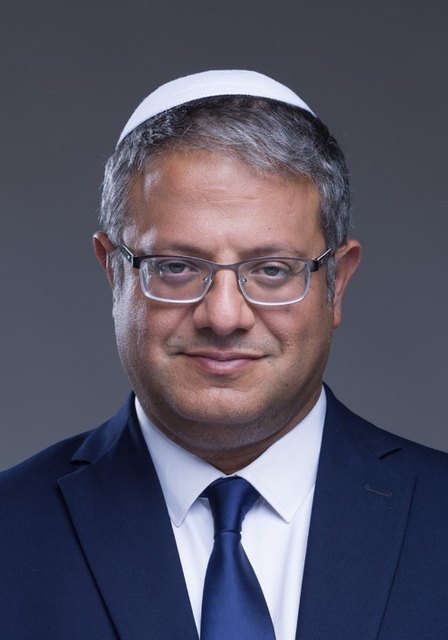
Yaakov Israel Neeman
Lawyer, educator and public servant who connected legal practice, economic policy, judicial administration and Jewish law
Yaakov Israel Neeman (September 16, 1939 – January 1, 2017) was a leading Israeli lawyer whose career moved repeatedly among private practice, legal education and national service. He co-founded Herzog, Fox & Neeman, helped establish the Faculty of Law at Bar-Ilan University, taught taxation law and served on a wide range of public bodies. In government, he was Director-General of the Ministry of Finance, Minister of Finance and, in two separate periods, Minister of Justice, despite never serving as a member of the Knesset.
Neeman's distinctive contribution came from his ability to work across professional boundaries. He understood law as a practitioner, scholar and teacher, while his work at the Finance Ministry and the cabinet gave him direct responsibility for the machinery of government. His fields ranged from taxation, corporations and securities to judicial administration, labor agreements, conversion policy and the place of Jewish law in a modern state.
Religious Zionist roots and military service
Neeman was born in Tel Aviv during the British Mandate to Menachem and Malka Neuman, the eldest of four sons. He grew up in a religious Zionist family, a background that later informed his interest in the relationship among Jewish tradition, Halakha and Israeli state law. His father was a fourth cousin of Theodor Herzl.
His secondary education included the Yishuv Hadash yeshiva high school and Midrashiat Noam, as well as a year at the high school affiliated with Yeshiva University. He enlisted in the Israel Defense Forces in August 1958 and served in the Golani Brigade. After an injury, he was reassigned to the Gadna youth corps. He completed his regular service as a lieutenant and later attained the rank of captain in the reserves.
Legal education and the training of Israeli lawyers
After his military service, Neeman studied law at the Hebrew University of Jerusalem, beginning at its Tel Aviv branch and continuing in Jerusalem. He earned his law degree with honors in 1964. He trained under Judge Miriam Ben-Porat at the Jerusalem District Court and continued his professional training and practice at Y. Gornitzky & Co. He completed a master's degree at New York University in 1965 and a doctorate in law there in 1968.
Neeman regarded legal education as an important part of his work. He began as a teaching assistant in contract law at the Hebrew University's Tel Aviv branch, taught taxation law at Tel Aviv University and the Hebrew University, and was among the founders of Bar-Ilan University's Faculty of Law, where he taught from 1971 to 1976. He was a visiting professor at the University of California, Los Angeles in 1976 and later held visiting appointments at Tel Aviv University and the Hebrew University.
His contribution to Bar-Ilan continued beyond the classroom. As chairman of the university's executive committee, he applied his legal and administrative experience to the development of an academic institution with a pronounced Jewish identity. His scholarship concentrated on taxation, corporate law and securities. He published more than thirty professional articles in Israel and abroad, assisted Supreme Court Justice Alfred Witkon with a later edition of Tax Law, and contributed a taxation chapter to Government and Law in Israel.
Building an enduring legal institution
Neeman entered independent practice in the early 1970s and, in July 1972, became one of the founders of Herzog, Fox & Neeman. He served for long periods as a senior partner, leaving the firm temporarily when public office required his full attention. His command of tax and corporate law, combined with his knowledge of government, equipped him to handle complex matters for companies and public figures. Among his clients was former foreign minister Abba Eban, whom he represented in arranging financial matters outside Israel.
The firm associated with his name represented major participants in the Israeli economy, including the Israel Electric Corporation, the Oil Refineries and Makhteshim Agan, while also undertaking pro bono matters for clients unable to pay legal fees. In this way, the organization Neeman helped establish became an important part of Israel's legal and commercial infrastructure. The firm was also involved in the litigation that produced Israel's 2004 “lost years” doctrine, expanding the ability of estates and dependents to recover compensation for income a victim would have earned had life not been prematurely shortened.
Alongside his legal practice, Neeman served as a director of Tefahot Mortgage Bank from 1974 to 1977. His work was already closely connected to public policy through committees dealing with taxation, government corporations, public-sector pay, conflicts of interest and local government.
Director-General of the Ministry of Finance
In November 1979, Finance Minister Yigal Hurvitz appointed Neeman Director-General of the Ministry of Finance. He served until February 1981. A conflict-of-interest arrangement barred him from handling matters connected to clients of his law firm. While Director-General, he served as a director of El Al and Israel Aircraft Industries, chaired interministerial committees on international economic affairs and on matters concerning Judea, Samaria and the Gaza Strip, and sat on the Israel Atomic Energy Committee. He also served on the World Bank's board during this period.
These responsibilities placed him at the intersection of the national budget, state-owned companies, international economic relations and long-term planning. At other points in his career, he served on the advisory council of the Bank of Israel and on committees examining tax reform, foreign-currency regulation and the organization of government enterprises.
Minister of Finance and national policy
Neeman returned to the Finance Ministry as minister on July 9, 1997, in Benjamin Netanyahu's first government. Drawing on his earlier administrative experience, he took part in shaping the 1998 state budget and the government's economic policy. His term included difficult negotiations with the Histadrut over wages and pensions. In December 1997, he and Histadrut chairman Amir Peretz reached understandings that ended a general strike. In September 1998, they signed a public-sector wage agreement following a four-day strike.
The government also entrusted Neeman with a matter of profound importance to relations between Israel and world Jewry: negotiations with representatives of the Reform and Conservative movements over conversion. The assignment drew on his ability to speak in the languages of law, religious tradition and state administration. It placed him at the center of an enduring question involving Jewish identity, personal status and the relationship between Israel and diverse Jewish communities abroad. Neeman resigned as finance minister in December 1998 and returned to legal practice.
Minister of Justice and institutional reform
Neeman was first appointed Minister of Justice in June 1996. He resigned that August when a criminal investigation was opened, and he was subsequently charged over an affidavit and testimony he had given. On May 15, 1997, he was acquitted. The court found that the affidavit contained incorrect and misleading information but accepted that the problem resulted from a recording error made without criminal intent, noting that corrections had been submitted before the hearing.
After the 2009 election, Neeman participated in the Likud's coalition negotiations and returned to the Justice Ministry on March 31, 2009. He remained in office until March 18, 2013. Early in this term, he recommended Yehuda Weinstein for appointment as attorney general, a nomination approved by the government.
Neeman used his second tenure to promote debate about the structure and efficiency of Israel's legal system. He proposed separating the attorney general's advisory function from leadership of the state prosecution, arguing that advising the government while retaining authority to prosecute its members created institutional tension and placed excessive responsibility on a single officeholder. He also advanced a proposal to refer certain civil claims to arbitration as a response to court congestion and raised proposals concerning the balance between parliamentary legislation and judicial review. These initiatives became part of a broader legal and public discussion even when they did not produce the full changes he sought.
Jewish law within a state legal system
Neeman viewed Jewish law as a legal and cultural resource that deserved a larger place in Israeli life. Remarks he made at a 2009 conference of rabbis and religious court judges were interpreted as calling for Halakha to become the law of the state. He later clarified that the Knesset was Israel's legislature and that civil courts interpreted its laws. What he advocated, he said, was a supporting role for religious tribunals in resolving financial disputes by agreement and according to principles of Jewish law.
This position reflected a concern that ran through his public life: how to carry an ancient Jewish legal inheritance into a functioning modern system without denying the authority of state institutions. His approach made Jewish law relevant not only as an object of historical study but also as a possible source for mediation, arbitration and legal reasoning.
Committees, universities and other fields of service
Neeman's public work extended far beyond the ministries he led. For decades, he was asked to serve on bodies concerned with the institutional foundations of Israeli society. Selected roles included:
- Membership in the Asher Committee on tax reform and chairmanship of a committee examining the relationship between tax law and foreign-currency controls.
- Membership in the Israel Bar Council and chairmanship of the Bar's legislation committee.
- Service on public committees concerning government corporations, public-sector salaries, teachers' status and conflicts of interest involving ministers and deputy ministers.
- Membership in a state commission on the structure of local government and chairmanship of an inquiry concerning the Bnei Brak municipality.
- Membership on the Hebrew University's board of trustees and chairmanship of Bar-Ilan University's executive committee.
- Chairmanship of a committee created to encourage Israel's film industry.
The breadth of this service was more than a collection of titles. It shows the role Neeman occupied as a lawyer called upon to translate public problems into rules, oversight mechanisms and workable arrangements. His work affected taxation, higher education, labor relations, local government, culture and the management of public assets.
Writing, family and remembrance
Neeman lived in Jerusalem's Talbiya neighborhood. He was married and had six children—five daughters and a son. He died in Jerusalem on January 1, 2017, aged 77, after a serious illness, and was buried the following day in the Jewish cemetery on the Mount of Olives. Hundreds attended his funeral, including former president Reuven Rivlin, Knesset Speaker Yuli Edelstein and government ministers.
His autobiography, Al Tira Avdi Yaakov (“Fear Not, My Servant Jacob”), appeared in 2017. Together with his books and professional articles, it records the perspective of a man who spent his career at the meeting point of faith, law, economics and politics, and who served Israel in several of its central institutions.
Why Yaakov Israel Neeman's legacy belongs in Moreshet
Yaakov Israel Neeman merits inclusion in Moreshet because his influence cannot be reduced to a single cabinet appointment. He helped build durable institutions: a major Israeli law firm, a law faculty within a university shaped by Jewish identity, a body of teaching and scholarship in taxation, and an extensive network of public committees concerned with how a state manages money, authority and responsibility.
His importance to Jewish and Israeli heritage is especially visible in his effort to connect Jewish law with state law and in his role in the national conversation over conversion and Israel's relationship with Jewish movements in the Diaspora. Even when his proposals generated debate, they addressed questions that remain central to Israeli life: how Jewish identity coexists with democratic institutions, how legal authority should be divided and how professional expertise can be turned into public service.
Moreshet.com preserves his story as part of the institutional history of Israel—a lawyer who educated students, founded organizations, advised public systems and assumed responsibility for the government's principal economic and legal ministries. That unusual combination gives his legacy continuing value for understanding the development of Israeli law, economic governance, legal education and the debate over the Jewish character of the state.