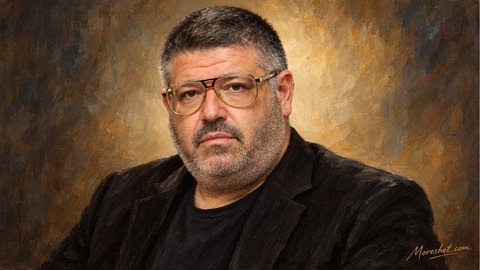
Ronan Tzur
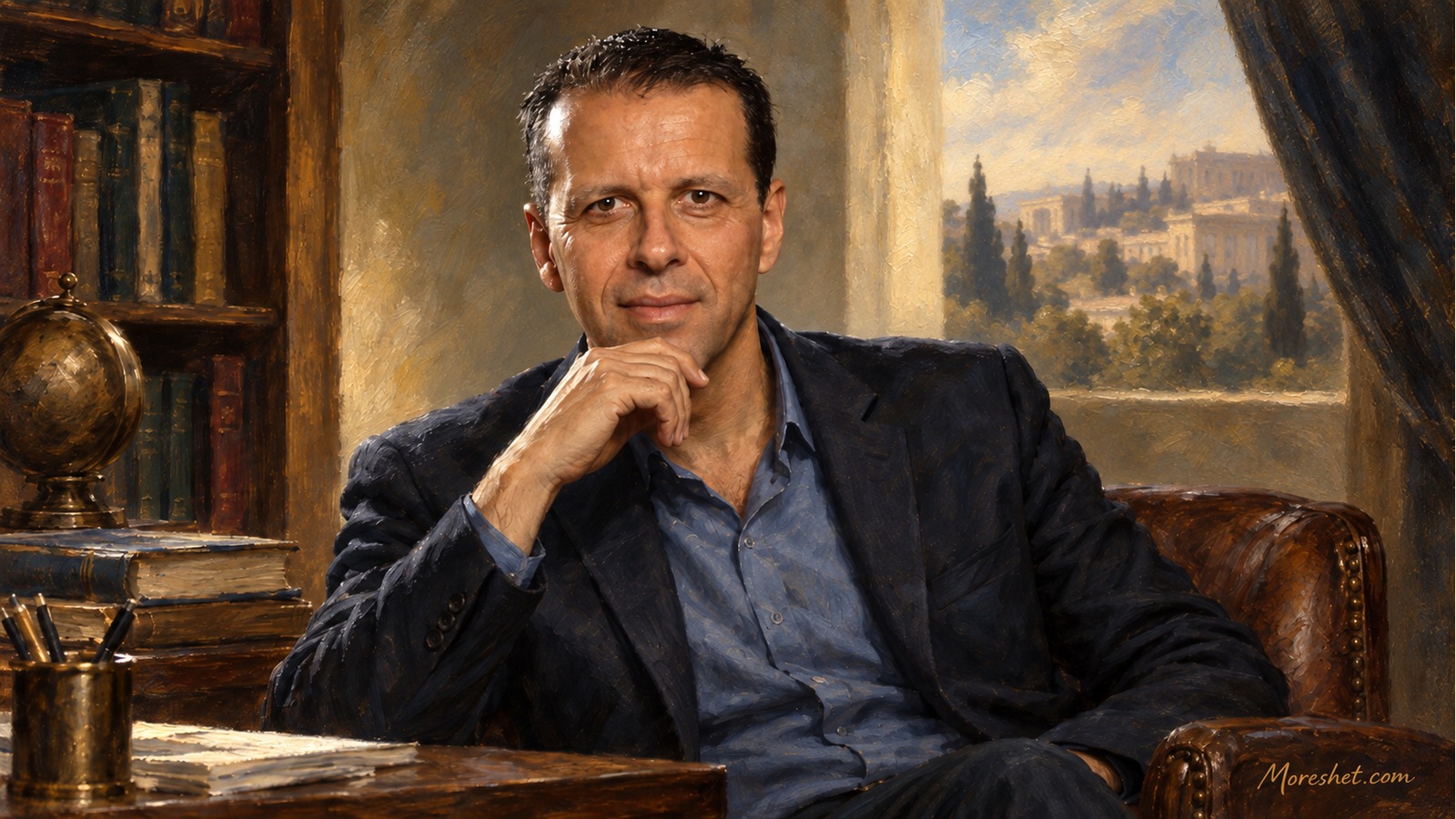
Ronan Tzur — AI-generated artistic portrait · Moreshet.com
An Israeli communications and political strategist at the intersection of public life, labor activism and crisis management
Ronan Tzur is an Israeli communications and political strategist whose work has unfolded for decades at the intersection of politics, public institutions, organized labor, business and the media. His career has included campaign management, advising elected officials, representing organizations and companies during periods of crisis, and helping public figures shape their messages for a national audience. He also served briefly as a member of the Knesset near the end of the 16th Knesset.
Political beginnings and public service
Tzur began his political activity in 1990 in the Israeli Labor Party. During Yitzhak Rabin’s tenure as prime minister, he served as coordinator of the Labor faction in the Knesset, placing him at the center of parliamentary and party activity during a consequential period in Israel’s political history. He later served as CEO of the Movement for the Absorption of Released Soldiers and advised Ran Cohen, a former Knesset member and secretary-general of the Labor Party, as well as the chair of the party’s Young Guard.
Tzur also worked as an adviser to Defense Minister Benjamin Ben-Eliezer and to Immigration and Absorption Minister Yuli Tamir. These positions connected party politics, government work and the practical task of explaining public policy to citizens and the press. He ran on the Labor Party list in the elections for the 16th Knesset and served as a member of the Knesset for approximately three months at the end of its term, following the resignation of Salah Tarif.
From party politics to strategic communications
In 2004, Tzur joined the advertising and communications firm of Motti Morel, becoming a partner in 2007. The move broadened his work from party politics to strategic communications and public relations. In 2016, he sold his share of the firm to Morel after a dispute between the partners.
Over the course of his career, Tzur advised a wide range of clients, including Israel Corporation, Delek Energy, the Rothschild Foundation, the Association of Public Companies, the Association of Pharmaceutical Companies, the Water Corporations Forum, Bombardier, Oracle Israel, Verifone, Midroog, Ayalon Investment House, real-estate companies and teachers’ organizations. This range illustrates the scope of communications consulting in Israel: it involves not only election publicity, but also policy explanation, crisis management, public accountability and the relationship between institutions and the communities they serve.
Representation during crises and public disputes
Tzur became particularly associated with work undertaken when organizations and public officials had to respond quickly to events with broad public consequences. During the Carmel wildfire crisis, he served as spokesman for Interior Minister Eli Yishai. He also represented physicians during their labor dispute and, in 2012, represented the Organization of Nurses in Israel in its campaign for improved working conditions.
During the same period, he was involved in the Pelephone labor crisis, negotiations over teachers’ employment terms and matters concerning the Israel Stock Exchange members’ association. In such cases, communications work was not simply the transmission of press statements; it formed part of disputes involving labor rights, public services, employment conditions and public trust.
Tzur also represented President Moshe Katsav, later resigning from the engagement after concluding that Katsav had violated agreements with his advisers during a press conference. He advised other public figures and professionals facing intense media attention, including psychiatrist Ilan Rabinovich and the CEO of the news website In Haredi Rooms.
Political campaigns and organized labor
In May 2012, Tzur managed Ofer Eini’s campaign for leadership of the Histadrut, Israel’s General Federation of Labor. The assignment demonstrated his experience working with labor organizations and developing a public message for a large and diverse constituency, while also managing an organizational and political campaign.
Before the April 2019 elections for the 21st Knesset, Tzur was appointed strategic adviser to the Blue and White party campaign. His party role later ended following disagreements with Yair Lapid. In August 2019, he returned to the political arena as a personal adviser to Benny Gantz, the party’s candidate for prime minister, during the subsequent campaign for the 22nd Knesset.
After the elections for the 24th Knesset, Tzur was appointed to lead coalition negotiations on behalf of the Labor Party. The position again placed him where party strategy, negotiation and the translation of political positions into practical agreements meet.
Communications, society and Israeli communities
In 2020, Tzur’s office was hired by the municipality of Bnei Brak to lead a public campaign supporting the establishment of a light-rail route through the city. The campaign sought to bring Bnei Brak’s transportation needs into the national conversation and to connect the question of infrastructure with the broader relationship between the ultra-Orthodox community, public transportation and the state.
Beginning in December 2020, Tzur provided public-relations services to the cybersecurity company Shirbit after it was hit by a cyberattack. This was another example of communications work in a crisis, when an organization must explain a technologically complex event while addressing questions of trust, privacy and business continuity.
Personal life
Ronan Tzur is the father of a daughter and lives in Ramat Hasharon, near Morasha, the neighborhood where he grew up. He is an enthusiastic pastry maker.
Why this legacy belongs in Moreshet
Ronan Tzur merits inclusion because he spent decades working in one of the arenas that most directly shape public life in Israel: the meeting point of politics, communications, organized labor, business and public institutions. From his work in the Labor Party and with Israeli ministers, through his brief Knesset service and his management of political and public campaigns, he participated in processes that influenced how major issues were presented to the public and debated in national life.
The disputes and campaigns with which he was associated — including physicians’ and nurses’ labor struggles, employment issues, transportation planning, responses to cyberattacks and national election campaigns — reflect important chapters in the development of Israeli society and its relationship with government and media. His place in Moreshet is therefore grounded not only in the titles he held, but in the connection between his professional activity and the public processes that shaped Israeli discourse and everyday life. Moreshet.com preserves that story as part of a broader record of people who worked in the arenas where decisions are negotiated and public opinion is formed.