Rafi Ginat
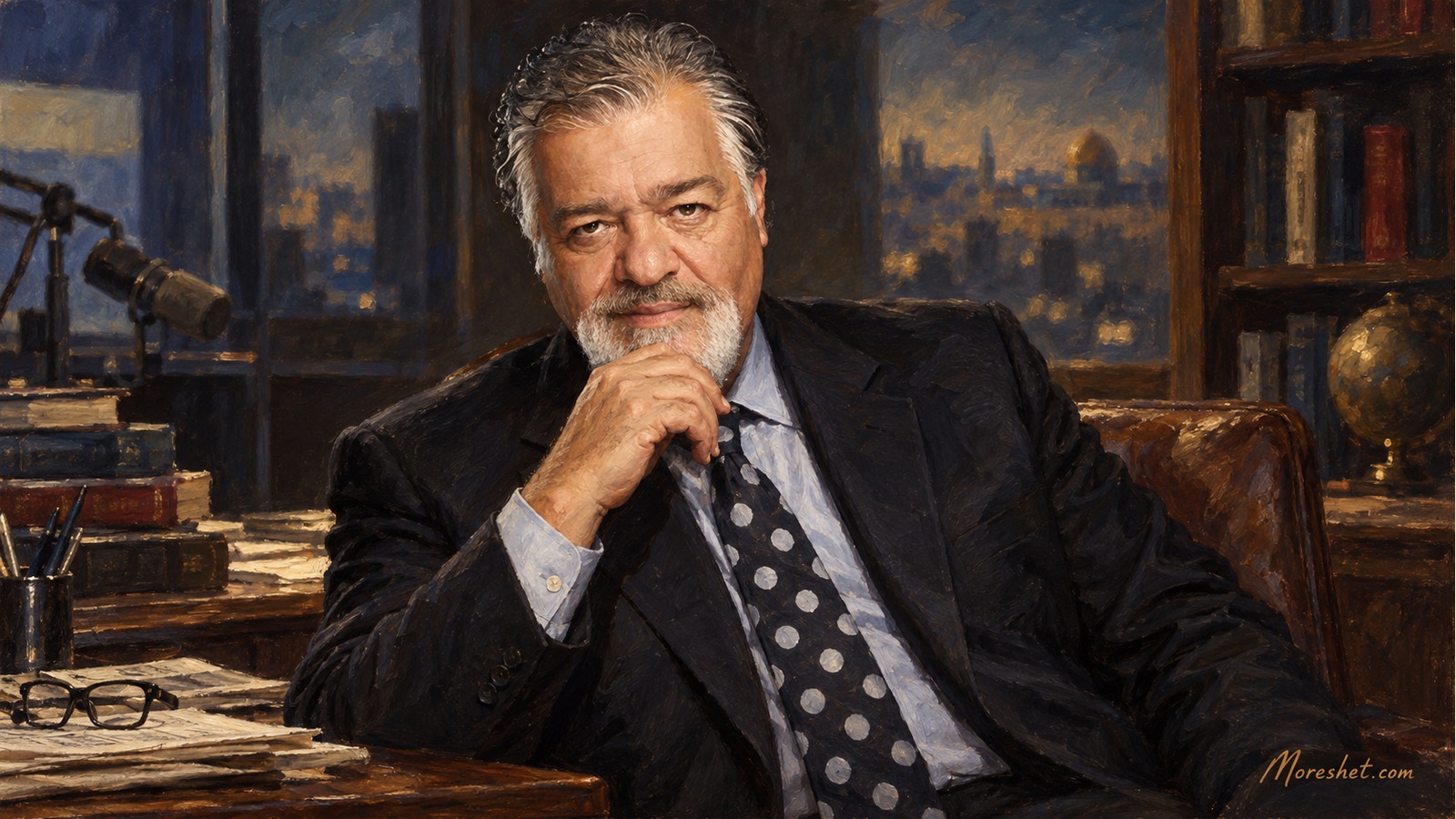
Rafi Ginat — AI-generated artistic portrait · Moreshet.com
The Israeli journalist, presenter, editor and singer who brought investigative consumer television into the mainstream
Rafi Ginat is one of the most recognizable figures in the history of Israeli media. Across more than five decades, he worked as a singer, sports announcer, television presenter and editor, journalist, newspaper editor and senior media executive. His most distinctive influence came from turning investigations into consumer issues, crime and public failures into subjects discussed by millions of Israelis, using a direct and accessible television style.
From music and sport to television
Ginat was born in Jerusalem as Rafael Jana to Abraham, who immigrated from Georgia, and Rachel, who was born in Germany. He grew up in Kiryat Tivon and studied at the Reali School in Haifa. Before entering journalism and broadcasting, he supported himself as a singer. From the late 1960s he was the lead vocalist of the band The Broshim. After the band broke up, he recorded solo songs that appeared on the Galey Zahal charts, including “Pundak HaAhava” and “Tsemed Hemad.”
In 1974, after seeing a newspaper advertisement for a sports-reporting course, Ginat entered Israeli television. For four years he worked as a sports broadcaster and editor at the Israel Television sports department. At the same time, he became a familiar voice in Israeli basketball. From 1974 until 2005, he served for 31 years as the public-address announcer for Maccabi Tel Aviv and the Israeli national basketball team at Yad Eliyahu Arena. He performed this role voluntarily, becoming part of the soundscape of major moments in Israeli sport.
Kolbotek and B'Shidur Choqer: investigations for a mass audience
Ginat’s major breakthrough came through the investigative and consumer programs “Kolbotek” and “B'Shidur Choqer.” “Kolbotek,” first broadcast on Israel’s sole television channel, examined the gap between the service the public was supposed to receive and the reality encountered by citizens and consumers. The program exposed failures in public authorities and private businesses. Its investigations into food quality in hummus restaurants became especially memorable, turning seemingly ordinary consumer questions into matters of public responsibility, health and trust.
Beginning in 1986, Ginat edited and hosted “B'Shidur Choqer,” a program about criminal cases that reconstructed incidents in cooperation with the Israel Police. It won the Golden Screen award four times. The program demonstrated how popular television could bring stories of crime, investigation and law enforcement into the homes of a broad audience. Ginat also served as head of the channel’s entertainment department, combining a strong on-screen presence with responsibility for the shaping of television content.
During the 1990s, Ginat moved between the changing frameworks of Israeli broadcasting. He presented “B'Shidur Choqer” and “Kolbodek” on the experimental Channel 2, hosted the cable crime program “Medor,” and later returned to “B'Shidur Choqer” on the Reshet network. From 1998 to 2000 he also hosted “Focus,” which featured authentic footage of disasters and daring rescue operations. In 2000, “Kolbotek” returned to the screen through Reshet and later moved to Channel 10. During this period, Ginat helped popularize the television use of the word “kombina” to describe rule-bending arrangements and improvised schemes.
Among the investigations associated with the later years of “Kolbotek” were reports concerning the seasoning of spoiled meat and sanitation conditions around meat-processing surfaces. Whether dealing with food safety or institutional failures, the program encouraged viewers to ask questions about the responsibilities of businesses and public authorities, and about the ability of journalism to protect the public.
Newspapers, editing and media leadership
Between 1990 and 1993, Ginat edited the weekly magazine “HaOlam HaZeh,” and for a period also held control of the publication. The move from the screen to the editor’s desk expanded his influence: he was no longer only reporting stories to the public, but also helping determine which subjects would receive attention. In 2005, he was appointed editor-in-chief of “Yedioth Ahronoth,” a position he held for approximately two years while continuing to host “Kolbotek.” The appointment reflected his standing as a media professional able to operate in both print journalism and commercial television.
In January 2013, Ginat was appointed CEO of Channel 10. As a result, “Kolbotek” moved from Channel 2 to Channel 10 after more than 12 consecutive years with Reshet. Ginat resigned as CEO in July 2014. The position added an institutional and managerial dimension to his career: alongside his work in front of the camera, he was responsible for a television organization during a competitive and transformative period in Israeli broadcasting.
Music, philanthropy and later appearances
Ginat maintained his connection to music throughout his media career. In 2004 he released “Personal Elections,” an album of 11 new versions of songs he admired, including “16 Tons,” “The Sinner” and “Hozeh Lach BaRach.” A distinctive low-price marketing strategy helped the album reach a wide audience, and its proceeds were donated to benefit children through Variety Israel. The project connected Ginat’s love of popular music with fundraising for children and young people.
His second album, “At Eye Level,” was released in 2009 and consisted largely of cover versions. His third album, “Rafi Raf,” appeared in July 2015. He also hosted the program “Medina Al HaMashek,” and in 2015 became a spokesperson for Tnuva. In 2023 he appeared in the third season of the reality program “The Masked Singer” as “The Magic Hat.” In 2024 he returned for a new season of “Kolbotek” on Keshet 12, a decade after its previous broadcast.
Ginat lives in Ramat Hasharon. He is married to Naava and has two daughters and a son.
Why this legacy belongs in Moreshet
Rafi Ginat merits inclusion in Moreshet because he worked for decades at the meeting point of media, culture and everyday Israeli life. Through “Kolbotek” and “B'Shidur Choqer,” he made investigative television accessible to a mass audience, brought failures affecting consumers and citizens into public view, and placed questions of responsibility, safety and law enforcement at the center of popular discussion.
His legacy is not confined to one program or one position. He was a familiar voice of Israeli basketball, a recording artist, an editor of both a weekly magazine and a major newspaper, a television executive and a presenter who repeatedly adapted to changing media platforms and audience habits. The charitable proceeds from “Personal Elections” add a concrete dimension of support for Israeli children and youth. By preserving this multi-layered career, Moreshet.com helps explain how one individual participated in shaping the language, subjects and public reach of Israeli media across successive eras.