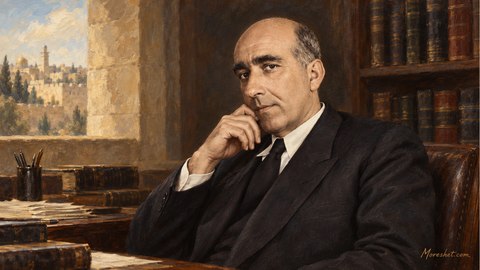
Paul Moritz Warburg
A leading advocate of monetary reform and the creation of the Federal Reserve
Paul Moritz Warburg (August 10, 1868 – January 24, 1932) was one of the central figures in the monetary reform that led to the creation of the United States Federal Reserve System. He advocated a more stable and flexible central banking structure and helped move that vision from public discussion into institutional form. His contribution included assisting with the drafting of the Federal Reserve Act of 1913.
Advocating monetary reform
Warburg recognized the need for a fundamental change in the monetary system. By supporting reform and advancing the idea of a coordinated federal banking structure, he helped turn an economic and technical debate into a process that produced a national institution with broad responsibilities.
The creation of the Federal Reserve established an institutional basis intended to contribute to financial stability and more effective monetary policy. Warburg therefore participated in shaping an institution that affected the American economy and influenced the way modern states approach money, credit and financial stability.
From an idea to a public institution
Warburg did not merely express support for monetary reform. He helped draft the legislation that established the Federal Reserve System and then became a founding member of the Federal Reserve Board. In doing so, he took part in the transition from an economic proposal to an operating public framework.
His role on the founding board placed him at the center of the new institution during its formative period. He helped shape the rules, language and structure within which American monetary policy would develop.
A legacy of institution-building
Warburg's achievement rests on his contribution to building a public structure intended to serve society over time. The reform he supported sought to address weaknesses in the financial system through a more organized central institution.
Why Paul Moritz Warburg belongs in Moreshet
Paul Moritz Warburg merits inclusion in Moreshet because of his concrete role in shaping an institutional change that influenced economic life in the United States and modern thinking about monetary policy. He advocated reform, contributed to the drafting of the 1913 Federal Reserve Act and served as a founding member of the Federal Reserve Board.
Including him in Moreshet and on Moreshet.com places his work within the broader history of people whose ideas and public service helped create durable frameworks for society.