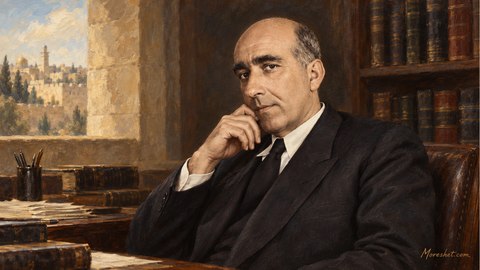
Käte Wallach
The Jewish lawyer who fled Nazi Germany and advanced comparative legal research
Käte Wallach (May 17, 1905 – December 27, 1979) was a Jewish lawyer, professor, and librarian whose life and work connected two major experiences: flight from Nazi persecution in Europe and the development of legal scholarship in the United States. After fleeing Nazi Germany, she became the first Jewish woman to pass the Wisconsin Bar examination.
This was more than a personal professional milestone. It represented the ability of a Jewish refugee to rebuild her career and enter an American legal system at a time when women and immigrants faced significant professional and social barriers. Wallach later extended her contribution beyond legal practice, dedicating her academic and library work to the knowledge infrastructure that supports legal research.
From Nazi Germany to the American legal profession
Wallach was born in 1905. Her life changed with the rise of the Nazis and the persecution of Jews in Germany. After making her way to the United States, she had to establish herself in a new country and in a legal system different from the one in which she had been educated and had begun her professional life.
Passing the Wisconsin Bar examination was a defining step in that process. As the first Jewish woman to pass the examination, Wallach became a pioneering figure for Jewish women and immigrants seeking a place in the American legal profession and in academic life.
Building resources for international legal scholarship
Wallach later joined Louisiana State University, where she worked as a professor and librarian. In those roles, she contributed to the growth of comparative law resources—the field that examines legal systems alongside one another and makes it possible to understand how different societies and countries address similar questions.
Her work also advanced legal bibliographies and international legal research. She was not merely teaching or collecting books; she was helping create tools that enabled students and scholars to locate, compare, and study legal sources from different countries and traditions. Such work may be less visible than a courtroom decision or a major treatise, but it is essential to organized legal knowledge and to scholarship that crosses national boundaries.
A legacy of persistence, knowledge, and academic service
Wallach’s story links the experience of Jews forced to leave Europe with the rebuilding of professional and academic institutions in the United States. She carried the experience of displacement and resettlement into work that strengthened legal education, librarianship, and international scholarship.
Her influence can be understood on two levels. Socially and personally, she demonstrated the possibility of professional advancement despite persecution, immigration, and gender barriers. Academically, she helped strengthen the resources that supported the study of comparative and international law. Her career therefore belongs to the broader history of Jewish immigrant women who helped build American institutions of knowledge and law.
Why Käte Wallach belongs in Moreshet
Käte Wallach merits inclusion in the heritage record because her life combined a personal breakthrough with a lasting professional contribution. She was the first Jewish woman to pass the Wisconsin Bar examination after fleeing Nazi Germany, and she later helped develop comparative law, legal bibliography, and international legal research as a professor and librarian at Louisiana State University.
Her achievement was therefore not only one of survival, but also of construction: entering the legal profession as a Jewish refugee, widening the possibilities available to women and immigrants, and strengthening the research resources used by legal scholars and students. Moreshet and Moreshet.com preserve stories of this kind—stories in which historical change appears both through a clear public milestone and through sustained, often quiet work that shapes institutions, professions, and communities over time.