Ofer Winter
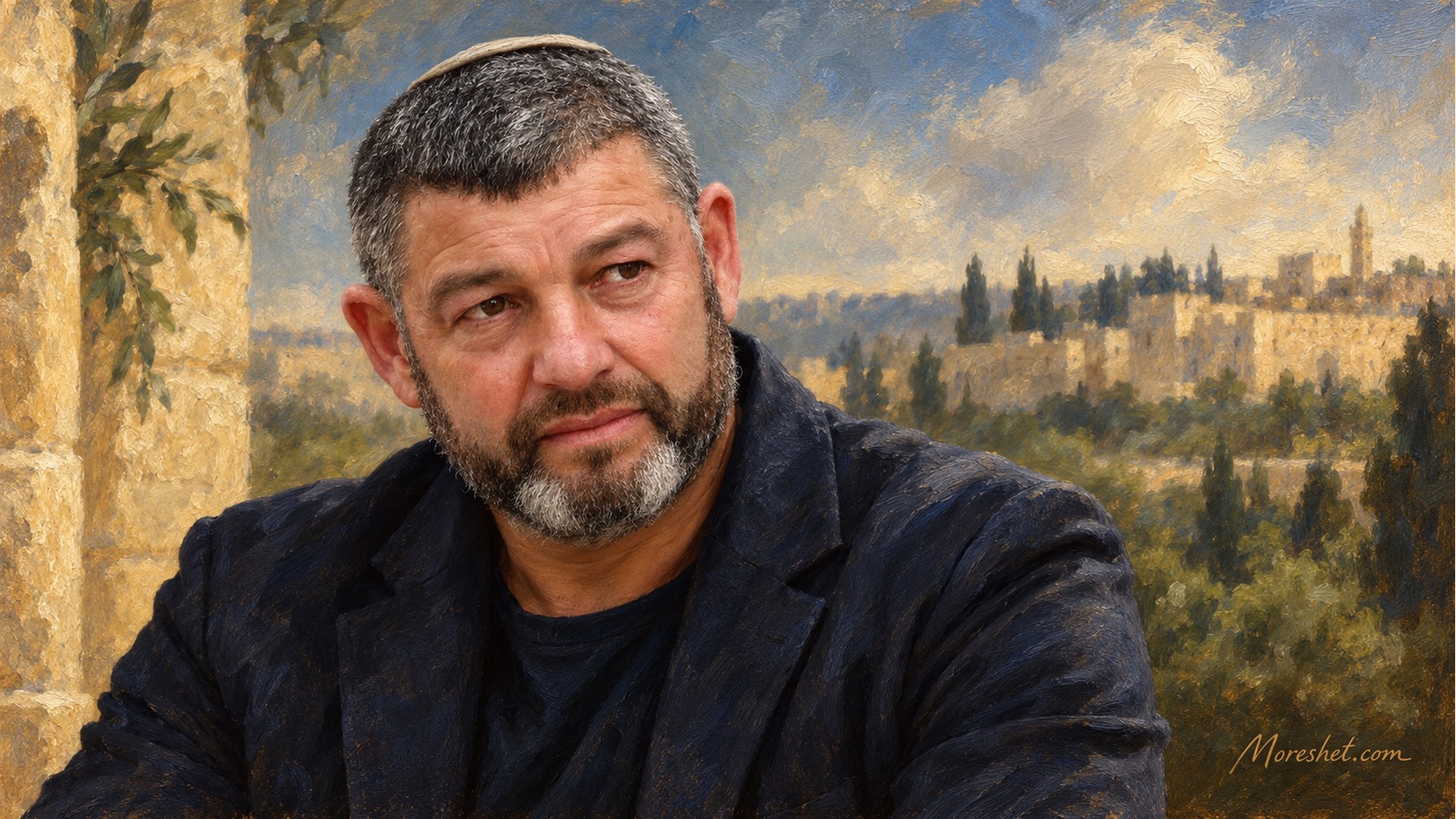
Ofer Winter — AI-generated artistic portrait · Moreshet.com
Combat commander, unit builder and senior IDF officer
Ofer Winter is a retired Israel Defense Forces brigadier general whose career of more than three decades extended from special forces and frontline infantry command to the IDF’s senior operational and defense-policy echelons. He commanded the Duvdevan Unit, the Givati Brigade and the 98th Division, served as chief of staff of Central Command, and acted as military secretary to four Israeli defense ministers. Across those assignments, he led troops in periods of sustained combat, helped adapt units to new operational demands and took part in developing a technological response to the threat of underground tunnels.
Winter’s biography also reflects an intergenerational Israeli tradition of military service. Raised with the memory of his father’s combat in the Yom Kippur War, he studied in institutions that combined Jewish identity, public responsibility and preparation for command. He carried that combination into his military leadership and, after leaving regular service, entered public life and founded the Amcha Yisrael party.
Family heritage, education and preparation for command
Winter was born on February 3, 1971, in Rekhasim and grew up in Kiryat Ata. He is the eldest of four siblings and comes from a family with Hungarian-Jewish roots. His father, David, known as Dutzo, served in the 113th Armored Battalion during the Yom Kippur War and fought on both sides of the Suez Canal. Winter has identified his father’s experience as an important source of the combat heritage he absorbed at home.
From 1985 to 1989, he attended the Or Etzion Military Boarding School for Command. He then joined the second class of the Bnei David pre-military academy in Eli. These formative settings joined preparation for military responsibility with religious study and a strong ethos of service to the state.
Winter later earned a bachelor’s degree in Land of Israel studies from Bar-Ilan University, a master’s degree in military and security studies from the Hebrew University of Jerusalem, and a master’s degree in political science from the University of Haifa. He graduated from Israel’s National Security College. After completing his divisional command, he studied at Reichman University and was named a visiting research fellow at its International Institute for Counter-Terrorism.
From special forces to Givati command
Sayeret Matkal, Maglan and the Givati reconnaissance company
Winter enlisted in November 1990 and volunteered for Sayeret Matkal, where he completed training as a combat soldier. After infantry officers’ course, he followed his commander Tal Russo to the Maglan special operations unit. He served as a team commander and later commanded a combat element, participating in numerous operations, including activity during Operation Grapes of Wrath in 1996.
He subsequently moved to the Givati Brigade, first commanding the spearhead company of the Tzabar Battalion and then the brigade reconnaissance company from 2000 to 2002. Those years coincided with the Second Intifada, when infantry commanders faced sustained operations in and around the Gaza Strip. The experience prepared him to assume responsibility for Givati’s larger reconnaissance battalion.
Leading the Givati Reconnaissance Battalion
Promoted to lieutenant colonel in 2003, Winter commanded the Givati Reconnaissance Battalion until 2005. Under his leadership, the battalion carried out repeated operations inside the Gaza Strip. In April 2004, Southern Command recognized the battalion with a unit citation for this sustained operational record; in April 2005, it received further unit-level recognition associated with the Medal of Distinguished Service.
The period also brought severe loss. In May 2004, six members of the battalion were killed when a Givati engineering armored personnel carrier was destroyed. The episode underscored both the human cost borne by Givati’s soldiers and the responsibility placed upon their commanders during some of the most difficult fighting of the Second Intifada.
Building capabilities across units and brigades
Duvdevan and a new operational arena
From 2005 to 2007, Winter served as the IDF’s attaché to the United States Marine Corps, gaining exposure to the doctrine and training practices of a major partner military. In 2007, he was appointed commander of Duvdevan, a specialized unit best known for complex counterterrorism and arrest operations in the West Bank.
At Winter’s initiative, Duvdevan took part in combat in the Gaza Strip for the first time during Operation Cast Lead in 2008–2009. The decision extended the unit’s specialized capabilities to a different theater. During his command, Duvdevan received the Chief of Staff’s Award for Outstanding Units in recognition of its operational work.
Winter was promoted to colonel in December 2009 and given command of the 646th Reserve Paratroopers Brigade, known as the Shualei Marom Brigade. In May 2011, he became commander of the Northern Brigade in the Gaza Division. This progression gave him experience leading a special unit, a reserve formation and a territorial brigade responsible for border defense and the security of nearby Israeli communities.
Commanding Givati in Operation Protective Edge
Winter returned to Givati as brigade commander in August 2013. He led the brigade during Operation Brother’s Keeper and Operation Protective Edge in the summer of 2014. Givati troops fought Hamas forces, located and destroyed combat tunnels and other military infrastructure, and played a central role in operations around Rafah.
At the opening of Protective Edge, Winter issued a commander’s letter to the brigade. Along with the conventional military themes of completing the mission and defending the people and homeland, he invoked the Shema and used explicitly Jewish religious language. The letter became an important reference point in Israel’s public and academic discussion about faith, tradition and the language of command in the army of a Jewish state. It revealed how Winter understood the connection between national defense, Jewish identity and personal belief, even as that formulation prompted differing responses.
A technological response to underground warfare
A significant practical achievement associated with Winter’s Givati command was his participation in the Snake Pit project, a system that combined several technologies to confront underground threats. The system was incorporated into operations during Protective Edge and demonstrated meaningful operational value. In April 2015, Winter shared the Israeli Directorate of Defense Research and Development’s Award for Creative Thinking with partners from the directorate and Defense Ministry, Shayetet 13, Rafael and Artemis.
The award represented a collaborative achievement rather than the invention of any single commander. Winter’s contribution lay in connecting a need identified in combat with the development, integration and field use of a multidisciplinary solution. This form of cooperation among operational units, defense researchers and Israeli industry became increasingly important as tunnels emerged as a major threat along Israel’s borders.
Senior command and the defense-policy arena
After completing his Givati command in June 2015, Winter attended the National Security College. In July 2016, he was promoted to brigadier general and appointed chief of staff of Central Command. The role placed him near the center of planning and force management in a sensitive area encompassing the West Bank, the Jordan Valley and the Jerusalem sector. It required the integration of operations, intelligence, protection and logistics across numerous units.
In October 2018, Winter became military secretary to the minister of defense. During his tenure, he served under Avigdor Lieberman, Benjamin Netanyahu, Naftali Bennett and Benny Gantz. The military secretary provides a crucial professional link between the defense minister, the IDF and the broader defense establishment, presenting military assessments for policy decisions and communicating guidance to the armed forces. Serving four ministers required both broad institutional knowledge and professional continuity through repeated changes in political leadership.
In August 2020, Winter was appointed commander of the 98th Division, also known as the Fire Formation. The multidimensional formation is built around paratrooper and commando forces and is intended for rapid, deep operations. He commanded it until September 2022, completing a progression from tactical leadership in small special units to responsibility for a division combining forces and capabilities from several branches.
October 7 and the transition to public life
On the morning of October 7, 2023, after the first reports of the Hamas assault reached him, Winter traveled south on his own initiative with his personal weapon. He joined troops in the Be’eri area and participated in the fighting. He did so even though he was not then serving as the active commander of that sector or division, choosing to place his combat experience at the disposal of forces confronting the attack during hours of profound uncertainty.
Winter’s regular IDF service ended in 2024 after approximately 34 years. His departure from uniform did not end his involvement with questions of security and national policy. He subsequently entered civilian public life and founded Amcha Yisrael, seeking to translate military experience into political activity. This is a distinct and comparatively recent chapter in his career, and the extent of its public and electoral influence remains to be determined.
Personal life
Winter lives in Mitzpe Netofa with his wife, Revital. They have eight children. Family, study and community life accompanied decades of demanding service, much of it spent in field commands and during periods of war. His family and religious background are not incidental details in his biography: they are visible elements in the way he has described duty, responsibility and public service.
Why Ofer Winter’s legacy belongs in Moreshet
Ofer Winter merits inclusion in Moreshet because his career documents more than three decades of Israeli military command: from special-forces training and frontline leadership to brigade and divisional command, senior headquarters work and service beside the defense minister. The honors earned by units under his command, the collaborative effort to field a response to the tunnel threat, and his decision to join the fighting around Be’eri on October 7 give his record practical significance beyond a list of ranks and appointments.
His story also illuminates the continuing encounter among Jewish faith, religious-Zionist education and service in the IDF. The commander’s letter he issued during Protective Edge entered a larger conversation about the values and language of military leadership in a Jewish state. Moreshet.com records Winter not on the premise that every Israeli shares every one of his views or formulations, but because his influence as a commander, his role in developing units and operational capabilities, and the way his life joins family memory, Jewish identity and the defense of Israel form a substantive chapter in the country’s military and social heritage.