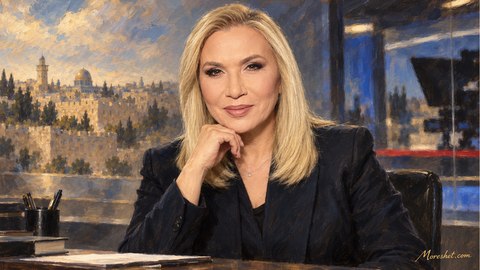
Muli Segev
The creator, editor and producer who helped define Israeli television satire
Muli Segev, born Shmuel Cohen on February 19, 1972, is an Israeli television creator, editor, producer, screenwriter and director, who also worked earlier as an actor and journalist. Over several decades, he has helped shape the language of Israeli comedy, satire and entertainment. He is best known as the creator and longtime editor of Eretz Nehederet (“It’s a Wonderful Country”), a program that became part of Israel’s public conversation and popular cultural memory.
From a childhood on television to journalism
Segev was born in Tel Aviv. His biological father was television creator and director Avi “Amuma” Cohen, and his mother was journalist Amira Segev. After his parents divorced, his mother married Dr. Shlomo Segev, who adopted him and raised him as his son. His maternal grandfather was architect Avraham Arlik. His family background connected journalism, television, architecture and creative work, giving him an early familiarity with the worlds he would later enter professionally.
Segev first appeared on television in 1977, at the age of five, on the Israeli Educational Television children’s program Rega im Dodley. From 1983 to 1986 he played Muli, one of the children, in the sitcom Krovim Krovim (“Close Relatives”). Both programs became part of Israeli television memory, and his appearances made him a familiar face from childhood.
After serving in the Israel Defense Forces newspaper Bamahane, Segev entered journalism. He worked as an editor at Hadashot and Zman Tel Aviv, and later became deputy editor of the weekend supplement of Maariv. Journalism gave him practical command of editing, pacing, narrative construction and the relationship between current events and audiences—skills that became central to his television career.
Building a new language of Israeli comedy
In 1999 Segev returned to television, this time behind the scenes, creating and editing the late-night program Yachasim Mesukanim (“Dangerous Relations”) with Dana Modan. In 2000 he joined Keshet and helped establish the cable comedy channel Beep. As its editor-in-chief until 2003, he oversaw a broad range of programs, including “Double Date,” “The Crime and Its Punishment,” and the satirical animated series M.K. 22.
Beep mattered because it created a consistent home for young, irreverent and experimental comedy, while giving writers, performers and new formats a platform. M.K. 22 won the Israeli Academy of Film and Television Award for Best Comedy Series. The channel also demonstrated Segev’s ability to bring together writing, performance, animation and production into a coherent television style.
Eretz Nehederet: satire as a cultural institution
In 2003 Segev created Eretz Nehederet with David Lipschitz and Asaf Shalmon. He also served as its chief editor for many years. Through sketches, characters, impressions and songs, the program addresses politics, the media, social tensions and the events of the day. It transformed current affairs into accessible popular culture and made satire a regular part of how Israelis processed public life.
The program’s influence cannot be measured only by its audience or its awards. It introduced characters and expressions into everyday speech, gave viewers from different backgrounds a shared way to discuss Israeli reality, and turned satire into a widely recognized form of social commentary. During election seasons and periods of national tension, the show became both a response to events and a record of the mood of the country.
Eretz Nehederet has won numerous Israeli Academy of Film and Television Awards, including eight awards for Best Entertainment Program. In 2022 it received four awards, including Best Screenplay for an entertainment, satire and sketches program. In 2020 the program and Segev received the Knight of Quality Government award in the culture category from the Movement for Quality Government in Israel. The recognition reflected the public role that satire can play in encouraging critical attention to institutions, leaders and social realities.
Creation, production and content leadership
In 2004 Segev became Keshet’s vice president for programming, a position he held until 2007. In that role he worked not only as an individual creator but also on project selection, format development and the direction of content for one of Israel’s major broadcasters. After leaving the executive position, he remained with Keshet as an independent producer and creator, expanding his work across comedy, drama, talk television and film.
In 2005 he co-created the comedy-drama series Ima’lle with Tamar Marom and Ram Nehari. The series won the Israeli Academy Award for Best Comedy Series. In 2007 he created Mesudarim with Asaf Harel, a series about four young men who become wealthy after selling a startup. It also won Best Comedy Series and was later adapted in Britain as Loaded. Its international adaptation showed that an Israeli story about technology, money, friendship and rapid social change could travel beyond its original setting.
In 2010 Segev co-directed the feature film Zohi Sdom (“This Is Sodom”) with Adam Sanderson and co-wrote it with David Lipschitz and Asaf Shalmon. Starring members of the Eretz Nehederet ensemble, the film became one of the notable commercial successes of Israeli cinema in its period and won two Ophir Awards, for Best Art Direction and Best Costume Design. The project extended the program’s characters and sketch-based sensibility from television into feature film.
Segev later served as producer and supervising editor on programs including The Kitzis Show, Omri Gordon’s New Show and Tonight with Guri Alfi. The latter won the award for Best Entertainment Program. Taken together, these projects show the range of his contribution: as an editor who gives a production its pace and shape, a producer who brings people and resources together, a screenwriter who develops characters and ideas, and a content leader who builds formats capable of reaching broad audiences.
Why Muli Segev’s legacy belongs in Moreshet
Muli Segev merits inclusion in Moreshet because his work documents and shapes a central chapter in modern Israeli culture. Through Eretz Nehederet, Beep, M.K. 22, Ima’lle, Mesudarim and Zohi Sdom, he helped create works that entered Israeli homes, everyday language and the shared cultural memory of the country.
His legacy is not simply a list of programs and awards. It lies in the idea that entertainment can also be a social document: a place where Israelis recognize themselves, laugh at leaders and institutions, confront public tensions and share a cultural experience. For Moreshet.com, Segev is also an important example of how editing, writing and production behind the scenes can influence public discourse as powerfully as work performed in front of the camera. His career remains part of the story of Israeli culture and of the ways Israeli society has learned to tell its own story.