Marie Munk
A pioneering jurist, judge and advocate for women’s rights in family law
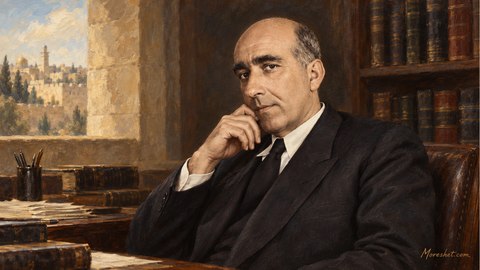
Marie Munk (July 4, 1885–January 17, 1978) was a pioneering German jurist and women’s rights advocate. She became the first woman to serve as both a lawyer and a judge in Berlin, and she worked to advance reforms in family law. Her career reflects the struggle to open the legal profession and public service to women, as well as the devastating consequences that Nazi policy had for her and for many others.
A pioneer in the legal system
Munk worked at a time when women still faced major barriers to studying law, practicing as lawyers and holding judicial office. Her entry into Berlin’s legal system was therefore a groundbreaking achievement. She was the city’s first woman to serve as a lawyer and as a judge. Her professional presence was not merely symbolic: she took part in legal work and decision-making in a field that affected individuals, families and communities, helping broaden recognition of women’s capacity to carry legal and public responsibility.
Family-law reform and women’s rights
Munk’s principal work focused on family law, a field that directly shapes the status of spouses, parents and children. She led reforms intended to promote fairer treatment for women within the family and under the law. Her work reflected an important insight: family law is not simply a private matter. It defines the boundaries of independence, security and rights in everyday life.
Her contribution formed part of a wider effort to make the law recognize women as people with rights, responsibilities and an independent voice. Through her professional and public activity, Munk belonged to a generation of jurists and activists who gradually changed women’s place in state institutions and society.
Removal under the Nazis and the continuing meaning of her work
The rise of the Nazis brought Munk’s legal career to an end. She was forced to leave her position because of Nazi policy. Her removal shows how a dictatorial regime can destroy professional institutions, undo advances toward equality and exclude people from public service through discriminatory policy.
Yet the significance of her work did not end when her career was cut short. Munk reached positions that had previously been closed to women and worked to change family law, leaving a precedent for those who followed. Her life also illustrates the historical connection between women’s rights, the rule of law and the protection of independent legal institutions.
Why Marie Munk’s legacy belongs in Moreshet
Marie Munk merits inclusion in Moreshet because she worked at the intersection of law, equality and women’s rights. She did more than hold a pioneering title: she used her legal career to advance family-law reform and expand women’s place in professional and public life. Her story shows how social change is built through institutions, expertise and persistence—and how such achievements require protection from regimes that abolish rights and freedoms.
Remembering her on Moreshet.com gives readers a broader historical understanding of the struggle for equality before the law and of the importance of a legal system that serves the whole of society. Munk’s legacy is one of breakthrough, public responsibility and the effort to preserve human dignity within the law and beyond it.