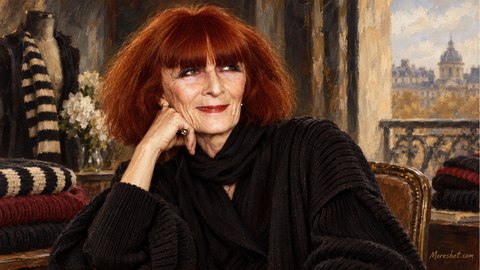
Marc Jacobs
The American-Jewish designer who made fashion a language of innovation, culture, and identity
Marc Jacobs (born April 9, 1963) is an American-Jewish fashion designer whose work has shaped international fashion from the late twentieth century into the twenty-first. Through the label bearing his name, his leadership at Louis Vuitton, and his ability to bring together streetwear, popular culture, contemporary art, and luxury design, Jacobs expanded the possibilities of fashion as both a business and a cultural form.
The Marc Jacobs brand grew into an international fashion house with hundreds of retail locations and collections for women, men, children, accessories, eyewear, and fragrance. His influence extends beyond individual garments. He helped change the way collections are presented, the way designers collaborate with artists, and the way fashion campaigns use recognizable cultural figures to tell stories about identity and belonging.
Early life, education, and a creative voice
Jacobs was born into a secular Jewish family in New York City. His father, an agent at the William Morris Agency, died when Marc was a child. Because of difficult family circumstances, he went to live with his paternal grandmother, who became an important presence in his life. From an early age, Jacobs was drawn to clothing, design, and the ability of visual objects to communicate character and narrative.
He attended the High School of Art and Design and then studied at Parsons School of Design in New York. While at Parsons in 1984, he won the Perry Ellis and Chester Weinberg Gold Thimble Award and was named Design Student of the Year. He had already encountered the realities of fashion from the inside: at 15, he worked as a stockboy at the avant-garde New York boutique Charivari. He also designed and sold hand-knit sweaters while still a student. These experiences helped shape an approach that combined experimentation with a close understanding of how people actually dress and live.
From an independent beginning to a global label
In 1986, with backing from Onward Kashiyama USA, Jacobs designed his first collection under his own name. The following year, he became the youngest designer to receive the Council of Fashion Designers of America's Perry Ellis Award for New Fashion Talent. Working with Robert Duffy, his creative collaborator and business partner from the mid-1980s, he formed Jacobs Duffy Designs.
From 1988 to 1993, Jacobs served as creative director of Perry Ellis's women's design unit, while Duffy was the company's president. His 1992 Perry Ellis collection, which brought grunge influences into a carefully constructed designer collection, was critically acclaimed and became a landmark in the period's fashion conversation. Although it was commercially unsuccessful, it demonstrated Jacobs's willingness to take risks and give serious design attention to a youthful, unpolished, self-aware aesthetic. That year, he won the CFDA Women's Designer of the Year award.
In 1993, Jacobs and Duffy established Marc Jacobs International. Jacobs presented his first full menswear collection in 1994 and later expanded into denim, accessories, eyewear, children's clothing, and fragrance. The secondary line Marc by Marc Jacobs, launched in 2001, brought his design language to a broader audience. At its height, the business operated hundreds of stores around the world; in 2013, there were 285 Marc by Marc Jacobs and Marc Jacobs Collection retail locations worldwide.
Louis Vuitton: joining heritage with renewal
In 1997, Jacobs became Louis Vuitton's first creative director for ready-to-wear clothing. The appointment marked a major development for the French luxury house, which had long been identified primarily with luggage, leather goods, and accessories. Jacobs created its first ready-to-wear clothing line and transformed its fashion shows into internationally visible cultural events.
At Louis Vuitton, he collaborated with artists including Stephen Sprouse, Takashi Murakami, and Richard Prince. These partnerships blurred the boundary between fashion and contemporary art and demonstrated how an established house could renew its cultural relevance without abandoning its historical identity. Jacobs remained in the role until 2014, when he left to concentrate on his own label.
Fashion as culture, image, and personal freedom
A defining feature of Jacobs's work is its openness to multiple influences: a little preppy, a little grunge, a little couture, and often something playful, ironic, or deliberately anti-establishment. Rather than presenting fashion as the isolated product of a single genius, he built collections and campaigns through dialogue with music, art, cinema, nightlife, and street culture.
His advertising campaigns often featured artists, musicians, actors, and cultural icons instead of relying only on conventional fashion models. The Spring/Summer 2016 campaign, for example, included Lana Wachowski, Sandra Bernhard, Bette Midler, Juliette Lewis, Christina Ricci, Sky Ferreira, and Bella Hadid. The casting reflected a belief that fashion can emerge from individuality, memory, relationships, and diverse forms of cultural influence. In this way, Jacobs contributed to broader representation of identities, ages, and styles in fashion imagery.
In 2020, he launched Heaven by Marc Jacobs, a line aimed at a younger audience and designed to blur conventional gender boundaries. The project continued his practice of connecting fashion with music, digital culture, and contemporary visual language. He also used social media to open model casting to the public, as in the Marc by Marc Jacobs campaigns for 2014 and 2015.
Professional recognition and public initiatives
Jacobs has received numerous honors from the Council of Fashion Designers of America, including awards for womenswear, menswear, and accessories. In 2010, Time magazine included him on its list of the world's 100 most influential people. That year, France awarded him the insignia of Chevalier of the Order of Arts and Letters. He received a Lifetime Achievement Award in 2011 and MTV's first Fashion Trailblazer Award, presented in partnership with the CFDA, in 2019.
His public work has also extended beyond commercial design. Through the Protect The Skin You're In project, celebrities posed for T-shirts intended to raise awareness of melanoma, with sales benefiting research at NYU Langone Medical Center. In 2009, Jacobs designed a shirt supporting the legalization of same-sex marriage. Such initiatives showed how a fashion brand and a highly visible designer could draw attention to health and social issues.
Jacobs has also participated directly in popular culture. He made his feature-film acting debut in Disconnect in 2012. The 2007 documentary Marc Jacobs and Louis Vuitton chronicled his work and creative environment. These appearances reinforced his role not only as a designer working behind the scenes, but also as a public cultural figure engaged with the wider conversation around fashion, art, advertising, and identity.
Why this legacy belongs in Moreshet
Marc Jacobs merits inclusion in Moreshet because of his lasting influence on visual culture and on the way fashion operates in the world. He built an international fashion house, led Louis Vuitton into a new era of ready-to-wear, made artist collaborations central to luxury design, and turned fashion campaigns into platforms for individuality, diversity, and cultural storytelling.
As an American-Jewish creator working on a global stage, Jacobs adds a story of creativity, independence, and deep participation in modern culture to the record of Jewish heritage. His impact can be seen in the designers he influenced, the fashion industry he helped reshape, and the millions of people who encountered his ideas through clothing, stores, shows, advertising, and media. Moreshet preserves this journey, while Moreshet.com places it within the broader history of Jewish creators whose work has helped shape world culture.