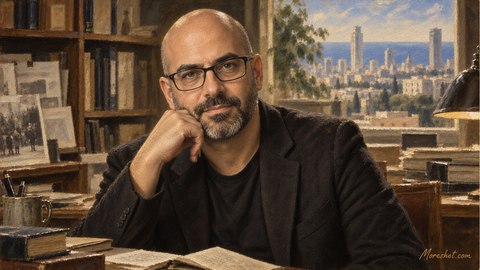
Yosef Ben-Shlomo
Scholar of Kabbalah and philosophy who opened complex intellectual worlds to wider audiences
Yosef Ben-Shlomo (1930–2007) could present an abstract idea as a vivid intellectual concern. A scholar of Kabbalah, philosophy of religion, Spinoza and Rabbi Kook, he combined close reading with memorable teaching. His contribution survives in books and editions, in students and in encounters between Jewish scholarship and wider audiences.
Studying across traditions
Born in Kraków, Ben-Shlomo immigrated to Palestine as a child. At the Hebrew University, his encounter with Gershom Scholem led him toward Kabbalah. He completed a doctorate on Moses Cordovero in 1964. After further study at Oxford, he taught in Jerusalem and later at Tel Aviv University, combining Jewish sources with questions from European philosophy.
Interpreting difficult texts
His Cordovero research clarified the systematic organization of Kabbalistic thought. Work on Spinoza and Kook required engagement with very different understandings of God, humanity and the world. Introductions, commentaries and editions, including work on Gates of Light, made difficult sources more accessible without abandoning their depth.
Television programs such as Seventy Faces and conversations with intellectuals extended his teaching beyond the university. He also participated in Israeli political debate. His scholarly and educational contributions can be appreciated independently of agreement with his public positions.
Why this legacy belongs in Moreshet
Moreshet includes Ben-Shlomo as an influential interpreter of knowledge and an engaging teacher. Moreshet.com records how he helped readers approach Kabbalah and philosophy as worlds that could be understood, compared and questioned. His enduring contribution lies in careful reading and in the curiosity he awakened in others.