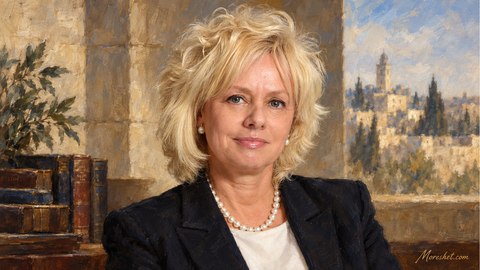
Jennie Loitman Barron
A pioneering suffragist who opened new paths for women in law and public service
Jennie Loitman Barron (October 12, 1891–March 28, 1969) was a leading American suffragist, jurist, and public servant. Her importance lies not only in the positions she held, but in the barriers she helped break down for women and mothers seeking a meaningful role in civic institutions.
A Voice for Women's Suffrage
Barron was active in the women's suffrage movement, one of the defining democratic struggles of modern American history. The movement connected the right to vote with the broader recognition of women as full citizens entitled to participate in public decision-making. Barron's work belonged to a generation of activists who helped expand the boundaries of political participation and create new opportunities for women in civic life.
Breaking Ground in Law and Education
In 1957, Barron became the first woman to serve as an Associate Justice of the Massachusetts Superior Court. Her appointment marked an important advance for women's representation in the judiciary and demonstrated that women could occupy senior positions in the administration of justice and the institutions of government.
She had earlier made history as the first mother to serve on the Boston School Committee. That achievement brought mothers' experiences and perspectives directly into decisions affecting education and community life. It also affirmed that family and civic experience could be sources of public leadership rather than barriers to it.
Representation on the International Stage
Barron was also the first female United States delegate to the United Nations Congress on Crime and Juvenile Delinquency. The role placed her in an international forum concerned with law, society, and young people. It reflected the growing recognition of women as full participants in professional and public discussions about justice and the future of communities.
Why this legacy belongs in Moreshet
Jennie Loitman Barron merits inclusion in the archive because her career joined several forms of public progress: she supported women's suffrage, broke new ground for women in the judiciary, helped shape public education in Boston, and represented the United States in an international United Nations forum. Together, these accomplishments document a concrete social transformation—the movement from recognizing women's rights in principle to including women in the institutions that administer justice, education, and government.
Her profile in Moreshet and on Moreshet.com reflects the archive's interest in the people who widened participation in public life. Barron's story provides historical context for struggles over equality, women's leadership, and civic service, while showing how institutional breakthroughs can influence the possibilities available to generations of women and citizens.