Inbal Dance Company
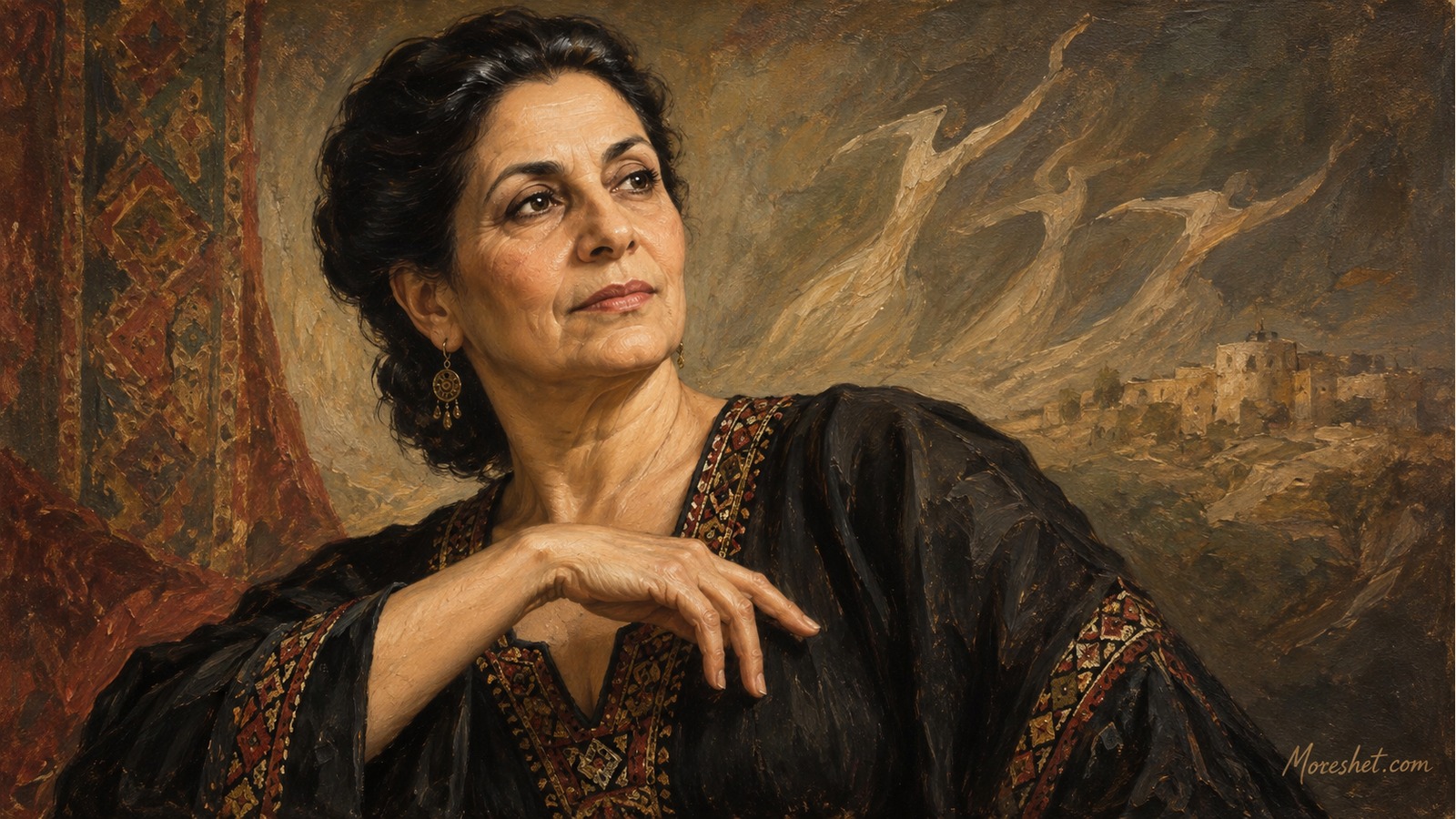
Inbal Dance Company — AI-generated artistic portrait · Moreshet.com
The Israeli ensemble that brought Yemenite Jewish traditions to the stage at home and abroad
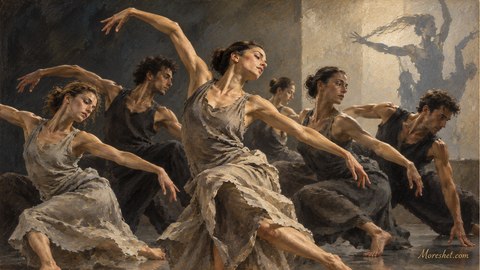
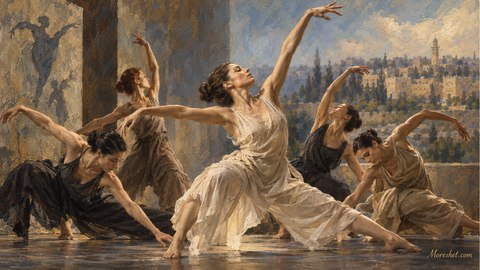
The Inbal Dance Company occupies an important place in the story of Israeli dance and in the cultural presentation of Yemenite Jewish heritage. Founded in Israel in 1949 by Sara Levi-Tanai, Inbal developed a stage language rooted in the movement, rhythms, imagery and communal traditions associated with Yemenite Jews. Its work helped broaden the cultural vocabulary of the young state and brought a Jewish tradition that had often been treated as peripheral into professional theatrical and international settings.
From the Carmel School to the stage
Levi-Tanai began by working with a group of boys and girls from the Yemenite community. The meetings took place in the Carmel School building and centered on games, movement and group activities. From this circle emerged Inbal's first generation of dancers, a group of seven young people. The process established more than a troupe: it created a framework in which community experience could be shaped into performance through movement, rhythm, costume and stage design.
In 1950 the ensemble began working formally, first under the name "Sara Levi's Eastern Troupe." It performed in moshavim, kibbutzim and other communities under the auspices of the Histadrut's cultural center. These appearances introduced its work to audiences throughout Israel and placed Yemenite Jewish cultural expression within the broader cultural project of the new country.
Recognition, support and representing Israel
A significant turning point came after the troupe appeared at the Dalia Folk Dance Festival in 1954. It subsequently received financial and organizational support from the Norman Foundation, later known as the America-Israel Cultural Foundation. This support enabled the ensemble to work under more favorable conditions and expand to 12 members. It also gave Inbal the stability to develop ambitious productions and present Yemenite tradition as a living source of artistic creation rather than merely as folklore observed from a distance.
Inbal's productions brought several artistic disciplines together. Pnina Lightersdorf, chief designer of the Maskit company, designed the troupe's costumes, while Anatol Gurvitch created sets and stage decorations for many of its productions. The combination of dance, costume, music and visual design gave the company a distinctive theatrical identity and helped establish it as a complete artistic ensemble.
Levi-Tanai's work received mixed responses. Some observers dismissed it as Eastern folklore, while others recognized its artistic and cultural significance. Inbal was nevertheless chosen to represent Israel abroad. From 1957 to 1959, the company toured North America and Europe. These tours presented international audiences with an Israeli interpretation of Yemenite Jewish traditions and strengthened the company's place in the wider world of dance.
Four decades of creation and continued development
Under Levi-Tanai's artistic direction, Inbal achieved substantial success in Israel and during international tours for approximately four decades. Its importance lies not only in the popularity of individual performances, but also in the sustained way it transformed communal heritage into a platform for new artistic work. Across the years, the company provided dancers and choreographers with a setting in which to develop its distinctive movement language and bring it to audiences in Israel and abroad.
At the first Colors in Dance festival, held in August 1984, Inbal dancers performed a choreography by Ronit Levi Weiss and won first place. The achievement demonstrated that the company could participate in the evolving conversation of Israeli contemporary dance rather than remain identified only with the preservation of older traditions.
The company's center is the Inbal Multidisciplinary Center for the Arts in Neve Tzedek, which serves as its artistic home and a base for ongoing activity. In the period documented by the archive, Inbal continued to work with artists from different generations. In 2015, during Barak Marshall's tenure as artistic director, the company presented his creation Wonderland. In 2016 it performed Simple Dance, choreographed by Mor Shani, and in 2021 staged Lakat, also by Shani.
Why this legacy belongs in Moreshet
Inbal merits inclusion in Moreshet because its history captures a central development in Israeli culture: the movement of Yemenite Jewish tradition from community life onto the professional stage, into cultural institutions and before international audiences. Sara Levi-Tanai, together with the generations of dancers and artists who worked with the company, expanded the boundaries of Israeli dance and gave a rich Jewish heritage visible form through living art.
The significance of Inbal extends beyond the history of one dance company. It lies in the connection it created among Jewish identity, community life, Israeli artistic expression and cultural representation abroad. Moreshet.com preserves this story as part of the larger history of culture-building in Israel: an institution that remained connected to tradition while collaborating with designers and choreographers and continuing to place Yemenite Jewish heritage at the center of theatrical creation.