Bat-Sheva Dance Company
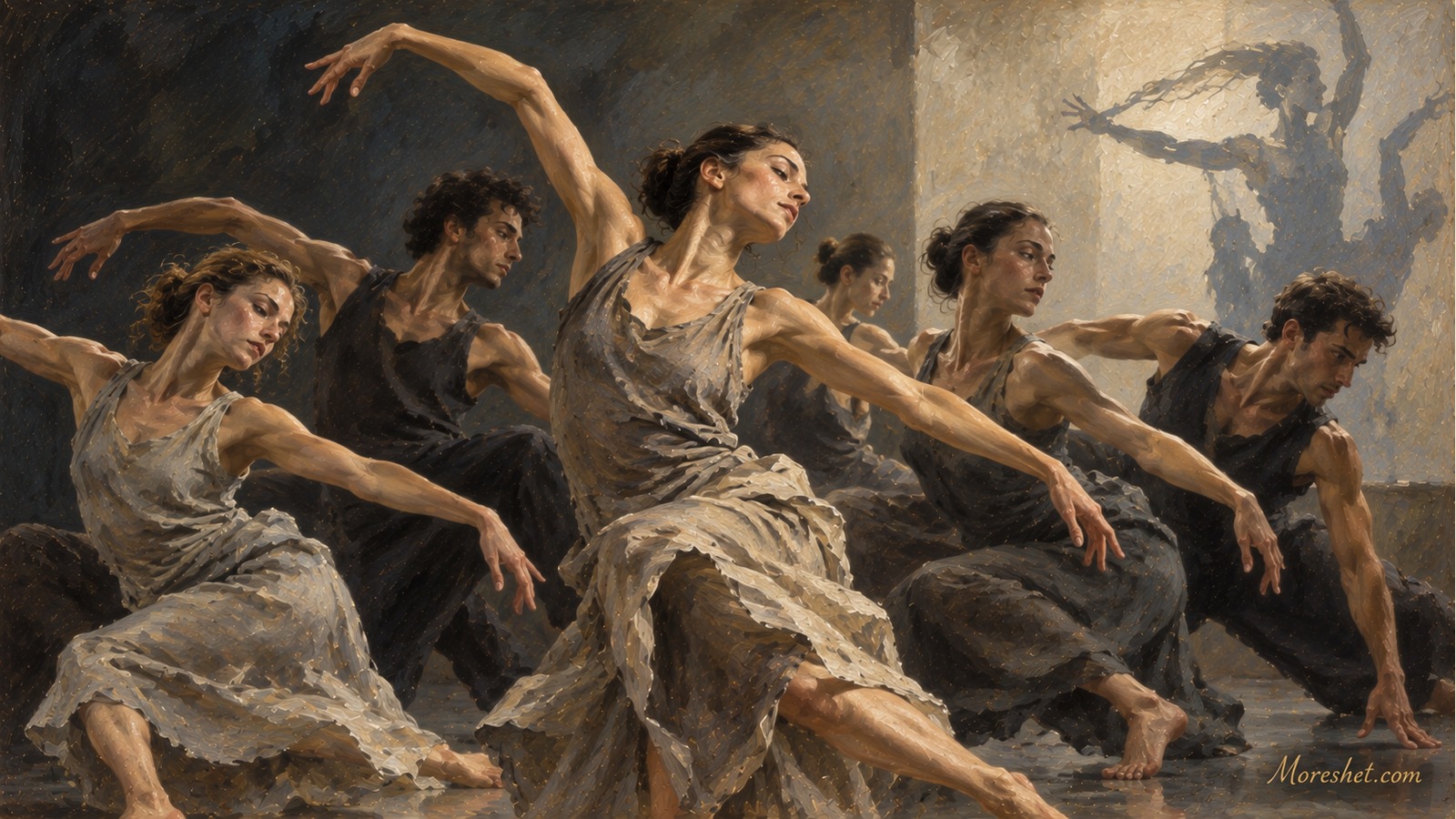
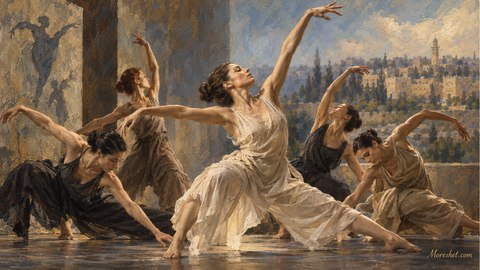
Bat Sheva Dance Company — AI-generated artistic portrait · Moreshet.com
A pioneering force in Israeli contemporary dance and a training ground for generations of artists
The Bat-Sheva Dance Company is one of the defining institutions in the history of Israeli dance. Since its establishment in 1964, it has provided a home for performance, choreography and artistic experimentation, helping contemporary dance become a significant part of Israel's cultural life. Alongside the main company, its younger frameworks have given emerging dancers opportunities to gain professional experience, reach new audiences and progress toward careers on the professional stage.
The company was founded by Baroness Bat-Sheva de Rothschild and the American choreographer Martha Graham. In its early years, it grew out of a group of dancers drawn to modern dance and lyrical theater. Bat-Sheva initially operated as a repertory dance company, and pianist Nathan Mishori accompanied its earliest rehearsals. From the beginning, the company brought together an international modern-dance influence with local creation and an Israeli audience.
Founding and artistic development
Bat-Sheva's creation was an important step in establishing serious dance institutions in Israel. At a time when the country's cultural institutions were still developing, the company offered dancers and choreographers a professional framework devoted specifically to dance. It placed dance on major cultural stages and introduced Israeli audiences to new movement languages, while giving artists room to explore forms of expression that did not depend on theater or music alone.
Ohad Naharin served as the company's artistic director from 1990 through 2017. His tenure became a prominent chapter in Bat-Sheva's history and in Israel's visibility within international dance. According to the supplied archive material, Gili Navot has served as artistic director since 2017. The succession of artistic leadership demonstrates the company's ability to renew itself while maintaining a stable institutional framework.
Bat-Sheva 2: A framework for artistic growth
Bat-Sheva 2 was founded in 1976 and operated until 1987. Its artistic directors were Rina Gluck and Rina Shaham; Nira Paz joined the leadership in 1980/81. The group enabled younger dancers to create and perform within a professional framework of their own, extending the company's work beyond its main ensemble.
Artists associated with Bat-Sheva 2 included Hadah Oren, Rachel Kafri, Ruth Asher, Miri Magnes, Sharon Pinzley and Ronit Land. Anna Sokolov participated in the company's involvement in the Haifa Municipal Theater production Kanafayim (“Wings”). These names reflect the breadth of the group's activity and its role as a setting in which artists could build experience, professional relationships and individual artistic voices.
The Bat-Sheva Ensemble and its connection with young audiences
The Bat-Sheva Ensemble, founded in 1990, serves as a younger company and a training ground for dancers at the beginning of their careers. Many ensemble dancers move to the main company after two or three years. This creates a continuing path from development to professional employment and enables Bat-Sheva to cultivate talent within its own institutional structure.
Most of the ensemble's performances are presented for children and teenagers. This work is more than an expansion of the audience; it is an investment in Israel's cultural future. It introduces young people to live dance, encourages artistic curiosity and presents the body and movement as tools for imagination, thought and communication. Over time, such encounters can help shape future dancers, creators and audiences.
Influence on Israeli and international dance
Bat-Sheva's contribution cannot be reduced to a list of directors or productions. The company built an artistic and organizational foundation that enabled contemporary dance to take root in Israel, provided opportunities for generations of artists and strengthened Israel's presence in international dance. The company and its associated ensembles encouraged experimentation, collaboration and the search for new forms of movement and expression.
Bat-Sheva's legacy is also visible in its ability to connect professional excellence with access to different communities. The main company's performances and the ensemble's work with children and teenagers create continuity between cultural institutions and the wider public. In this sense, Bat-Sheva has contributed not only to dance as an art form, but also to Israeli cultural life and to an artistic language through which Israel is represented beyond its borders.
Why the Bat-Sheva Dance Company belongs in Moreshet
The Bat-Sheva Dance Company merits inclusion in Moreshet because it is a cultural institution that shaped a central chapter in the history of Israeli dance. Its founding by Bat-Sheva de Rothschild and Martha Graham, its sustained activity, the leadership of artistic figures including Ohad Naharin, and the younger frameworks it created for emerging dancers produced an influence far greater than any single performance.
Bat-Sheva gave dancers and choreographers room to develop, introduced Israeli audiences to contemporary dance and built an enduring connection with children and teenagers. Its story shows how artistic creation, institutional building and community life can reinforce one another. Preserving the company's history on Moreshet.com records the way dance became part of Israeli heritage and how a local institution could contribute to the wider world of culture.