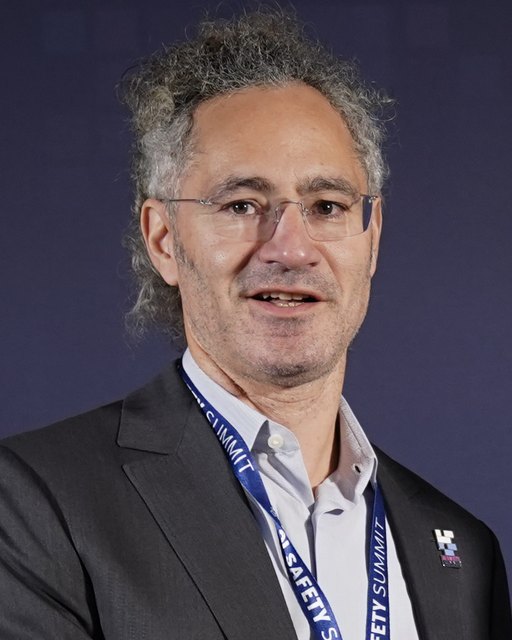
Leonard Kleinrock
The Jewish American computer scientist who gave data networks a mathematical foundation, led ARPANET's first measurement center, and trained a generation of Internet pioneers
Leonard Kleinrock is a Jewish American computer scientist and engineer whose work helped turn computer networking from a daring idea into a system that could be designed, measured, and expanded. His research applied queueing theory to the flow of information, giving engineers mathematical tools for analyzing congestion, capacity, and delay. At the University of California, Los Angeles, he later directed the ARPANET Network Measurement Center and supervised the UCLA team at whose site the first message on that pioneering network was transmitted on October 29, 1969.
Kleinrock's significance rests on more than that celebrated moment. He connected mathematical theory with experiments on a working network, educated many of the people who built early Internet technologies, wrote foundational books, and helped shape American research-network policy. In doing so, he helped establish the systematic study of computer-network performance. Smartphones, cloud services, online commerce, collaborative science, and everyday communication among communities around the world all depend on networks that must manage traffic, delay, and finite capacity—the problems he placed at the center of his career.
From New York to the mathematics of networks
Kleinrock was born in New York City on June 13, 1934, to a Jewish family. He graduated from the Bronx High School of Science in 1951 and earned a bachelor's degree in electrical engineering from the City College of New York in 1957. At the Massachusetts Institute of Technology, he completed a master's degree in 1959 and a doctorate in electrical engineering and computer science in 1963.
In the early 1960s, he addressed a question that would become fundamental to the online world: What happens when many users send information through a shared network? His doctoral research, Message Delay in Communication Nets with Storage, used probability and queueing theory to examine how messages wait, how congestion forms, and how capacity, priorities, routing, and network topology affect transmission time. The work was developed into his 1964 book, Communication Nets: Stochastic Message Flow and Design.
This contribution was practical as well as theoretical. A communication network cannot guarantee that every message will move immediately; it must cope with changing demand, limited resources, and queues at intermediate points. Kleinrock's models gave engineers a way not merely to build a network, but to predict its behavior, locate bottlenecks, and compare design choices. In 1966, Donald Davies—one of the independent originators of digital packet switching—used Kleinrock's analytical techniques to assess whether a packet-switched network could provide an acceptable response time for a human user.
UCLA and the building of ARPANET
After completing his doctorate, Kleinrock joined the UCLA faculty. He built a long career there as a researcher and educator and became Distinguished Professor Emeritus of Computer Science in the Henry Samueli School of Engineering and Applied Science. From 1991 to 1995, he chaired UCLA's Computer Science Department.
In 1968, Kleinrock received a contract to establish ARPANET's Network Measurement Center. Its task was to measure the experimental network, model its performance, and compare observed behavior with theoretical expectations. This work was indispensable. Connecting computers did not by itself create a dependable infrastructure; researchers also needed to learn how the network behaved under load, how long messages waited, where failures occurred, and how its design could be improved.
Kleinrock managed a UCLA group that included future leaders of Internet development such as Steve Crocker, Jon Postel, and Vint Cerf. Members of the group contributed to early ARPANET communications software and the Network Control Program, or NCP, the host-to-host protocol that preceded TCP/IP. His influence as a mentor therefore formed a substantial part of his achievement: he created an environment in which young researchers solved problems for which no established textbooks or standards yet existed.
The first message: “lo”
At 10:30 p.m. on October 29, 1969, UCLA student programmer Charley Kline, working under Kleinrock's supervision, attempted to log in from the university's SDS Sigma 7 computer in Boelter Hall room 3420 to an SDS 940 at the Stanford Research Institute. The intended message was login. The letters l and o arrived, and then the system crashed. The literal first message received over ARPANET was therefore “lo.” After the computers recovered, the full login was completed.
The test appeared modest, but it marked a historic transition: distant computers were beginning to communicate through a general-purpose network rather than a line dedicated to one application. The first permanent link between the UCLA and Stanford Research Institute Interface Message Processors was established on November 21, and by December 5 the initial four-node network was operating. Historical accuracy matters here: Charley Kline typed and transmitted the message, while Kleinrock led the UCLA laboratory and project in which the experiment took place.
From a pioneering experiment to Internet performance theory
During the 1970s, Kleinrock greatly expanded the application of queueing theory to packet-switched computer networks. His two-volume Queueing Systems—the theoretical volume published in 1975 and the computer-applications volume in 1976—became important resources for students, researchers, and engineers. Together, they helped establish a disciplined way to analyze servers, queues, and networks in which demand fluctuates over time.
His research addressed ARPANET performance and a broad range of network technologies, including packet radio, local-area and broadband networks, mobile and nomadic computing, peer-to-peer systems, and intelligent software agents. The goal was not simply to explain a network that already existed. His work offered principles for designing systems that could grow without surrendering efficiency.
A notable example is his 1977 paper with his student Farouk Kamoun on hierarchical routing in large networks. As a network grows, no individual router can efficiently retain detailed information about every possible destination. Arranging routes in regions and levels reduces the information each part of the system must manage and makes large-scale growth possible. Hierarchical organization remains a fundamental principle in the architecture of extensive networks, including the Internet.
Kleinrock's documented contributions should be distinguished from the historical question of who invented packet switching. Paul Baran and Donald Davies are recognized for independently developing the digital packet-switching concept. Kleinrock's central place in Internet history rests on his mathematical analysis of data networks, the measurement and evaluation of ARPANET, and his mentorship of researchers who developed subsequent networking technologies. That distinction does not diminish his achievement; it identifies its enduring character more precisely.
Education, entrepreneurship, and the spread of networking knowledge
Kleinrock published hundreds of research papers and supervised scores of graduate students. Members of his academic community went on to important work in protocol design, network operations, and the conversion of communications research into widely used systems. His impact as an educator can be measured in this diffusion of expertise: knowledge developed in his laboratory traveled with his students into universities, industry, and infrastructure that would eventually serve billions of people.
He was a cofounder of Linkabit and the founder and chairman of Nomadix and the Technology Transfer Institute. These ventures reflected his continuing interest in carrying technical knowledge from universities into commercial practice. He also organized numerous professional seminars in the United States and internationally, helping make advanced networking research accessible to academic and industrial audiences.
Shaping research-network policy
In 1988, Kleinrock chaired a committee of the U.S. National Research Council's Computer Science and Telecommunications Board that issued Toward a National Research Network. The report argued that the United States had a clear and urgent need for a high-performance national research network. It helped inform the policy environment that led to the High Performance Computing Act of 1991.
Programs and funding advanced during this period expanded network infrastructure and supported tools including the Mosaic browser at the National Center for Supercomputing Applications. Released in 1993, Mosaic played a major role in making the World Wide Web accessible to a broad public. Kleinrock later led the committee that produced the influential 1994 report Realizing the Information Future: The Internet and Beyond, which examined the digital infrastructure's future as networking moved beyond its academic origins.
Foundational publications and international recognition
Among Kleinrock's most important publications are:
- Communication Nets: Stochastic Message Flow and Design (1964), which developed his doctoral research into a broad theory of message flow and network design.
- Queueing Systems, Volume I: Theory (1975), presenting the mathematical foundations of queueing systems.
- Queueing Systems, Volume II: Computer Applications (1976), applying the theory to computing and communications.
- “Hierarchical Routing for Large Networks” (1977), written with Farouk Kamoun and devoted to the performance and optimization of routing at scale.
- Queueing Systems: Problems and Solutions (1996), written with Richard Gail as a practical companion for studying and applying the theory.
The recognition Kleinrock received reflects the unusual combination of theory, engineering, and education in his career. He was elected to the U.S. National Academy of Engineering in 1980, received the Marconi Prize in 1986, and was honored with the ACM SIGCOMM Award in 1990. In 2001, he shared the Charles Stark Draper Prize with Vint Cerf, Robert Kahn, and Lawrence Roberts for the development of the Internet.
Kleinrock received the 2007 National Medal of Science for fundamental contributions to the mathematical theory of modern data networks and work associated with packet switching; the medal was presented at the White House in 2008. In 2010, he was a recipient of Tel Aviv University's Dan David Prize, and he has also received an honorary doctorate from the Technion–Israel Institute of Technology. He was inducted into the Internet Hall of Fame in 2012 and received the IEEE Alexander Graham Bell Medal that year. In 2014, the BBVA Foundation honored him with its Frontiers of Knowledge Award for contributions to the theory and practical development of the Internet.
Boelter Hall room 3420, where the first ARPANET transmission originated, was restored to its 1969 appearance and converted into the Kleinrock Internet Heritage Site and Archive. Opened to the public in 2011, it gives physical form to the moment when mathematical research, experimental engineering, and collaborative work converged at the beginning of networked computer communication.
Why Leonard Kleinrock's legacy belongs in Moreshet
Leonard Kleinrock merits inclusion in Moreshet because his career represents a Jewish American contribution with exceptionally broad human consequences. Born into a Jewish family in New York, he advanced from public education to the frontiers of science and converted abstract mathematics into tools for building and measuring an infrastructure that connects people, institutions, and communities. The honors he received in Israel, including the Dan David Prize at Tel Aviv University and an honorary doctorate from the Technion, also reflect his standing within Israeli scientific life.
His legacy endures on three levels: the theory that taught engineers how to understand congestion and delay; the UCLA laboratory from which ARPANET's first message was transmitted; and the generations of students who helped develop the protocols and infrastructure of the networked world. For Jewish and Israeli life, as for communities everywhere, the Internet transformed education, scientific collaboration, commerce, cultural memory, and communication across continents. Moreshet.com records Kleinrock not as a solitary inventor, but as a scientist, educator, and institution-builder whose exacting work helped give the digital age a practical foundation.