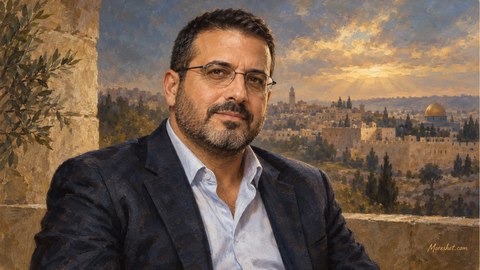
Bruno Landesberg
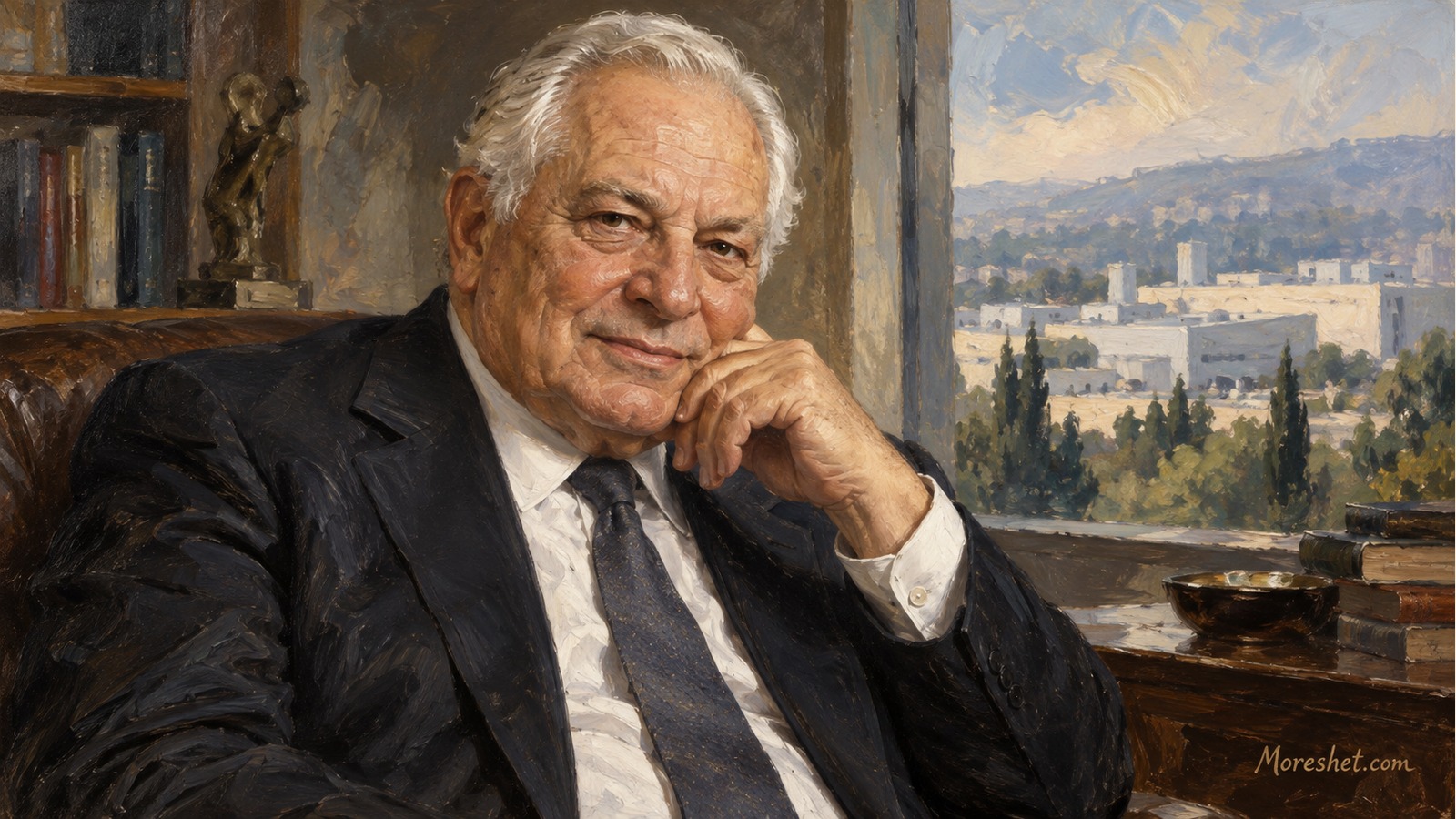
Bruno Landesberg — AI-generated artistic portrait · Moreshet.com
The founder of Sano who helped build Israeli industry and supported the country’s cultural institutions
Bruno Landesberg (August 8, 1920–October 19, 2017) was an Israeli businessman, industrialist and philanthropist who founded Sano and served as its chairman. His life spanned childhood loss, flight from Europe during the Second World War, immigration to Israel in the country’s formative years, and the creation of a major manufacturing company from a small plant in Bat Yam. Under his leadership, Sano became a publicly traded company and one of the household names of everyday life in Israel.
From Eastern Europe to Israel
Landesberg was born in Czernowitz, now in Ukraine, to Moshe and Eva. His father, a merchant and importer, died of lung disease when Bruno was two and a half. His mother raised Bruno and his younger brother, Genia, and when Bruno was 14 the family moved to Bucharest. In 1940, as the Nazi threat spread, Bruno fled eastward with his brother and returned to Czernowitz, where he met Raia, who later became his wife.
In June 1941, Bruno and Raia escaped to the Soviet Union. They first settled in Saratov, where he studied literature, history and economics at the university, and later moved to Bukhara, where their son Alex was born. In 1944, they returned to Bucharest, where Landesberg completed his studies. He became involved with the Communist movement taking shape in Romania and received recognition for participating in the Communist underground and the anti-fascist struggle. He also translated several works from Russian into Romanian, worked for the Bucharest municipality and joined his father-in-law’s textile business. A small textile factory he established was eventually nationalized by the state.
On March 3, 1952, Landesberg immigrated to Israel with Raia and their son. The family first settled at Kibbutz Shiller, where he worked in a banana plantation, performed in local theater and organized ballroom dances. They later moved to Tel Aviv, beginning a new chapter in his professional life.
From the defense establishment to manufacturing
Landesberg began his Israeli career as a warehouse assistant at Rafael, then known as the Science Corps. He advanced to become a liaison officer between the Supply Branch and the Israel Defense Forces. After approximately three years, he left the Ministry of Defense and entered the cleaning-products industry. As sales manager at Kadima Chemicals Corporation, later known as Klin, he gained a close understanding of consumers, distribution and the practical demands of a developing market.
In 1958, he took a decisive entrepreneurial risk. He mortgaged his home and pledged his property to secure a distribution contract after the company had fallen out with its previous distributor. He purchased a distribution route and established the Southern Marketing Company, moving from salaried employment to independent business ownership. The early years brought serious liquidity problems, but Landesberg combined practical experience with study and teaching. He lectured on marketing and sales management at the Israel Management Center, and those lectures helped earn him a five-month scholarship in international marketing at Harvard University.
Building Sano and shaping Israeli everyday life
After returning from the United States in 1961, Landesberg established a small factory in Bat Yam. With a limited group of employees, he first manufactured a toilet-cleaning product, followed by mothballs and air fresheners. His focus on practical household products connected local manufacturing with the needs and routines of a young Israeli society.
In 1963, the company received a license to distribute 3M’s Scotch-Brite products. Their popularity in Israel helped establish the business as both a distributor and a manufacturer with a broad market presence. In 1965, Sano was formally registered as a company. It gradually became one of the most recognizable names in Israel’s cleaning-products industry, and in 1982 it was listed on the Tel Aviv Stock Exchange. In 1987, Landesberg received the Israel Industry Prize in the chemistry category.
His achievement was not limited to building a successful company. Sano represented local production, employment and commercial innovation, while its products became part of the routines of countless Israeli households. Landesberg showed how marketing knowledge, calculated risk and persistence could turn a small enterprise into a company with lasting economic and social reach.
Culture, community and continuity
Alongside his business activity, Landesberg was a significant supporter of culture in Israel. He contributed to the Yiddishpiel Theater and the New Israeli Opera, helping strengthen institutions that brought Jewish, Israeli and international cultural traditions to audiences in the country. In 1984, together with Hanan Zouz and Shlomo Ronli-Riklis, he founded the Young Israeli Philharmonic Orchestra. The orchestra created an important framework for developing young musicians and gave performers at the beginning of their careers an opportunity to grow within Israel’s professional musical tradition.
Landesberg also served on the Public Council of the Geneva Initiative, played tennis as an amateur and was a member of the honorary council of Israel’s tennis centers. These activities reflected an engagement that extended beyond corporate management. He supported cultural, civic and sporting frameworks that offered young people opportunities for artistic expression, discipline and advancement.
Over the years, Landesberg brought several descendants into Sano’s work. His eldest son, Alex, held senior positions including chief executive and chairman; his daughter Eva was involved in management; his granddaughter Ia Shachar worked in export development; his grandson Yuval, Alex’s son, became chief executive after serving as vice president of marketing; and his granddaughter Tamar took responsibility for development. This family continuity helped preserve the company’s character while carrying forward the enterprise Landesberg had established.
Landesberg was diagnosed with lymphoma in 2011. He died on October 19, 2017, and was buried at the cemetery of Kibbutz Horesha. He spoke several languages, including French, German and Hebrew. In 2014, he also appeared as a presiding judge in Tuviaansky, a film directed by Riki Shalev.
Why this legacy belongs in Moreshet
Bruno Landesberg merits inclusion in Moreshet because his life brings together several defining strands of Israel’s modern history: immigrants and survivors rebuilding their lives, private enterprise helping create a local industrial base, and companies becoming part of the country’s culture and daily experience. He founded Sano and guided it from a small Bat Yam factory to a publicly traded company, influencing employment, manufacturing, distribution and household life across Israel.
His legacy extends beyond business. His support for Yiddishpiel, the New Israeli Opera and the Young Israeli Philharmonic Orchestra strengthened cultural institutions and helped create opportunities for new generations of performers. The combination of industrial leadership, family continuity and sustained cultural philanthropy makes his story a meaningful record of contribution to Israeli society. Moreshet.com preserves his memory not simply as the founder of a company, but as a builder whose influence endured in industry, culture and the life of the state.