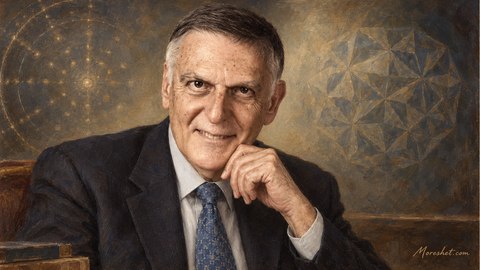
Boris Pasternak
Poet, translator and author of Doctor Zhivago, awarded the Nobel Prize in Literature
Boris Pasternak (1890–1960) was a Russian poet, translator and novelist whose work gave remarkable intensity to the relationship between private life and history. Internationally celebrated for Doctor Zhivago, he had already established a substantial reputation as a poet before the novel appeared. His writing asks readers to attend to the individual: a person who loves, remembers and creates even when public events demand complete submission to a collective cause. He was awarded the 1958 Nobel Prize in Literature but was compelled by political pressure to decline it.
An artistic upbringing
Pasternak was born in Moscow into a Jewish family deeply engaged with the arts. His father, Leonid Pasternak, was a painter, and his mother, Rosa Kaufman, a pianist. Music and visual art were part of his formative environment, providing ways of understanding experience that remained important after he chose literature.
He studied music before turning to philosophy, including a period in Marburg, Germany. These early interests continued to inform a poetry sensitive to rhythm, perception and the passage of time. His descriptions of nature are not simply decorative backgrounds. Weather, light and movement become active elements in the experience of being alive.
Poetry and the work of translation
Collections including My Sister, Life established Pasternak as a distinctive literary presence. His poems bring ordinary scenes into unusually vivid focus, inviting a reader to recognize emotional depth in an apparently passing moment. This attentiveness helps connect the lyric work to the later fiction: both depend on the conviction that an individual’s experience possesses value that cannot be reduced to a political slogan.
Translation was another substantial part of his career. His Russian versions of Shakespeare, Goethe and other writers connected readers with major European literary traditions. The work required artistic judgment as well as linguistic knowledge, giving established works a persuasive voice in another language. It also allowed him to sustain a literary livelihood during periods when his own writing faced official obstacles.
Doctor Zhivago and the pressures of history
Doctor Zhivago follows a physician and poet through revolution, war and profound personal upheaval. Its achievement lies in holding large historical transformations alongside love, memory and the difficult choices of particular people. The novel refuses to let the scale of an event make those lives insignificant.
Rejected for publication in the Soviet Union, it first appeared in Italy in 1957. The Nobel award the following year brought international recognition and an intense campaign against its author at home. Pasternak initially accepted the prize before withdrawing under pressure. The episode made visible the costs that political authority could impose on independent artistic expression. Soviet publication of the novel followed only in 1988, long after his death.
Why Boris Pasternak belongs in Moreshet
Pasternak belongs in Moreshet at Moreshet.com as part of the contribution of writers from Jewish families to world literature. His relationship with Jewish identity was complex, and Christian imagery also has a significant place in his work. Recognizing that complexity allows his achievement to be understood accurately. His literary inheritance combines extraordinary artistic sensitivity with a lasting affirmation of conscience, creative freedom and the worth of individual lives under historical pressure.